How Much Money Do You Need to Start Trading?

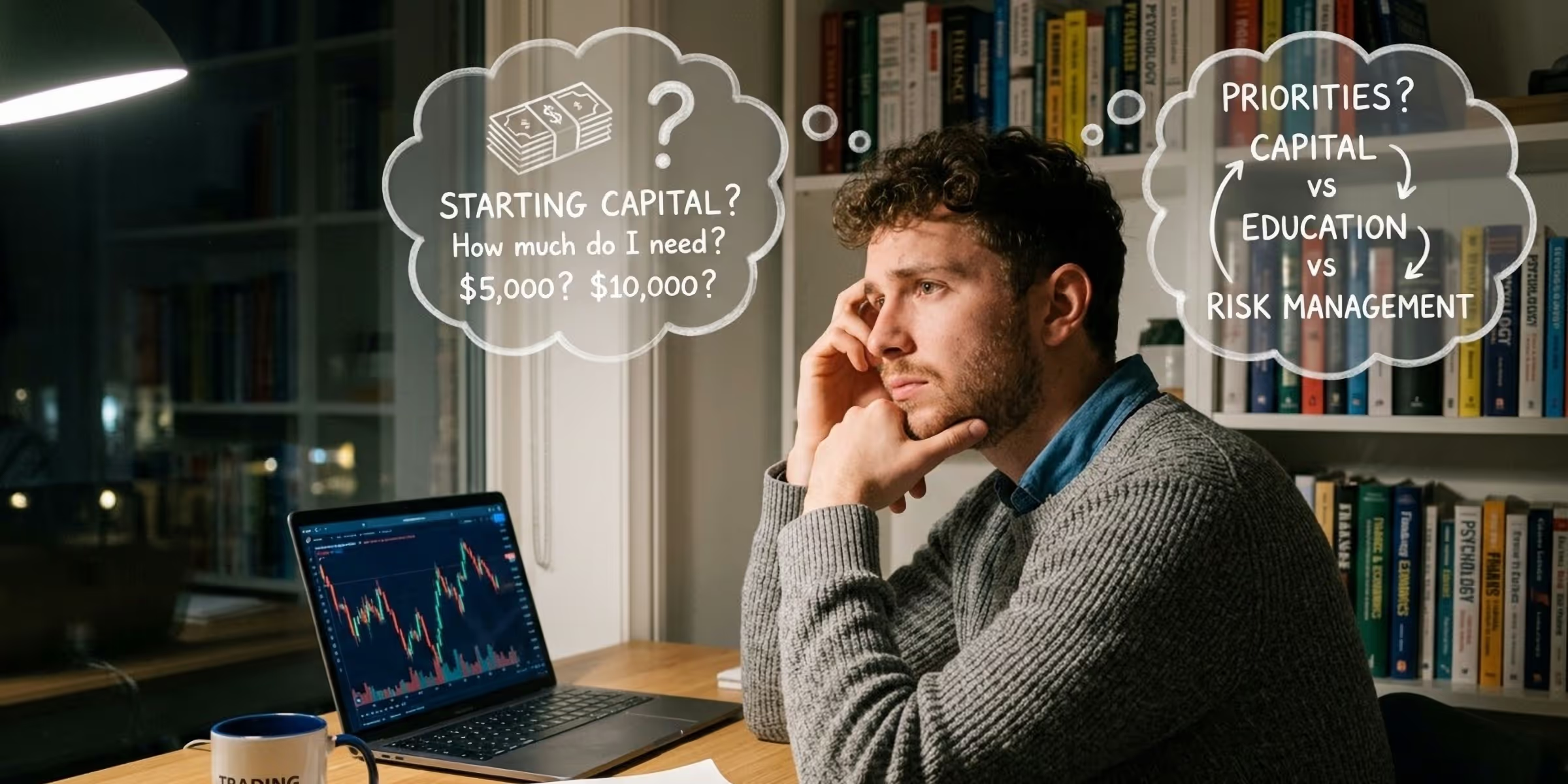
How much money do you need to start trading?
One of the very first questions people ask when they become interested in trading or investing is simple:
How much money do I need to start trading?
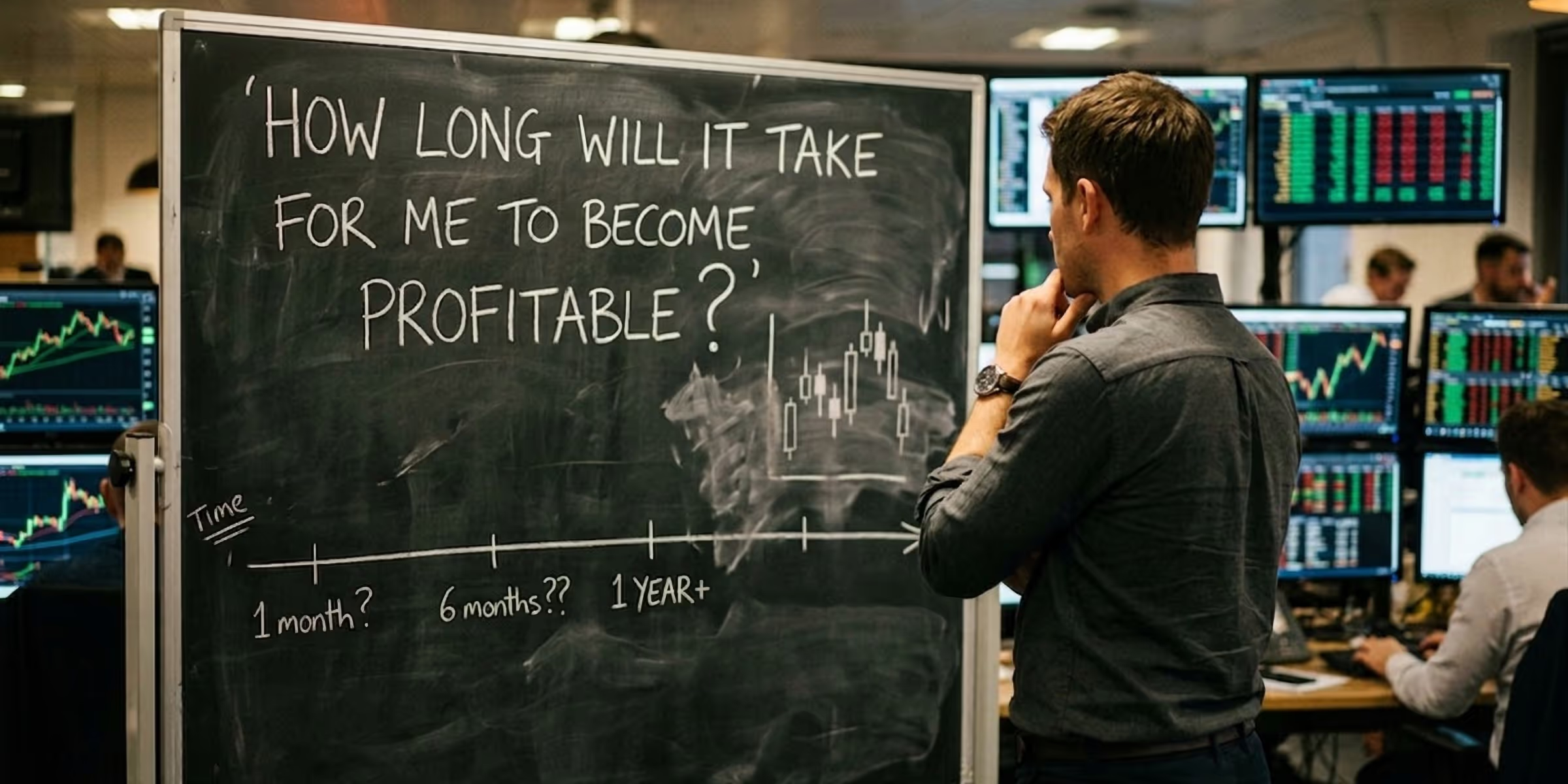
At first thought, the answer seems straightforward. Many beginners expect to hear a specific number, perhaps $500, $1,000, or $10,000. In reality, however, the answer is far more complicated. The amount of capital required to start trading depends on several important factors, including your level of experience, the types of financial instruments you plan to trade, your risk tolerance, and your profit expectations.
In other words, there is no single number that applies to everyone. Some traders begin with only a few thousand dollars, while others start with tens or even hundreds of thousands. The key is understanding how your knowledge, strategy, and the instruments you trade influence the amount of capital you need.
Let’s explore the most important factors that determine how much money you should have before entering the markets.
Experience and knowledge matter more than capital
The first and most important factor is your level of trading knowledge and experience. This determines not only how much money you should start with but also which markets and instruments you should trade.
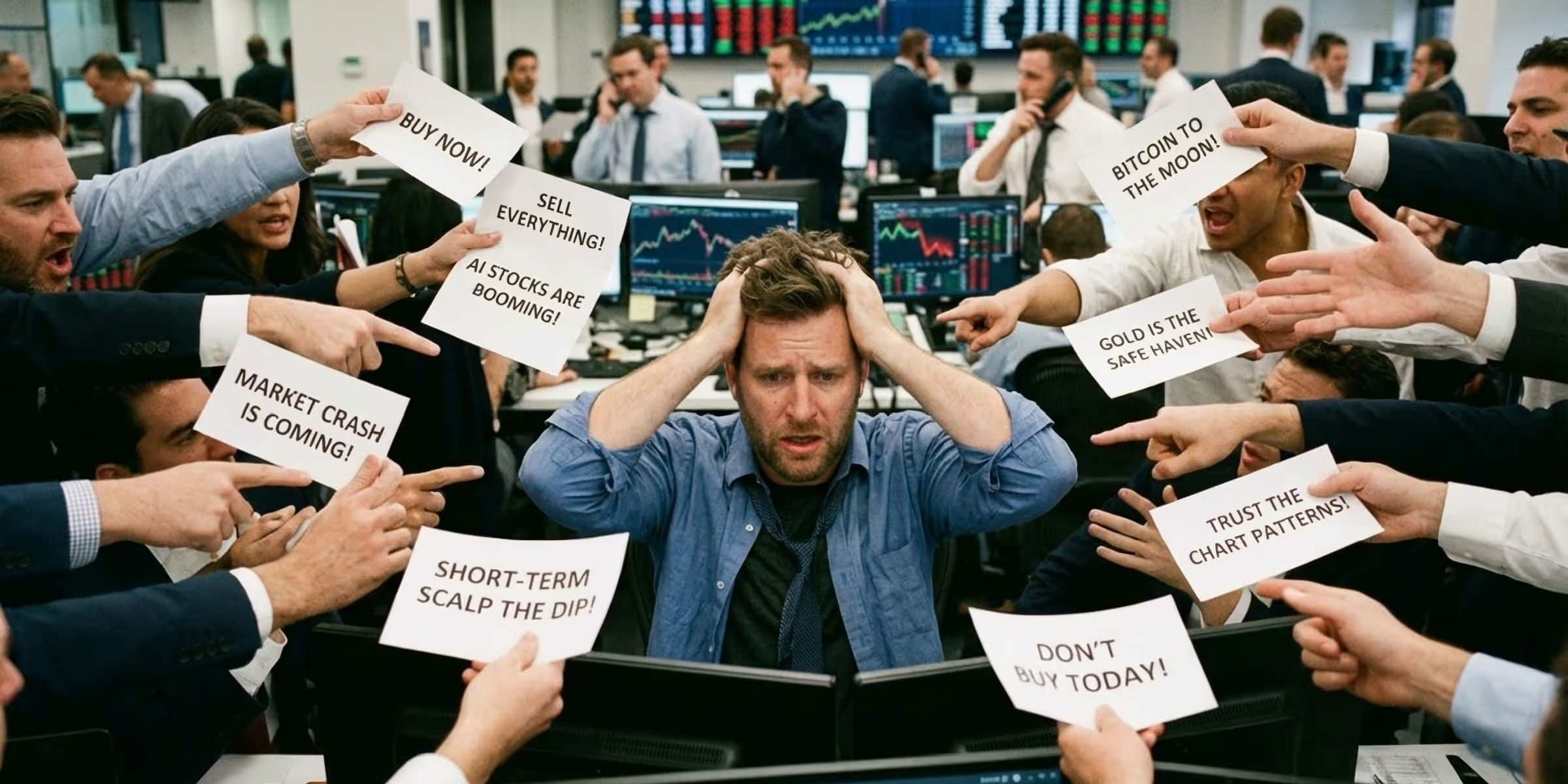
For beginners, the temptation to jump into the markets with large bets can be extremely strong. Many new traders believe they can make quick profits by following market news, listening to financial commentators, or taking advice from friends who claim to know which stocks will rise.
Unfortunately, this approach rarely works in the long run.
Many inexperienced traders place large trades hoping to score a big win. Occasionally, they succeed purely because of luck. A market may move in their favor, generating a significant profit. This early success can create a dangerous illusion that trading is easy.
But luck is not a strategy.
Over time, traders who rely on tips, rumors, or random decisions almost always lose money. Markets are complex systems influenced by countless factors, and without proper knowledge, traders are essentially guessing.
The biggest danger is not just losing money - it is losing confidence in trading altogether. When someone risks a large amount of capital without understanding the market and loses it quickly, they often become discouraged and abandon trading entirely.
This is why beginners should approach trading very carefully.
Why beginners should start small
If you are new to trading, the best approach is to start with a small account and focus on education rather than profits.
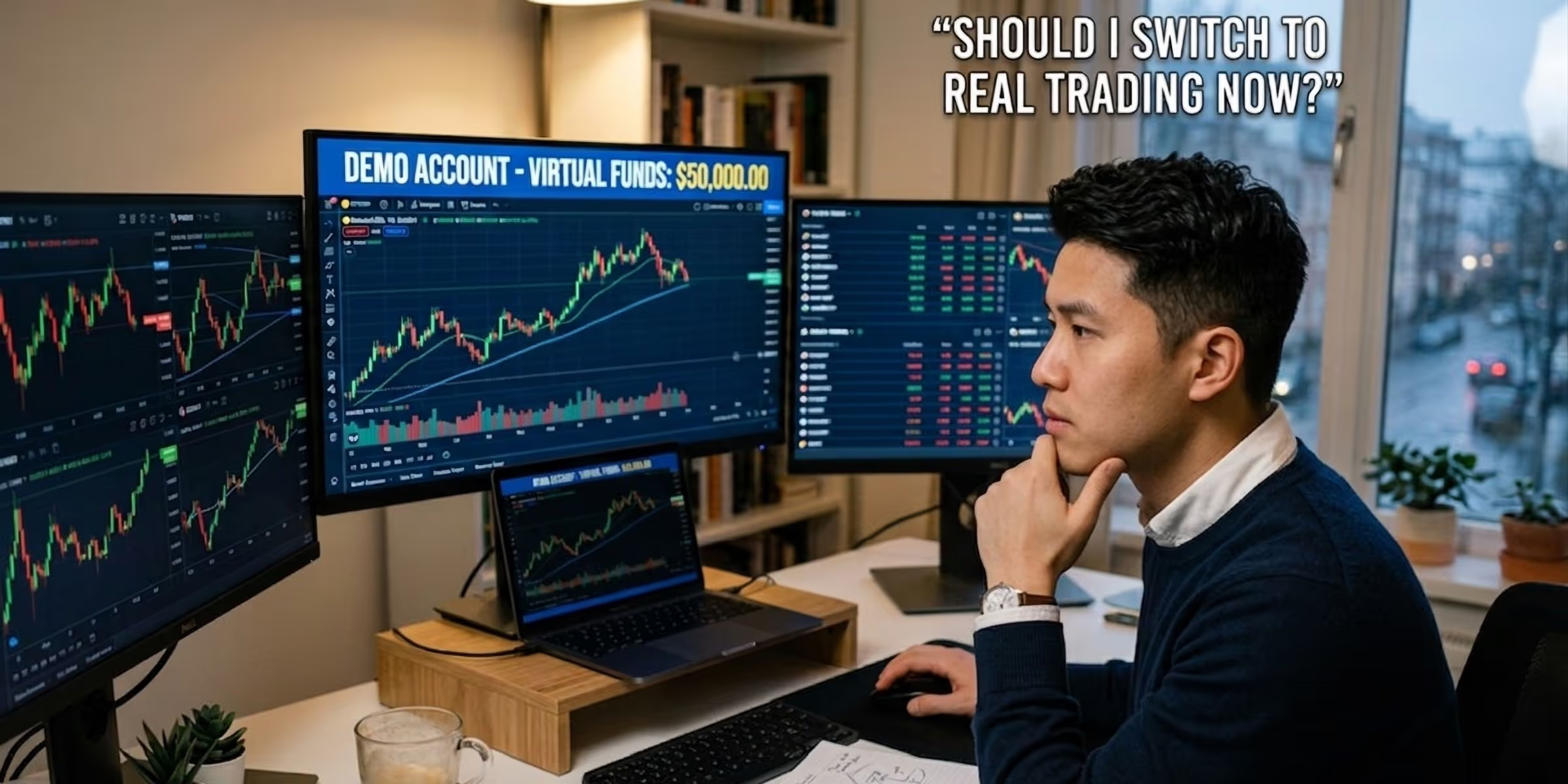
Before risking real money, it is wise to practice using a demo trading account. Many brokerage platforms offer simulation environments that let you trade with virtual funds. This allows you to learn how markets behave, test strategies, and understand trading platforms without financial risk.
However, at some point, you will need to transition from simulated trading to real trading. This step is important because trading with real money introduces emotions that are not present when using a demo account.
Fear, greed, excitement, and frustration all become much more intense when real capital is at stake.
For this reason, beginners should start trading with small amounts of money, even if they have significant savings available. The goal at this stage is not to make large profits but to develop discipline and learn how to manage risk.
A reasonable starting point for many beginners is between $2,000 and $5,000. With this type of account, traders can begin buying small positions in non-leveraged instruments such as stocks or exchange-traded funds (ETFs).
These instruments are relatively straightforward compared to more complex financial products. They allow beginners to learn how markets move without exposing themselves to excessive risk.
As experience grows and confidence improves, traders can gradually increase their position sizes and explore additional trading opportunities.
Expanding your options: intermediate traders
Once a trader gains some experience and develops a better understanding of market behavior, they may begin exploring more advanced instruments.
At this stage, traders often become interested in markets such as:
- Options
- Foreign exchange (Forex)
- Short-selling stocks
- Margin trading accounts
These instruments provide additional flexibility and profit opportunities. However, they also introduce new complexities and risks.
Unlike simply buying stocks, these instruments are influenced by additional variables such as volatility, contract duration, leverage, and interest rates. Understanding how these factors affect pricing requires much deeper knowledge of market mechanics.
For example, options pricing depends not only on the underlying stock price but also on time remaining until expiration, market volatility, and other mathematical factors. Forex trading involves currency relationships influenced by global economic conditions and interest rate policies.
Because these instruments often involve leverage, traders can control much larger positions with relatively small amounts of capital.
While leverage can amplify profits, it also magnifies losses.
The danger of trading with too little capital
One of the biggest misconceptions promoted online is the idea that traders can start with extremely small accounts, sometimes as little as $100 or $500, and quickly generate substantial profits.
Technically, it is possible to trade with small accounts. Many brokers allow it.
However, the reality is that small trading accounts almost always lead to excessive risk-taking.
Let’s consider a simple example.
Suppose a trader wants to earn $2,000 per month from trading. If their starting capital is only $500, they would need to generate a 400% monthly return to achieve that goal.
Chasing this type of return is not only unrealistic—it is extremely dangerous.
To pursue such aggressive returns, traders would need to take enormous risks. A few losing trades could easily wipe out the entire account.
I experienced this firsthand early in my trading journey. When I first began trading the EUR/USD currency pair in the Forex market, I funded an account with only $300. Within minutes, I lost the entire amount.
The reason was simple: I had no real understanding of the market or the risks involved.
This experience taught me a valuable lesson: trading with insufficient capital often forces traders to behave like gamblers.
Instead of focusing on consistent decision-making and risk management, traders with tiny accounts feel pressured to chase large gains quickly. This psychological pressure leads to poor decisions and emotional trading.
Why a larger account changes everything

For traders interested in leveraged instruments such as options or forex, it is far more realistic to begin with an account of at least $5,000, and preferably between $10,000 and $20,000.
This level of capital provides several important advantages.
First, it allows traders to manage risk properly. Instead of risking large percentages of their account on each trade, they can keep losses small and controlled.
For example:
- Losing $100 on a $10,000 account represents only a 1% loss.
- Losing $100 on a $1,000 account represents a 10% loss.
The psychological impact of these two situations is completely different.
When losses represent a large percentage of an account, traders often experience emotional stress. This stress can lead to impulsive decisions, revenge trading, and abandoning carefully planned strategies.
A larger account provides room for mistakes, which is essential for long-term success.
Even experienced traders experience losing streaks. Having sufficient capital allows them to survive these periods without destroying their account.
Advanced trading and professional-level capital
For highly experienced traders who specialize in sophisticated markets, even larger accounts are often required.
One example is futures trading, which involves highly leveraged contracts tied to commodities, stock indexes, currencies, and other financial instruments.
Futures markets offer tremendous opportunities for profit, but they also require strict discipline and substantial capital reserves. Because these contracts can move rapidly, traders must maintain enough margin to withstand temporary price fluctuations.
For traders operating at this level, accounts of $50,000 or more are often recommended in order to trade comfortably.
At this stage, trading becomes less about speculation and more about professional risk management. Experienced traders understand that preserving capital is just as important as generating profits.
There is no universal number
As you can see, there is no fixed amount of money that guarantees success in trading.
The capital required depends on several factors:
- Your level of trading knowledge
- Your risk tolerance
- The financial instruments you trade
- Your profit expectations
- Your ability to manage emotions and losses
A beginner might start learning with a $3,000 account trading simple stocks, while an experienced trader may require $50,000 or more to operate efficiently in advanced markets.
What matters most is not the amount of money itself, but how well you manage risk.
Education comes before capital
Many aspiring traders focus too much on the question of capital and not enough on the more important question:
Do I have the knowledge required to trade responsibly?
Trading is not about predicting the future with perfect accuracy. It is about managing risk, controlling emotions, and making decisions based on probability rather than hope.
Before worrying about how much money you need, you should invest time in learning:
- How financial markets function
- How to analyze price movements
- How to manage losses
- How to control emotional reactions to market volatility
These skills are far more valuable than any starting capital.
In fact, traders who develop strong discipline and risk-management skills can gradually grow their accounts over time. Those who lack these skills often lose even large amounts of capital.
Conclusion
The question of how much money you need to start trading does not have a simple answer. The amount depends heavily on your experience level, the markets you choose to trade, and how well you manage risk.
For beginners, starting with $2,000 to $5,000 trading simple instruments like stocks or ETFs can provide a valuable learning experience.
Intermediate traders exploring leveraged instruments may require $10,000 or more to trade responsibly and manage risk effectively.
Advanced traders working with futures or other highly leveraged markets often operate with $50,000 or more to maintain stability and flexibility.
However, capital should never be your primary focus when entering the trading world.
Your first priority should always be education and skill development.
Ultimately, trading is not about the amount of money you start with; it is about how well you understand and manage risk. Once you learn this, profits will follow.
Topics
Trading Myths

Beginner Trading

Technical Analysis
Market Education
Risk Management