How Long Does It Really Take to Become Profitable?


The truth about how long it takes to become profitable
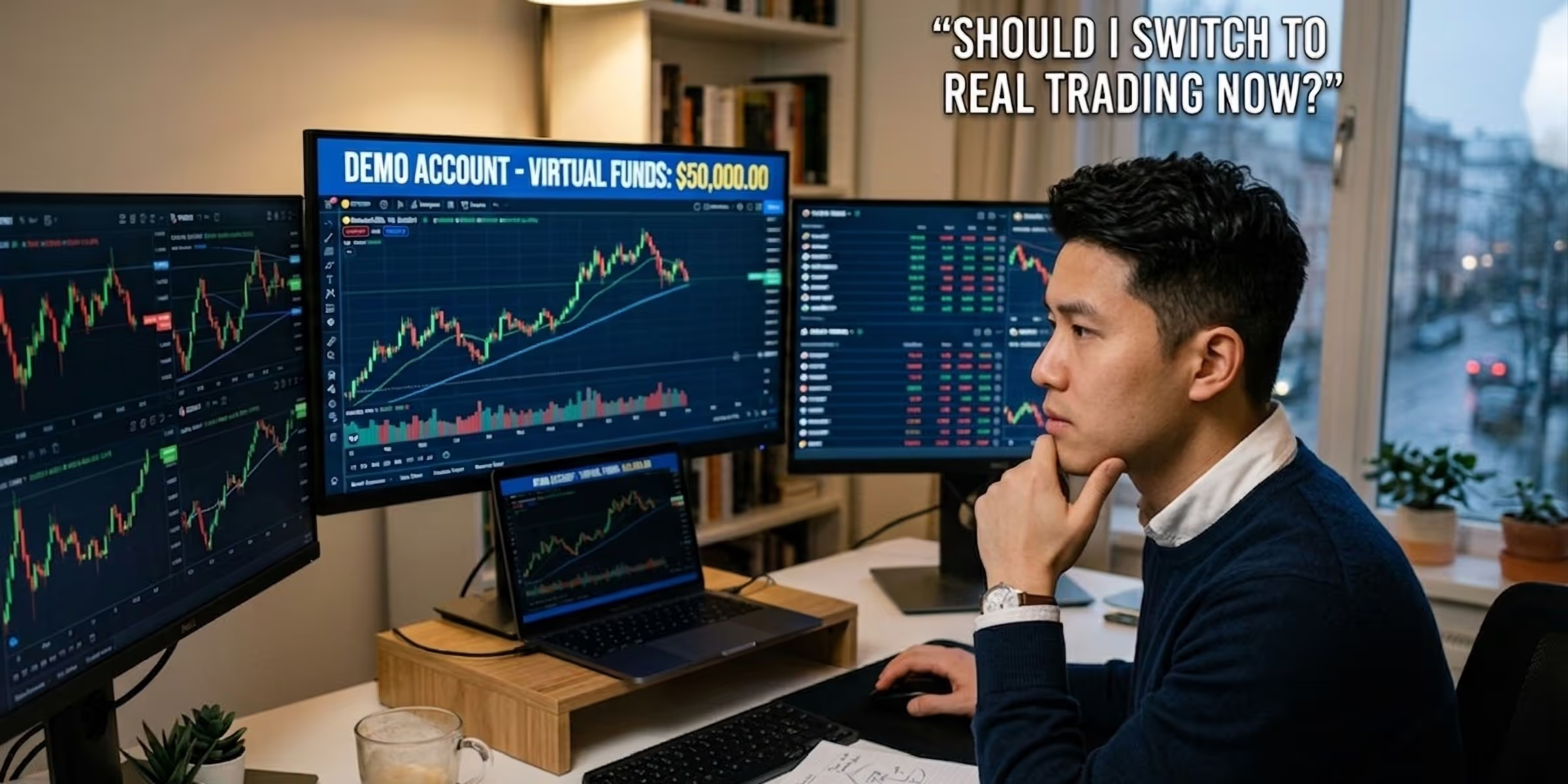
One of the most common questions beginner traders ask is how long it takes to become profitable. Many newcomers believe that once they learn a few tools, such as indicators, chart patterns, or basic technical analysis, they can quickly start generating consistent profits and even replace their primary source of income. In reality, the process is far more complex. Understanding the basics of trading is only the first step. Before consistent profits become possible, traders must develop practical experience, discipline, and the ability to operate under real market pressure.
Have you ever wondered why some market analysts can accurately predict price movements yet never become wealthy traders themselves? The reason is that analyzing markets and actually trading them require different skill sets. Effective trading requires decision-making amidst uncertainty, risk management, and emotional control. These skills can only be developed through hands-on experience in the markets. A similar situation can be observed in other professions.
For example, many professors who teach business and finance courses do not necessarily run successful companies themselves. While they may possess strong theoretical knowledge, running a business in a competitive environment requires practical skills that can only be developed through real-world experience.
Trading works in much the same way. Reading books and taking courses can provide valuable knowledge, but they cannot replace the lessons learned through actual trading. Because every trader’s background, resources, and learning curve are different, the time it takes to become profitable will vary from person to person. However, by answering a few key questions, you can begin to estimate how long the journey toward profitability may realistically take.
Did you receive proper trading education before you started trading?
This is the first and most important question to answer. Many beginner traders skip this step and only discover the consequences the hard way. Without proper knowledge, the markets will almost always take your money, and sometimes your entire trading capital.
At this stage, many beginners waste valuable time experimenting with random ideas and setups that rarely work. Instead of building a solid educational foundation, they jump straight into trading and hope to figure things out as they go. For some traders, this phase lasts a few months before reality sets in, but I have seen others remain stuck here for more than a year, constantly trying to prove that they are good enough to outsmart the markets.
The truth is simple: it is nearly impossible to learn how markets work by trading alone without research and study.
I learned this lesson very quickly. In 2010, I placed my first trade in the forex market without having any knowledge of how it actually worked. Within less than five minutes, I lost my entire $300 account. At the time, I had no idea that foreign exchange (forex) currencies were highly leveraged instruments. That mistake was enough to convince me that if I wanted to trade seriously, I first needed to study and understand the markets before risking real money again.
Almost every trader goes through a similar experience at least once. The speed at which you progress largely depends on how quickly you realize that education is not optional; it is essential. For someone who learns quickly and studies consistently, it typically takes about three to six months to develop a solid understanding of market fundamentals and trading concepts.
How well do you handle mistakes and being wrong?

The next major challenge is psychological, and this is where many traders struggle the most.
Many beginners approach trading with the mindset that they need to prove they are right. They try to predict what the market will do and then defend that prediction even when the market clearly moves in the opposite direction. Unfortunately, the market does not care about our opinions.
Markets dictate what happens next, not individual traders.
This psychological barrier prevents many people from improving because they resist admitting mistakes. Everyone naturally wants to be right, but successful traders understand that trading is not about proving intelligence or predicting the future. It is about reacting to what the market is actually doing.
Many traders repeatedly try to force their predictions on the market and end up losing money again and again. The moment you accept that the market is always right, and that your job is simply to follow price signals rather than fight them, trading becomes significantly easier.
Instead of trading based on personal bias, successful traders focus on objective market signals and strategies that move with the market rather than against it.
This realization can take months for some traders. Personally, it took me about two months of trial and error, and several losing trades, to fully understand this concept. Losses have a way of teaching powerful lessons. Human nature tends to avoid repeating mistakes that cause pain, and in trading, this learning process often happens through experience.
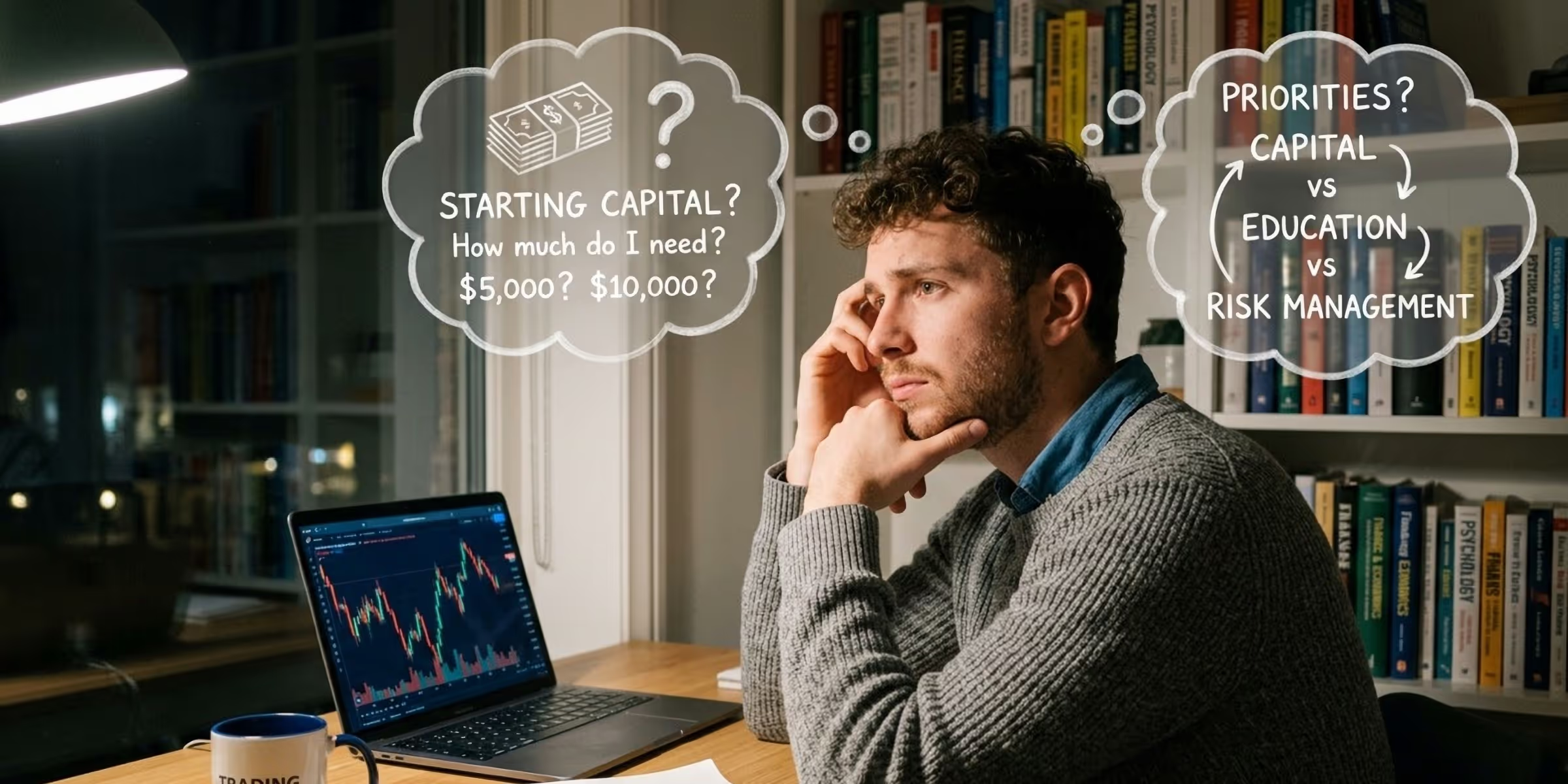
Do you have enough capital to trade your strategy properly?
Another factor that slows many traders down is a misunderstanding about capital requirements.
Many beginners believe that the goal is to make the largest possible profit with the smallest possible amount of money. While this idea sounds attractive, it often leads to failure. For a trading strategy to work properly, it must be supported by adequate capital.
Trading is similar to starting any other business. Every business requires a certain level of capital to operate effectively.
You may hear people claim that you can trade futures with only $1,000. Technically, this is possible because of leverage. In reality, however, this usually leads to losing that money very quickly. Leveraged instruments require room for mistakes, drawdowns, and losing trades. Without sufficient capital, even a good strategy can fail simply because the account cannot withstand normal market fluctuations.
Imagine driving an expensive car like a Mercedes S-Class. Would you use the cheapest generic oil for an oil change? Technically, you could, but it would likely damage the engine. The same principle applies to trading. Using insufficient capital may technically allow you to trade, but it often leads to disaster.
How quickly you can accumulate the necessary capital depends on your personal financial situation. However, the sooner you have the proper capital to support your strategy, the sooner you can begin progressing as a trader in a meaningful way.
Are you trading full-time or part-time?
Your time commitment also plays a role in how quickly you develop trading skills.
This factor depends largely on the trading style you choose. For example, day traders typically progress faster because they place many more trades and gain experience more quickly. A swing trader may place five or six trades per month, while an active day trader might execute twenty or more trades during the same period.
The difference in experience gained over time can be significant.
If trading becomes your full-time focus, your progress may accelerate even further. However, this approach requires careful financial planning. Ideally, traders should have enough savings to cover living expenses for at least six months. Without financial stability, the psychological pressure to make money quickly can lead to emotional decision-making and poor trades.
Because everyone’s situation and trading style are different, there is no universal timeline here.
Do you have a mentor, or are you learning alone?

Having a mentor can dramatically shorten the learning curve.
An experienced trader who can review your trades and provide professional feedback can help you identify mistakes much faster than you could on your own. If you have the opportunity to learn directly from a professional trader, it can significantly accelerate your progress toward profitability.
However, this is not always realistic. Professional traders rarely mentor others unless they are compensated generously for their time, and many beginners simply cannot afford such services.
As a result, most traders follow a different path: they invest in educational resources, learn the fundamentals, and then continue their development independently.
This is the route I personally took, and it is how many traders eventually learn. Progress may be slower without a mentor, but it is still entirely possible. It simply requires more dedication, discipline, and time.
Some traders choose to continue their education through advanced courses that provide ongoing support and feedback. This type of structured learning can help reinforce key concepts and reduce the likelihood of costly mistakes.
Do you have a trading business plan and a tested strategy?
One of the most critical factors that determines whether you will become profitable, and how quickly, is your trading plan.
Trading without a structured plan almost always leads to inconsistent results. A proper trading plan defines the strategy you will use, the market conditions you will trade, your risk management rules, and the criteria for entering and exiting positions.
Within that plan should be a strategy that has been tested and shown to produce positive results over time.
Markets tend to move in repeating patterns and cycles. Traders who understand these patterns and know when to apply their strategy can take advantage of these recurring opportunities.
Without a clear strategy and plan, traders often fall into an endless cycle of research, constantly searching for new ideas but never developing a system that truly works for them.
A well-designed trading plan serves as a roadmap. It guides decision-making and helps maintain consistency, which is essential for long-term profitability.
Why experience is the one factor that cannot be rushed

Even if you follow every step mentioned above, there is one factor that cannot be rushed: experience.
Once you have the education, strategy, and capital in place, the real journey begins. Skill in trading develops through repetition and exposure to different market conditions.
Think of learning to type on a keyboard. Even if you know where every key is located, it takes time and repetition before you can type quickly and accurately. Your muscles gradually develop memory through practice.
Trading works in a similar way.
You will make mistakes. You will break your own rules. You will experience losses and periods of frustration. There will be times when the market simply does not cooperate with your strategy.
These experiences are not signs of failure; they are part of the learning process.
Traders who have been in the markets for many years understand this well. Losses are simply a cost of doing business. In fact, professional traders can still be profitable even when many of their trades lose money.
For example, a trader could have three winning trades and seven losing trades out of ten and still be profitable, as long as the winning trades are larger than the losing ones. Once you begin to understand trading as a game of probabilities rather than being right or wrong, your perspective changes completely.
However, reaching this level of understanding requires time and experience.
Putting it all together
When all of these factors are considered together, a realistic timeline begins to emerge. If you follow the correct steps from the beginning, such as educating yourself before trading, studying market behavior, learning emotional discipline, developing a strategy, and building a good trading plan, you can reasonably expect the journey toward profitability to take about one year or a little less if you really put an effort to learn trading the right way.
When viewed from the perspective of starting a new business, this timeline becomes much more reasonable. Building any successful business requires time, effort, and consistent improvement.
Trading is no different.
When you approach it as a business rather than a shortcut to quick money, the path toward profitability becomes far easier and more achievable.
Topics
Trading Myths

Beginner Trading

Technical Analysis
Market Education

Risk Management