Trading Psychology
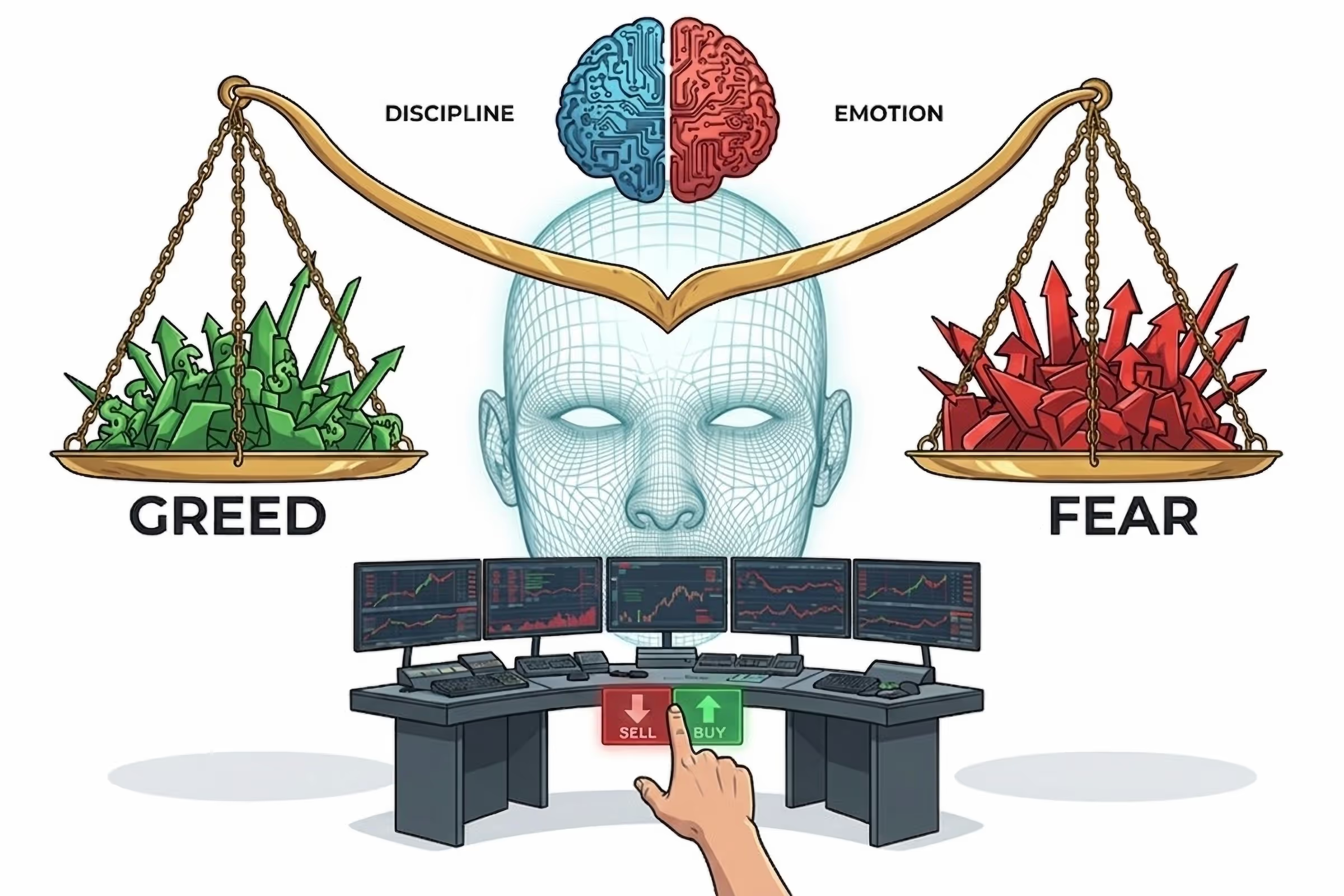
You can have the best strategy in the world — a proven system, solid risk management, a watchlist full of well-researched setups — and still lose money consistently. Not because the strategy doesn't work, but because of what happens between the moment you spot a trade and the moment you actually execute it. That gap, small as it sounds, is where most trading accounts quietly fall apart.
Trading is one of the few activities where your own mind is frequently your biggest opponent. The market doesn't know you exist. It doesn't care about your account balance, your streak of losses, or the fact that you really need this trade to work out. But your brain does — and it reacts to all of those things in ways that feel completely rational in the moment and look completely irrational in hindsight.
Fear makes you exit winners too early. Greed keeps you in losers too long. Overconfidence after a good run leads to oversized positions. Frustration after a loss leads to revenge trading. These aren't character flaws — they're deeply wired human responses to uncertainty and financial risk. Every trader experiences them. The ones who manage them well are the ones who survive.
That's what this section is about. The articles here dig into the mental and emotional side of trading — the patterns of thinking and behavior that quietly undermine performance even when the technical analysis is sound. We'll cover topics like discipline and consistency, how to handle losing streaks without unraveling, the dangers of emotional decision-making, building confidence without tipping into arrogance, and how to develop the kind of process-focused mindset that professionals rely on to stay steady when markets get chaotic.
The technical side of trading can be learned relatively quickly. The psychological side takes longer — because it requires you to recognize patterns in your own behavior, not just on a chart.
But once you get a handle on it, everything else improves. Your entries get cleaner, your exits get more disciplined, and the market becomes a lot less personal. That's when trading stops feeling like a battle against the market and starts feeling like a battle you can actually win.