Why Risk Management Is the Key to Trading Success


The Most Important Skill in Trading: Risk Management
Most beginner traders enter the market thinking success comes from finding the perfect strategy. They dedicate hours to finding the best indicators, chart patterns, or stocks to trade. Their main focus is usually on one thing: profit.
But experienced traders understand something much more important.
The most important skill in trading is not prediction. It is not chart patterns alone. It is not even a strategy by itself.
It is risk management.
Risk management is what determines whether you stay in the game long enough to survive, gain experience, and eventually become profitable. Without it, even a decent strategy can fail. With it, a trader has a much better chance of surviving the learning curve and building consistency over time.

This is one of the biggest differences between beginners and more disciplined traders. Beginners often ask, “How much can I make on this trade?” Professional traders ask, “How much can I lose if this trade goes wrong?”
This mindset changes everything.
In this article, we will look at why risk management matters so much in trading, why large losses are so difficult to recover from, and why protecting capital should always come before chasing profits.
Why Risk Management Matters More Than Most Beginners Realize
Trading is not just about finding opportunities. It is also about surviving mistakes.
That is important because mistakes are unavoidable in trading. Even strong setups fail. Even experienced traders take losses. No strategy produces winners all the time. The goal is not to eliminate losses completely. The goal is to control them so they do not destroy your account.
This is where many beginners get into trouble.
Instead of approaching trading as a business skill, they often approach it emotionally. They become excited by the possibility of fast gains, increase their position sizes too quickly, and take losses that are much larger than their account can comfortably handle.
The result is usually predictable.
One or two bad trades can erase a large portion of the account. After that, confidence drops, emotions take over, and decision-making gets worse. What started as a trading mistake quickly becomes a psychological problem.

That is why risk management is not just a technical topic. It is one of the foundations of long-term survival in this type of business.
If you do not protect your capital, you do not give yourself enough time to learn and have a chance at success. If you’re a beginner experiencing similar challenges, consider reading my article “Steps Beginners Should Take to Learn Trading.”
Trading Survival Comes Before Trading Success
Many people underestimate how important survival is in trading.
They assume success comes from being right most of the time. In reality, success often starts with simply staying active long enough to improve. Traders need time to make mistakes, review them, adjust, and gain experience. That process cannot happen if the account is heavily damaged early on.
This is why proper risk control is mandatory. It gives traders room to develop.
A trader who protects capital can continue learning through real market experience. A trader who takes oversized losses often runs out of capital before they ever build real skill.
That is one reason smart traders think defensively first. They do not enter trades, asking only how much they can make. They also evaluate what happens if the setup fails.
This is the attitude that separates professional trading from gambling.
Why Large Losses Are So Dangerous
Large losses create two major problems simultaneously.
The first problem is mathematical.
When an account takes a big hit, the recovery becomes harder than many beginners expect. A trader who loses a meaningful portion of capital now has less money working for them, which means they need a larger percentage gain just to get back to where they started.
The 1% Rule for Trading
Here is the number one rule you must follow every time you open a position, regardless of whether you’re buying or selling: Your maximum allowed loss per trade should never exceed 1% of your total capital.
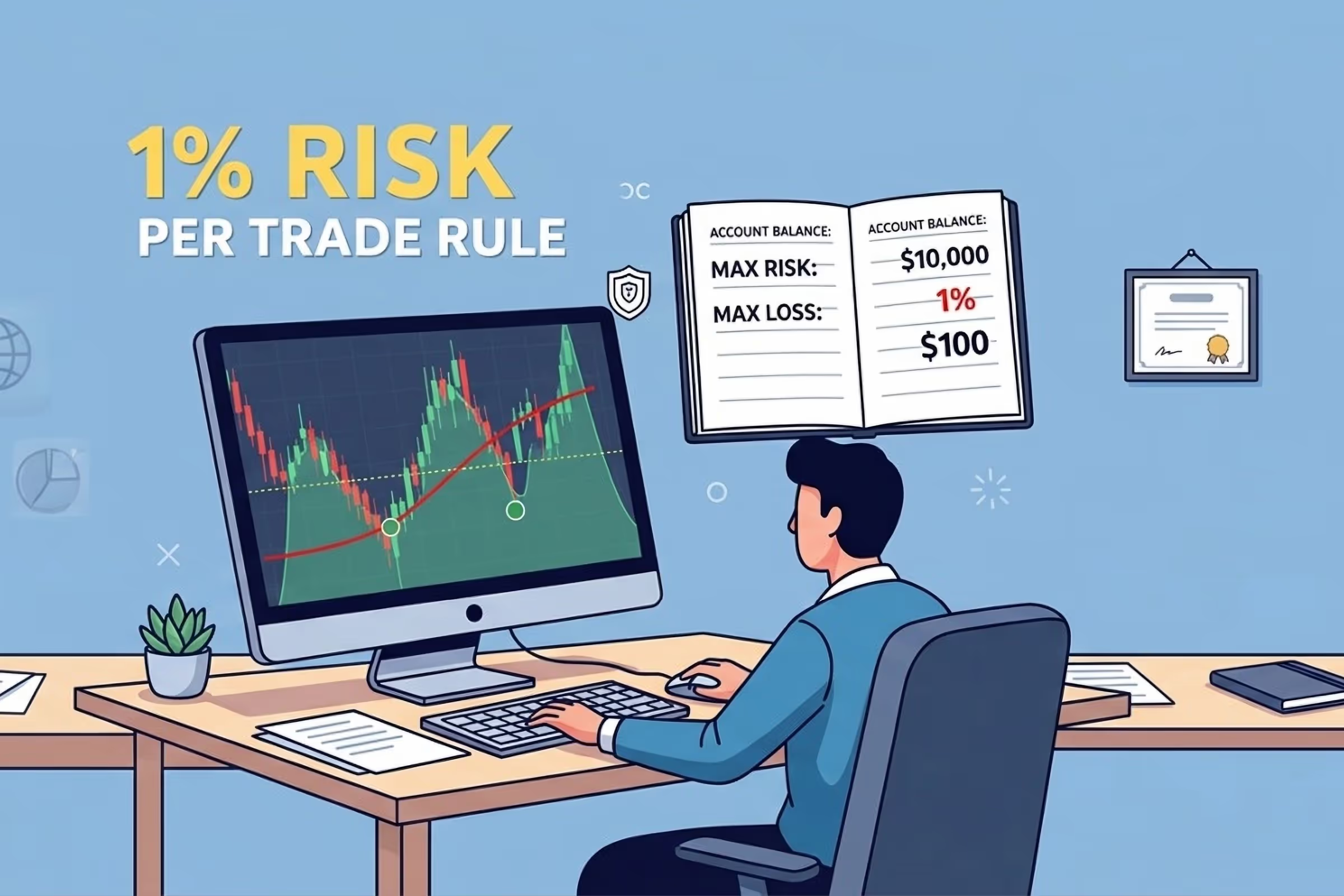
This applies to all trading styles, including day trading and swing trading. Think of it as a universal rule every trader must follow because your long-term profitability depends on it.
If you’re a trader with a good amount of experience, risking 2% is still acceptable, but it increases risk, so you must be more selective with your setups.
A common question beginners ask is: “How many trades can I have open at the same time without exceeding my total risk limit?”
To answer this, you need to understand why the 1% rule exists in the first place. It is based on simple math. The main idea here is that the larger your loss, the harder it becomes to recover. Let’s look at an example and see why this is the case:
Example 1 - Losing 20%
Starting capital: $100,000
Lose 20% → you now have $80,000
To return to $100,000:
- You need to gain $20,000
- $20,000 / $80,000 = 25% gain needed
If you start with $100,000 and lose 20%, your account drops to $80,000. To get back to $100,000, you now need to make $20,000 in profit. But since you're growing that $20,000 from a smaller account balance, it takes a 25% gain, not 20%, to recover. This is why bouncing back from losses is harder than it seems. The more you lose, the harder your account has to work just to return to where you started.
Here’s another example to think about what happens when you lose half of your capital.
Example 2 - Losing 50%
Starting capital: $100,000
Lose 50% → you now have $50,000
To return to $100,000:
- You must double your money
- That’s a 100% gain
A 50% loss requires a 100% gain to break even.
If you start with $100,000 and lose 50%, your account drops to $50,000. To get back to your original $100,000, you now need to double your money, which means achieving a 100% gain. For most traders, reaching that level of return in a short period of time is extremely difficult. The industry's average annual return is around 10%, roughly in line with the long-term performance of the S&P 500. If you can consistently match or exceed that benchmark, you are already doing very well. Now imagine how long it would realistically take to recover a 100% loss at this pace.
This is why large losses are so dangerous; they become increasingly hard to recover from. The 1% rule exists specifically to prevent this from happening.
Now, let's return to the question: how many trades can you hold at once while remaining within your overall risk limit?
There are two methods we can use to answer this question.
Method 1 – Only one trade at a time.
This is the simplest approach. You risk your full 1% on one single position.
Many traders using this approach focus on major ETFs like SPY, which represent the entire market.
The advantage is simplicity:
- If the market goes up, SPY tends to go up
- If the market goes down, SPY tends to go down
- You avoid the extra risk of individual stocks
But there is one drawback:
You may miss better opportunities because you’re limited to just one position.
Method 2 – Multiple trades while still staying within the 1% rule.
For example:
If your total 1% risk is $500, you can divide it across multiple trades.
You can take five trades, each risking $100. Even if all five stop out, you still only lose 1% total. This method gives you more flexibility and more opportunities without increasing total account risk.
The second problem is emotional.
Large losses often lead to frustration, fear, hesitation, and revenge trading. Instead of following a clear process, traders start trying to “make the money back.” That usually leads to poor decisions, further losses, and a cycle that becomes difficult to break.
This is why protecting against large drawdowns is so important.
Small losses are manageable. Large losses can change both your account balance and your mental state.
And once emotions start controlling decisions, trading usually becomes much more dangerous.
Why Small, Controlled Losses Are Healthier
No trader enjoys taking losses, but small losses are a normal cost of doing business in the market.
That is how experienced traders view them.
A controlled loss does not mean failure. It simply means the trade did not work. The trader followed a plan, accepted the outcome, and moved on to the next opportunity.
This is a much healthier approach than taking one oversized loss that damages confidence and leads to emotional trading.
Small losses are easier to handle because they allow you to remain objective. You can review what happened, learn from it, and continue trading with a clear mind.
That ability to stay emotionally stable is extremely important.
Trading is a performance skill. And like any performance skill, emotional control has a huge effect on results.
Risk Management Helps You Stay Disciplined
One of the biggest hidden benefits of risk management is that it improves discipline. When traders know in advance that they are only exposing a small, controlled amount of capital, it becomes easier to follow a plan. There is less fear, less panic, and less temptation to make impulsive decisions during the trade.
Without risk control, everything feels heavier.
Every price movement feels personal. Every loss feels painful. Every position feels like a threat to the account. Strategy hopping and the constant search for new trading systems from random sources can become a habit, only prolonging the stress.
That kind of pressure makes discipline much harder.
But when risk is calculated, traders can think more clearly. They are more likely to respect stop levels, avoid emotional decisions, and follow the strategy as intended.

In other words, risk management supports good behavior. And in trading, good behavior matters just as much as good analysis.
Why Risk Management Gives Beginners More Time to Improve
Becoming a better trader requires repetition. You need enough trades to identify patterns in your own behavior. You need enough experience to notice which setups fit your style, which mistakes keep repeating, and where your discipline starts to break down.
That takes time.
A proper risk management gives you that time.
If each loss is controlled, you can continue to gather experience without destroying your account. You can review your trades, improve your planning, and gradually build trust in your strategy through repetition.
This is one reason beginner traders should take risk management seriously from the start. It is not just about avoiding disaster. It is about creating a learning environment where improvement is actually possible.
If your early losses are too large, the learning process gets cut short. If you notice large losses starting to accumulate, it’s often best to switch to a demo account and continue trading with paper money for a while. This allows you to identify the problem and work on fixing it without risking additional capital. One of my articles that discusses the pros and cons of using demo accounts may be helpful if you find yourself in this situation.
Risk Management and Reward Must Work Together
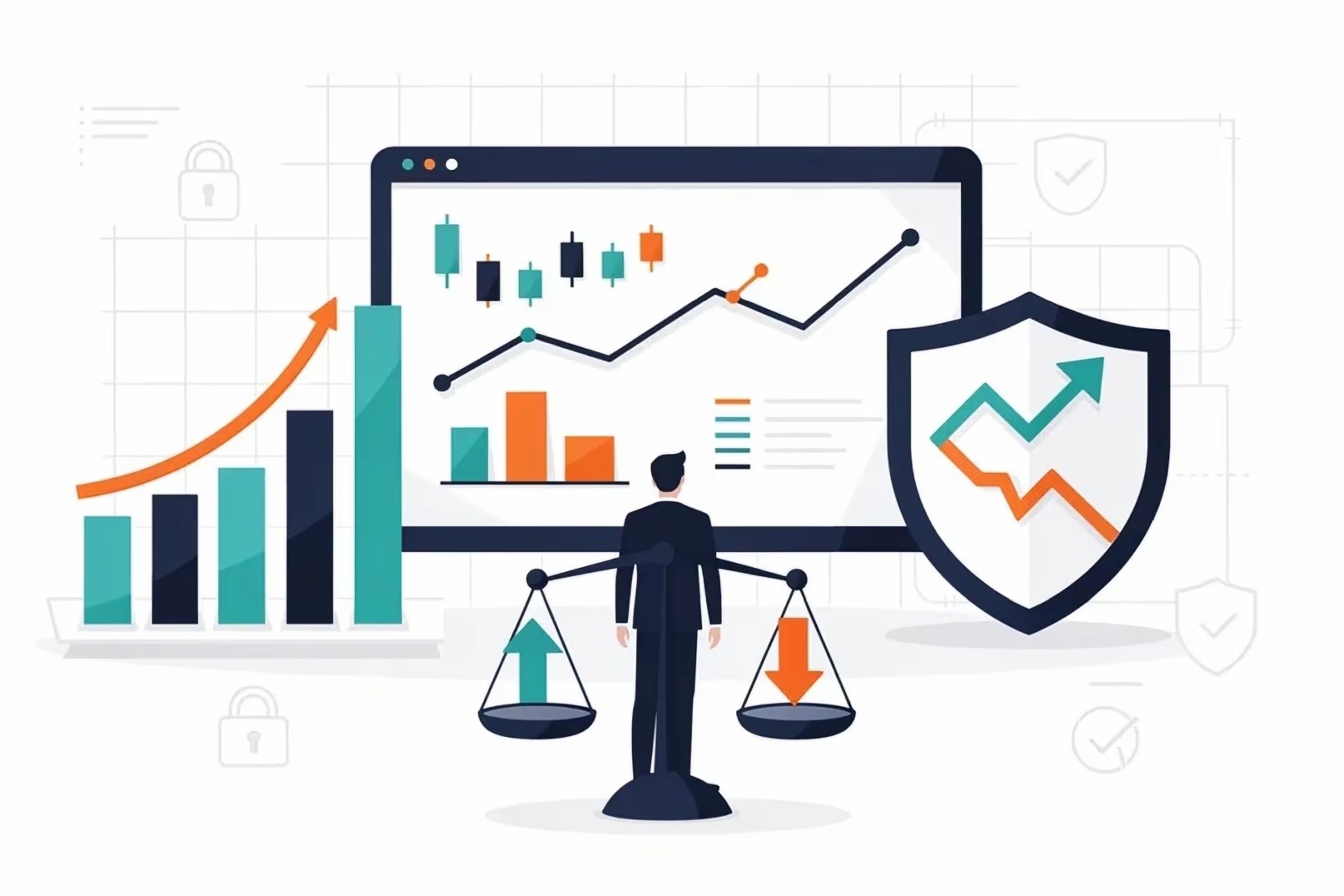
Good trading is not only about limiting losses. It is also about ensuring the potential reward justifies the risk taken.
This is where traders start thinking more professionally.
Before opening a position, a trader should understand where the setup becomes invalid and where profits can reasonably be taken if it works. That planning helps create structure and prevents random decision-making after the trade is already open.
This relationship between potential loss and potential gain is one of the most important ideas in trading.
It teaches traders that they do not need to win every trade to perform well over time. It is important to enter trades where the potential profit per trade, based on high probability, exceeds potential losses while also controlling total risk.

This concept is a key element of professional trade planning, yet many beginners fail to grasp it early in their learning journey. That’s exactly why I wrote this article - to help beginners grasp it from the start, and I’ll continue exploring it in greater depth in future related pieces.
Trading Is a Business - Not Gambling or a Search for Excitement
One of the best mindset shifts a new trader can make is to stop viewing trading as a hobby or as something that might bring money if lucky.
Trading should not be approached like a thrill-seeking activity. It should be approached like a business activity.
Businesses survive by controlling costs, managing risks, and operating with proper planning. Traders should think the same way.
That means planning trades in advance, defining risk before entry, and understanding that capital protection is part of the job. It also means accepting that not every day will produce a trade and not every trade will produce a profit.
This mindset can feel less exciting at first, but it leads to much better habits.
The goal is not to seek constant action in the markets. The goal is to make good decisions regardless of market conditions. If you’re interested, I cover some of these topics in my article “Why 90% of Traders Fail, It's not what you think,” where I explain the common mistakes traders make and how to avoid them.
Why So Many Traders Still Ignore Risk Management
Even though risk management is essential, many beginners still overlook it.
Part of the reason is psychological. Profit is exciting. Protection is not.
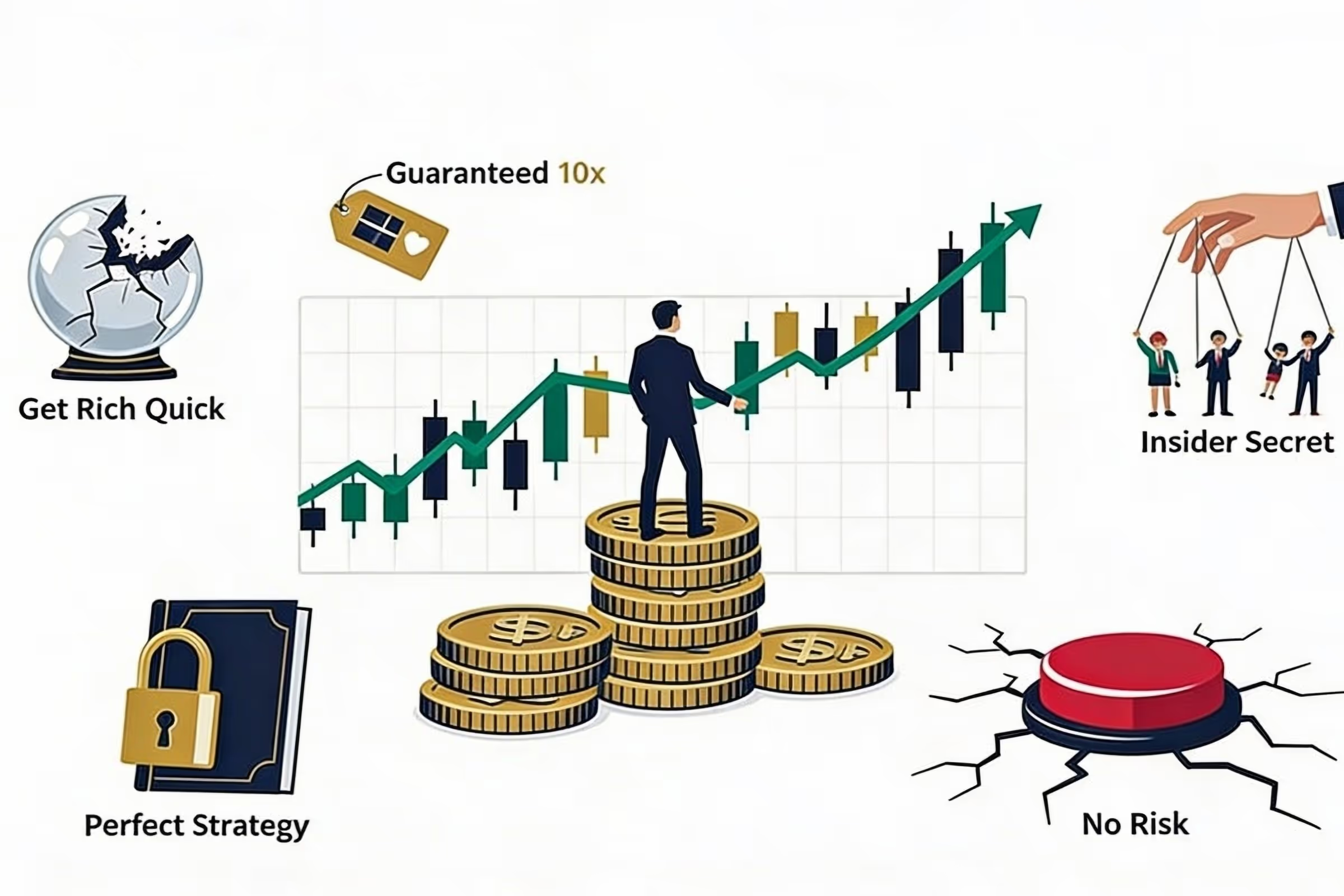
Another reason is social media. Traders are constantly exposed to screenshots of big gains, fast wins, and exciting trades. What they do not usually see is the level of risk behind those trades, or the losses that often come with that style of behavior.
This creates unrealistic expectations and gives the illusion that trading is both easy and always profitable.
Risk management can also feel less interesting than strategies, indicators, or chart patterns. But the truth is simple: strategy without risk control is incomplete.
A trader can have a good setup and still fail if losses are not controlled properly.
That is why professionals treat risk management as a requirement, not as an optional extra.
Final Thoughts:
If there is one lesson every new trader should understand early, it is this:
Protect your capital first.
Without capital, there is no next trade. Without protection, there is no consistency. And without consistency, there is no real path toward long-term profitability.
Topics
Trading Myths

Beginner Trading

Technical Analysis
Market Education
Risk Management