The Myth of a Perfect Trading Strategy


Why Traders Believe a Perfect Strategy Exists
One of the most common misconceptions beginner traders develop when they first start learning about the markets is the belief that there is a single perfect strategy that guarantees success. Many newcomers assume that if they simply discover the right system, one reliable method for entering and exiting trades, they will eventually become consistently profitable.
This belief is extremely widespread. In fact, most traders go through this stage early in their learning journey. At that point, they simply do not yet have enough experience or reliable information to understand how markets operate. I experienced this myself when I first started trading. Like many others, I believed that success depended on finding the one strategy that would work in every market environment.
Honestly, I cannot really blame people for falling into this trap. In most professions, mastering a skill usually leads to predictable outcomes. If you study a profession, practice the techniques, and gain experience, success typically follows.
Consider learning how to drive a truck. You go to a driving school, learn how to operate the vehicle, study road rules, and practice until you pass the licensing exam. Once you are certified, you can begin working and earning a living. With enough practice and experience, you are very likely to succeed in that profession.
Many people approach trading with the same expectation. They believe that if they learn one good strategy and apply it consistently, profitability will eventually follow.
However, trading is fundamentally different from most other professions, and failing to understand this difference can cause many traders to struggle or ultimately fail. If you are interested in learning more about this topic and discovering other reasons traders struggle, I recommend reading my article “Why 90% of Traders Fail.”
Financial markets are not controlled environments where the same inputs always produce the same outputs. Instead, markets consist of millions of participants, including individual investors, institutions, hedge funds, governments, and algorithms, all acting based on different motivations and information. Prices constantly shift due to changing expectations, economic conditions, and human emotions such as fear and greed.
Because of this complexity, no single strategy can work in all market environments.
If a trader attempts to use the exact same system across all market conditions, it may perform well during certain periods when conditions align with their strategy. But when the environment changes, that same strategy can suddenly become ineffective.
This is why experienced traders eventually learn an important lesson: long-term success requires adaptability. Instead of relying on a single perfect system, traders must develop multiple strategies designed for different market conditions.
Markets Are Random in the Short Term
What often happens is that a trader spends weeks or months studying charts and experimenting with different approaches until they finally discover a strategy that appears to work very well. Perhaps the strategy performs beautifully during a strong bull market, producing a series of successful trades.
At that moment, the trader often believes they have finally discovered the “secret” to trading.
But markets rarely remain the same for long.
Eventually, conditions change. A trend slows down, volatility increases, or the overall market direction shifts or becomes uncertain.

When this happens, the once-profitable strategy may suddenly begin producing losing trades.
Instead of recognizing that the environment has changed, many traders assume the strategy itself has failed. They begin to doubt their system and search for a new one.
This behavior is known as strategy hopping, and it can be extremely damaging. Constantly switching strategies prevents traders from gaining the experience necessary to properly evaluate their approach. It also creates emotional stress and inconsistency. Often, because of this stress traders start searching for new strategies and systems online, hoping to quickly find a solution. However, constantly jumping from one idea to another can be harmful. I discuss the risks of this behavior in more detail in my article on the dangers of following random trading advice.
Many traders experience this cycle repeatedly. They discover a strategy, believe it works, then abandon it when the market changes.
One reason this happens is that markets, especially on shorter timeframes, often behave randomly. Prices do not always move in ways that seem logical or predictable.
For example, during the long bull market that followed the 2008 financial crisis, markets became highly sensitive to interest rate expectations. In many cases, strong economic data caused markets to fall rather than rise. Good economic news increased the likelihood that central banks might raise interest rates, which investors interpreted negatively.
This kind of counterintuitive behavior can create confusing price movements.
Another example of unpredictability occurs when political events influence markets. Statements by government officials, unexpected geopolitical developments, or sudden policy changes can move markets sharply within minutes.
In highly uncertain environments, such as geopolitical conflicts or economic crises, market behavior is often influenced more by traders’ emotions than by purely rational analysis. Price swings can become extremely volatile and chaotic.
These unpredictable movements reinforce an important point: markets are not perfectly orderly systems. Short-term randomness is an unavoidable part of trading.
Every Strategy Experiences Losing Streaks
Because markets constantly shift, every strategy, no matter how well designed, will eventually experience losing streaks.
Professional traders understand this very well.
Instead of expecting a system to work in all situations, experienced traders learn to recognize different types of market environments and adjust their strategies accordingly.
For example, buying stocks during pullbacks can be a highly effective strategy during a strong uptrend. When the market is rising consistently, temporary declines often create opportunities to buy at lower prices before the trend continues.
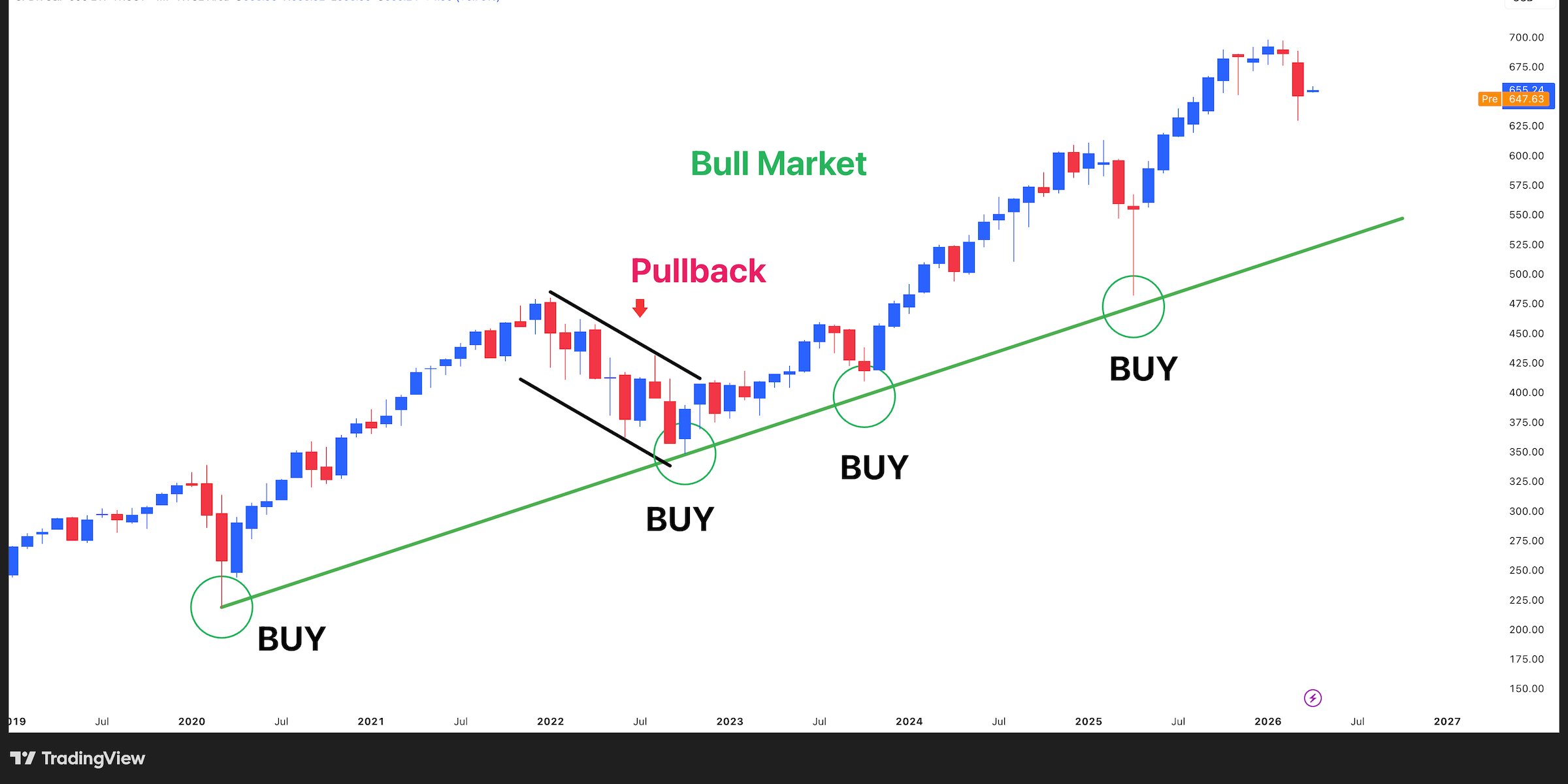
However, once a bull market weakens and a downtrend emerges, that same strategy can quickly become dangerous. Buying dips in a falling market often leads to repeated losses.
In that environment, the more appropriate strategy might be to sell rallies or short overextended price moves.

Personally, I rely on three broad types of strategies, each designed for a specific market condition:
- Trend-following bullish strategies for uptrends
- Short-selling strategies for downtrends
- Range trading strategies for sideways markets
Each of these strategies is designed to work best within a particular environment. When conditions change, the strategy must change as well.
Traders who have spent years studying the markets often develop the ability to recognize these shifts relatively quickly. They understand that losing streaks do not always mean a strategy is flawed. Sometimes the losses simply reflect a change in the market environment.
When a strategy stops working, it is important to ask an important question:
Has the market environment changed?
If the answer is yes, the correct response may not be to abandon the strategy altogether, but to switch to another approach better suited to current conditions.
The Real Goal: Positive Expectancy
Many beginner traders focus on finding a strategy that produces winning trades nearly all the time. In reality, this is not how successful trading works.
Professional traders think in terms of probability and expectancy.
A profitable strategy does not need to win every trade. Instead, it must generate a positive average outcome over many trades.
For example, a strategy might win only 50–55% of the time but still produce consistent profits if the winning trades are larger than the losing ones.
This concept is known as positive expectancy.
The goal of trading is not perfection. The goal is to develop a system where the average outcome across many trades is positive.
Once traders understand this concept, their perspective changes dramatically. Instead of obsessing over individual trades, they begin focusing on the long-term performance of their strategy.
Losses become a normal and expected part of the process rather than a sign that something is wrong.
Why Perfection Fails, and Adaptability Matters More
Experienced traders eventually learn that searching for a perfect system is not only unrealistic but also counterproductive.
Markets are constantly evolving. Economic cycles shift, technological innovations change trading dynamics, and investor sentiment fluctuates.
A strategy that works well today may become less effective tomorrow.
Traders who insist on finding a perfect system often become rigid in their thinking. They become emotionally attached to a specific approach and struggle to adapt when conditions change.
A helpful way to understand this concept is by comparing trading to two well-known games: chess and poker.
Chess is a game of pure strategy and skill. Every move can be calculated based on logic and planning. If a player consistently makes better moves than their opponent, they will almost always win.
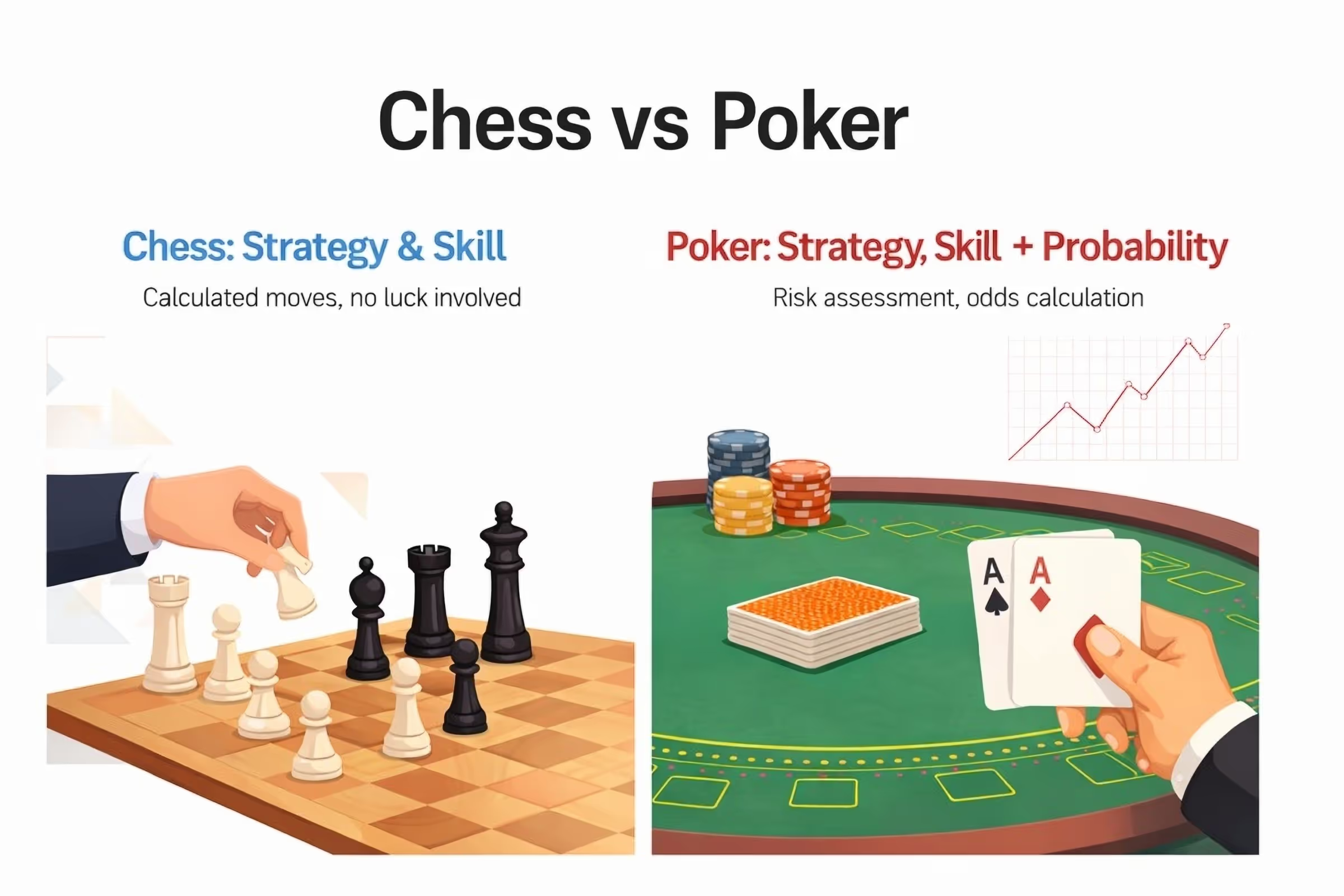
Poker, however, operates differently. Skill and knowledge still matter, but outcomes are influenced by probability and uncertainty. Even the best players occasionally lose hands because chance and calculating probability play a big role.
Trading is far more similar to poker than chess.
Successful traders focus on identifying situations where the probabilities are in their favor. They do not try to predict every price movement perfectly. Instead, they wait for favorable conditions and act when the odds appear advantageous.
In other words, trading is not about being the smartest person in the market or predicting every reversal. It is about positioning yourself in situations where the potential reward outweighs the risk.
Your entry does not need to be perfect. Your exit does not need to capture every last dollar of a move.
What matters most is staying aligned with the overall market direction and managing risk effectively.
The Real Edge: Discipline and Risk Control
One of the most difficult things in trading is predicting when a long trend will finally reverse.
Many traders attempt to identify the exact top of a bull market or the precise bottom of a bear market. Unfortunately, this approach often leads to large losses.
Trying to fight a strong trend can be extremely dangerous. Markets frequently continue trending far longer than most traders expect.
Instead of attempting to predict reversals, experienced traders often wait for confirmation.
Confirmation signals may include changes in market structure, momentum indicators, or price patterns that suggest a genuine shift in direction.
Waiting for confirmation has two important advantages.
First, it helps protect capital by avoiding premature trades. Second, it reduces emotional stress by removing the pressure to perfectly predict market turning points.
Discipline plays a critical role here.
Even when a trader has a well-designed strategy, success ultimately depends on the ability to follow that strategy consistently. This includes respecting stop losses, controlling position sizes, and accepting losses when they occur. These principles are closely tied to proper risk management, which i discuss in more detail in the article “Why Proper Risk Management Is the Key to Trading Success.”
Proper risk management, rather than prediction, is often the true edge in trading.
What a Realistic Trading System Looks Like
A realistic and good trading system is built on the assumption that markets are uncertain.
Instead of trying to predict every movement, the goal is to identify the current market environment and apply the appropriate strategy.
At a minimum, a comprehensive trading system should account for three major market conditions:
- Uptrends
- Downtrends
- Sideways markets
Each environment requires different tactics.
A well-structured system should also address how to handle periods of extreme volatility.
For example, during events such as financial crises or sudden economic shocks, markets may move dramatically within very short periods of time.
A good example of this is the bursting of the dot-com bubble in the early 2000s, when technology stocks and the broader market declined sharply. Many once-promising companies lost most of their value, and the collapse caused significant damage to the overall economy. Traders who were unprepared for such a dramatic shift in market conditions often suffered heavy losses, and some even lost their entire trading capital.
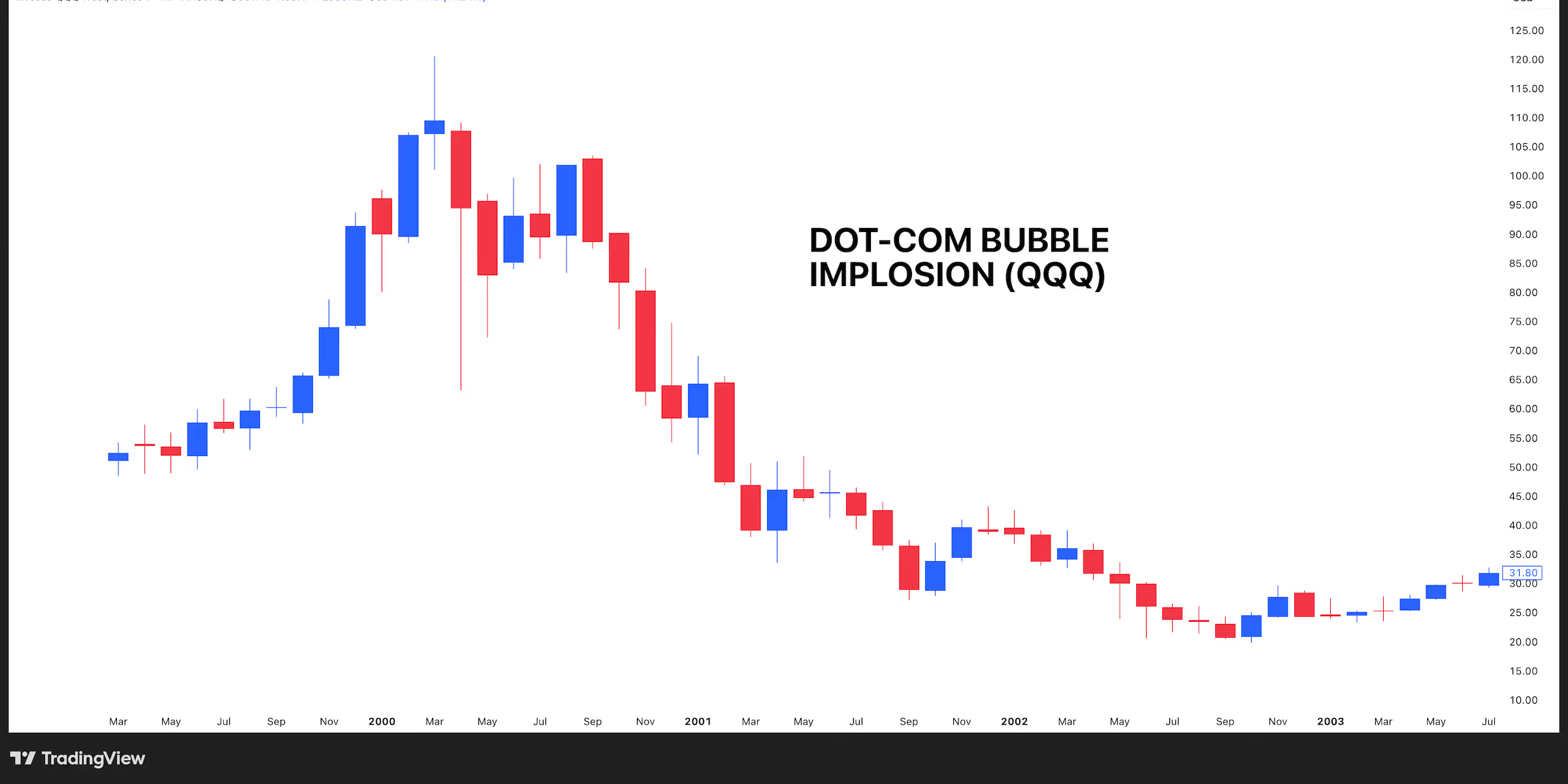
Events like this highlight the importance of having a well-defined trading plan. Traders should decide in advance how they will respond during extreme market conditions—whether that means continuing to trade with adjusted strategies or temporarily stepping aside until markets stabilize.
These decisions should be part of a carefully planned strategy rather than emotional reactions. A major part of this planning is technical analysis, which I explain in more detail in my article “How Should You Analyze Charts?”
Developing such a system takes time, experience, and continuous refinement
Final Thoughts: Stop Looking for a Perfect Strategy
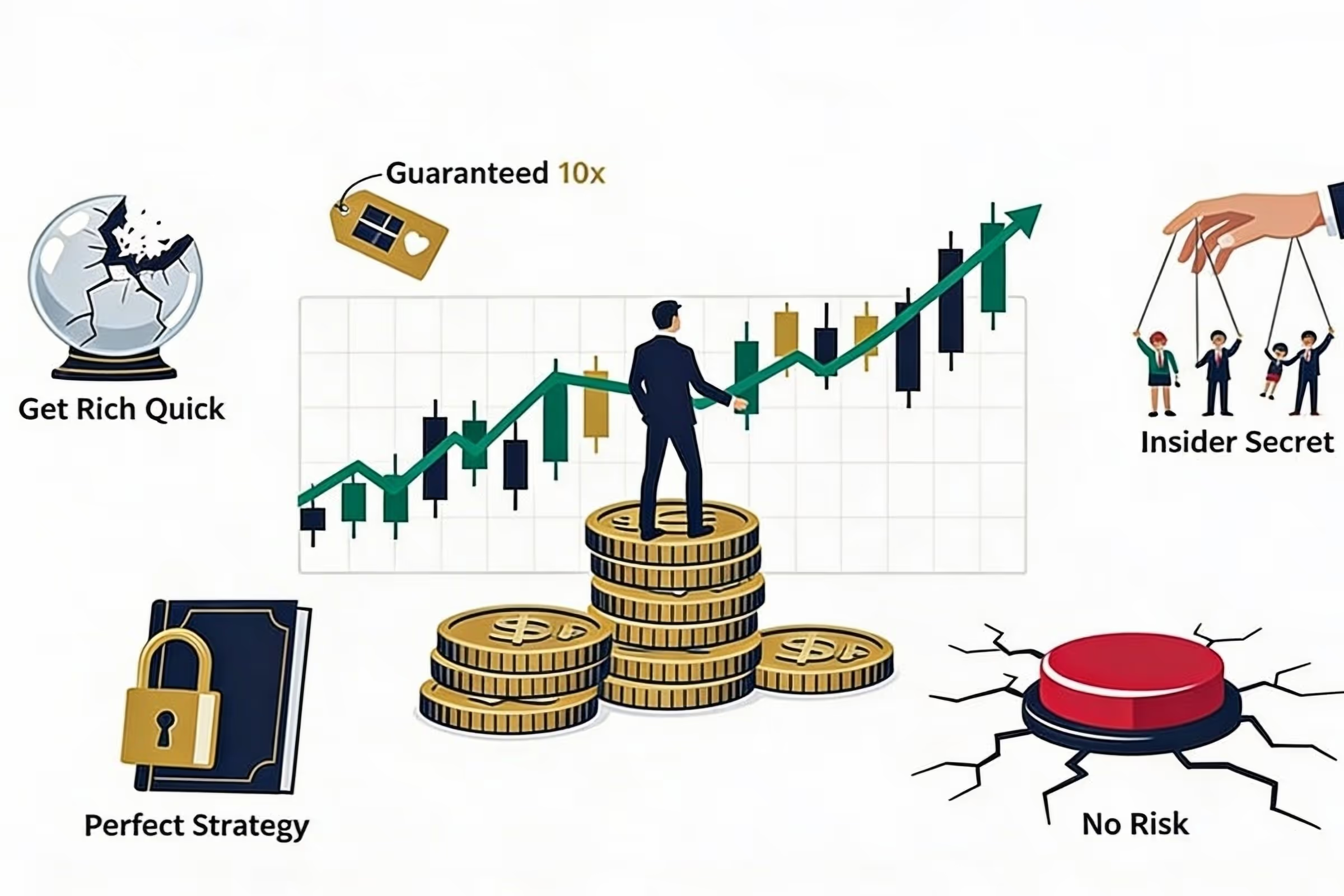
The idea that there is one perfect trading strategy is one of the most persistent myths in the trading world.
In reality, markets are complex systems influenced by countless variables, including economic conditions, political events, investor psychology, and global news.
Because of this complexity, no strategy can perform perfectly in every situation.
Successful traders do not search for perfection. Instead, they develop adaptable systems that allow them to respond to changing market conditions.
They understand that losses are inevitable, uncertainty is unavoidable, and flexibility is essential.
If you stop searching for the perfect strategy and begin focusing on probability, risk management, and adaptability, you will already be thinking more like a professional trader.
And in the long run, that mindset makes all the difference.
Topics
Trading Myths

Beginner Trading

Technical Analysis
Market Education

Risk Management