How Should You Analyze Charts?

Technical vs Fundamental Analysis: What’s the Difference?
One of the first questions I asked myself when I started learning about market analysis was which type of analysis to use if I ever wanted to learn to read charts. At that time, I considered myself slightly more advanced than many beginners because I at least knew I needed to learn technical analysis. I had heard that learning this type of analysis was the way to go, and, as it turned out, I was right.
In this post, I want to save you time by explaining what technical analysis is all about and how learning this method can help you move ahead much faster in your trading journey. Many beginner traders spend months or even years trying to figure out where they should start, and they often end up overwhelmed by the amount of information available online.
When I first started learning about trading, I was confused about whether I should learn fundamental analysis at all. It seemed to me that fundamental analysis required an accounting or finance degree because you need to understand financial statements, balance sheets, company reports, and other complex financial documents to identify which stocks are worth buying or selling.
At the time, it seemed logical that if you wanted to invest in a company, you should understand its financial health. Many long-term investors still rely heavily on fundamental analysis to determine whether a company is undervalued or overvalued.
However, after spending more time studying markets and observing how prices move, I realized something that completely changed my perspective.
Markets are not driven purely by numbers or financial reports. They are heavily influenced by human psychology and emotion.
Fear, greed, optimism, panic, and speculation can move markets dramatically, regardless of a company's fundamentals. For example, a stock from a financially healthy company can drop sharply simply because investors panic amid uncertain economic conditions.
Once I realized this, I began asking myself an important question:
How can I rely solely on fundamental analysis if emotions and mass psychology can move prices suddenly and dramatically?
I needed an analysis that let me see what was happening in real time. I needed a method that would show me how the market was reacting in the present rather than relying solely on financial reports or economic predictions.
Technical analysis became the answer to this dilemma.
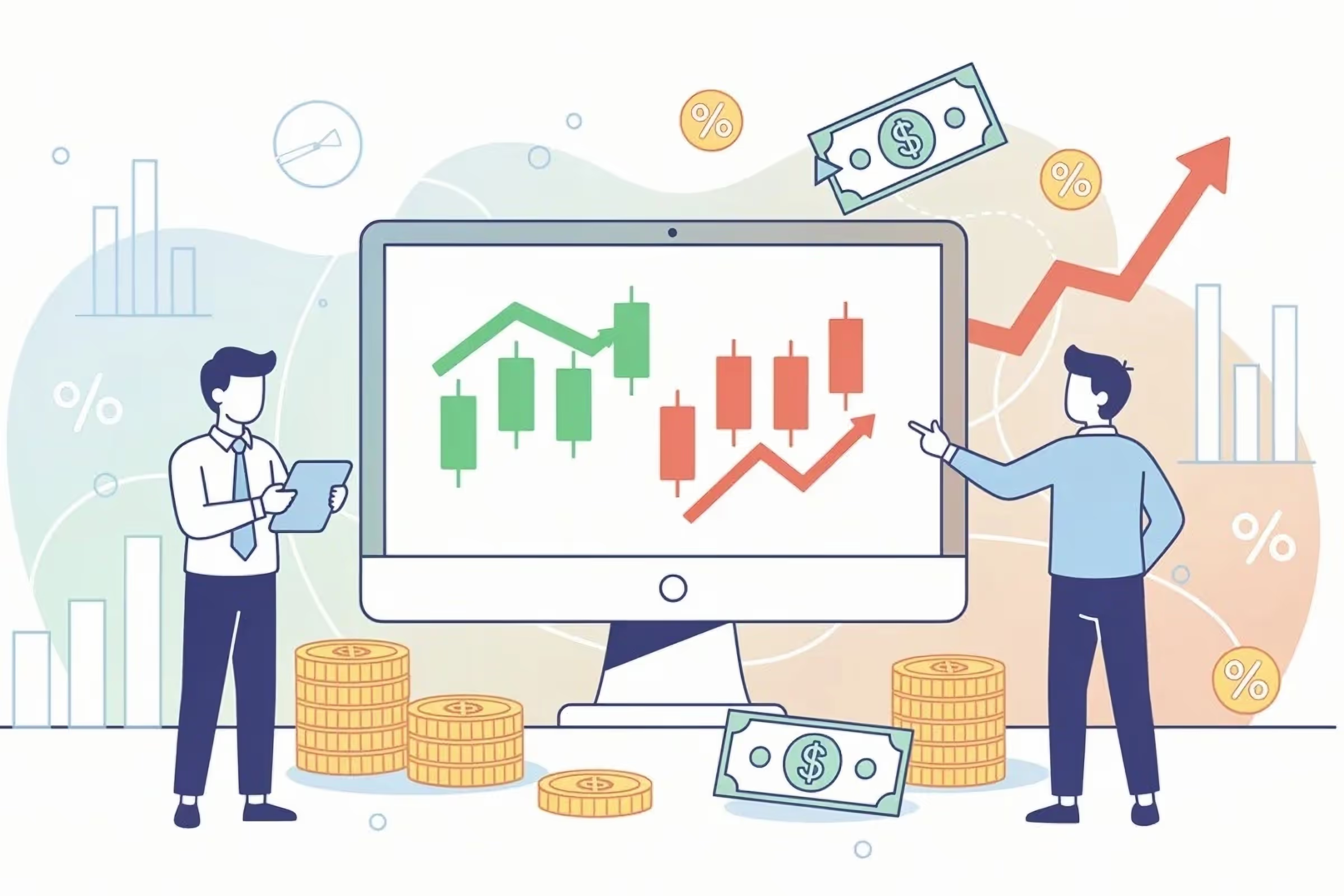
While fundamental analysis focuses on financial data and company performance, technical analysis focuses on price movement displayed on charts. These charts provide real-time information about what traders and investors are actually doing in the market.
Why Many Traders Rely on Technical Analysis
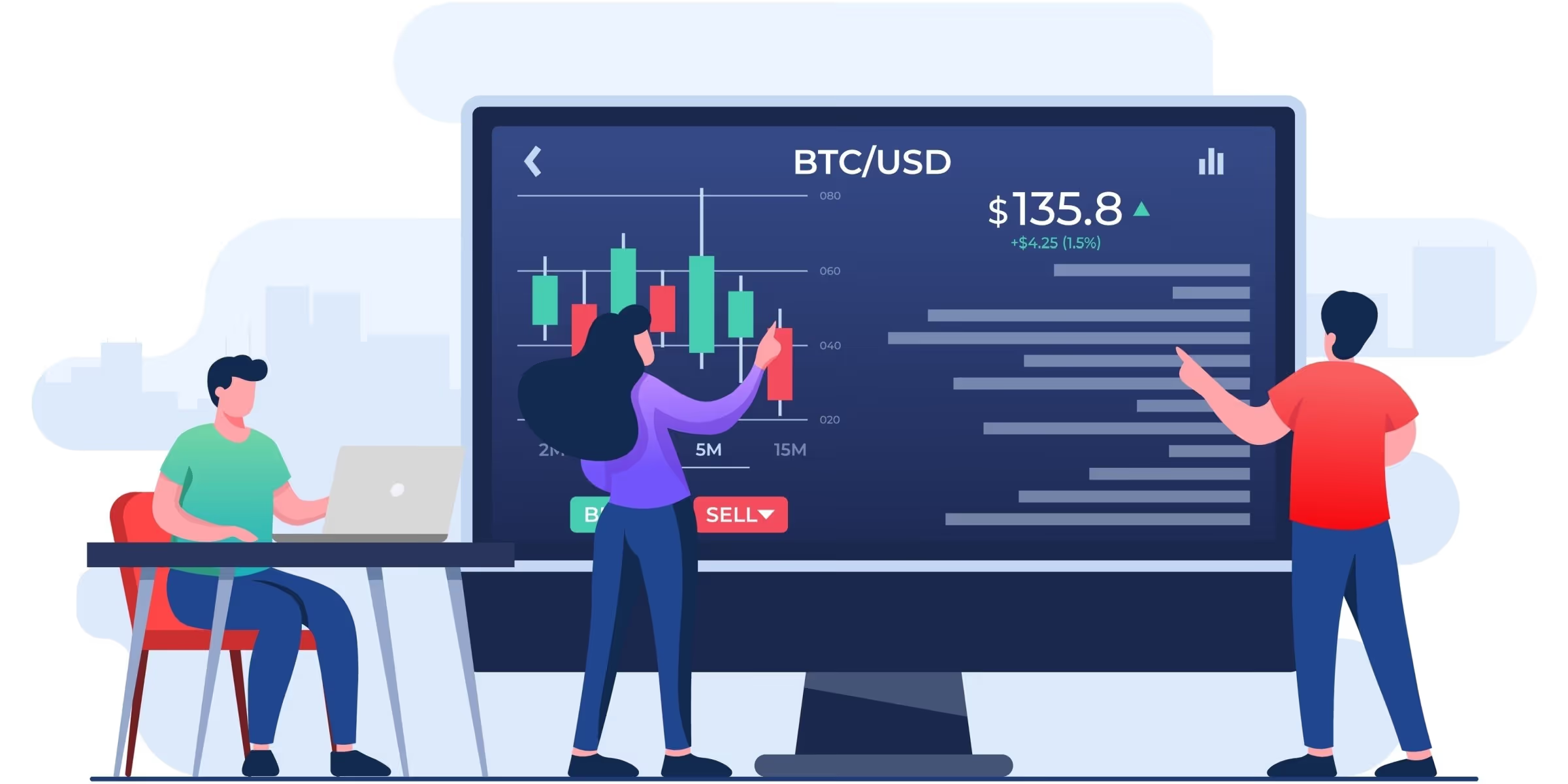
This is one of the main reasons many traders rely on technical analysis: it provides real-time price data.
Price charts reflect the actual activity of buyers and sellers in the market. They allow traders to see how prices are behaving at any given moment and help them identify trends, patterns, and possible turning points.
Charts provide immediate feedback about market behavior, which is extremely valuable when making trading decisions.
Another important advantage of technical analysis is that it removes much of the noise created by financial media, analysts, and rumors circulating online.
When you watch markets through price charts long enough, you eventually realize that the information presented on financial news websites is often already outdated by the time it reaches the public.
Markets tend to move before the news becomes widely known.
Many beginner traders lose money by simply following others' opinions rather than developing their own analysis, which I discuss in more detail in my article on the risks of following random trading advice online.
Think about how financial news spreads. A journalist first needs to gather information, verify it, write an article, and publish it. By the time millions of people read the article, professional traders and institutional investors may have already acted on that information.
This is why markets often move before most people hear the news.
There is a famous saying in trading: “Buy the rumor, sell the news.”
This means that prices often rise or fall in anticipation of news, not necessarily after the news is released.
Many beginner traders experience the frustration of buying a stock based on positive news, only to see the price start falling shortly afterward. This happens because the market had already priced in the information before the public reacted to it.
Learning technical analysis helps traders focus on price behavior itself, which is often the most direct reflection of what is happening in the market.
The Accessibility of Technical Analysis
One of the most attractive aspects of technical analysis is that you do not need a specialized degree to understand it.
You do not need to be a professional accountant or economist to learn how price charts work.
What you really need to understand is a very simple concept: why prices move.
The answer is straightforward - supply and demand.
Markets operate according to the same economic forces that influence everyday goods and services.
For example, if there is a sudden disruption in oil supply due to geopolitical events or war, the price of oil will likely rise because the available supply becomes limited while demand remains strong.
Stock prices move in a similar way. When more people want to buy a stock than sell it, the price rises. When more people want to sell than buy, the price falls.
Most beginner traders can learn technical analysis more effectively by focusing on understanding these basic principles and practicing applying them to price charts.
In fact, many traders begin their learning process by practicing strategies in a demo trading environment, where they can test their ideas without risking real money.
However, beginners often make a major mistake when learning technical analysis. They try to learn every indicator, every chart pattern, and every trading method at the same time.
This approach often leads to confusion and frustration.
Trying to absorb too much information at once can trap traders in a cycle of endless learning without ever developing real trading skills.
In reality, becoming consistently profitable in trading takes time, discipline, and practice, which I explain in more detail in my article about how long it takes to become profitable trading.
Technical analysis becomes much easier when you approach it step by step rather than trying to master everything at once.
Common Tools Used in Technical Analysis
Technical analysis includes a wide range of tools that traders use to interpret market behavior. Some of the most common tools include:
- Chart patterns
- Candlestick formations
- Technical indicators
There are hundreds of indicators available to traders, and each one attempts to highlight certain aspects of market behavior.
However, learning every indicator or pattern is rarely the most effective approach.
Early in my trading journey, I tried to learn as many indicators as possible. I believed that the more tools I knew, the better my trading results would become.
To my surprise, the opposite happened.
Using too many indicators created confusion and made it harder to make clear decisions. Different indicators often produced conflicting signals, making it difficult to determine what the market was actually doing.
This situation is often referred to as analysis paralysis.
Many beginner traders experience this problem when they overload their charts with indicators and signals.
A much better approach is to learn the most important concepts first and then select a small number of tools that complement your trading strategy.
For example, when I analyze charts in trending markets, quite often I use the Relative Strength Index (RSI). When markets move sideways, I may use the Stochastic Oscillator to identify possible overbought or oversold conditions.
At the same time, I also look for simple chart patterns and candlestick formations that confirm my analysis.
Combining a few reliable tools can increase the likelihood of identifying a good trading setup.
Do You Need to Learn Every Tool to Become Successful?

By now, it should be clear that learning every technical analysis tool is not the most efficient path to becoming a successful trader.
Trying to master everything can prolong the learning process and often leads to confusion.
This realization came not only from my own experience but also from conversations with other traders I met throughout my career.
Many experienced traders shared the same advice:
Do not overcomplicate trading.
The best approach is to first learn the fundamental concepts of market behavior.
These include:
- support and resistance
- trends
- chart patterns
- candlestick formations
- basic technical indicators
Once you understand these concepts, you can begin developing your own approach by selecting a few tools that work well together.
Some successful traders do not use indicators at all and rely entirely on price action.
Think about everyday situations, such as shopping at a grocery store. When you compare product prices, you do not need complicated financial indicators.
You simply remember the product's previous cost and compare it with the current price.
If the price is lower than before, it may be a good deal. If the price is higher than expected, you may decide not to buy it.
Markets operate in a very similar way.
Prices move relative to previous levels, and traders react to these changes.
Learning a few reliable tools and using them to confirm price signals is often far more effective than trying to use dozens of indicators at once.
Using Technical Analysis to Manage Risk
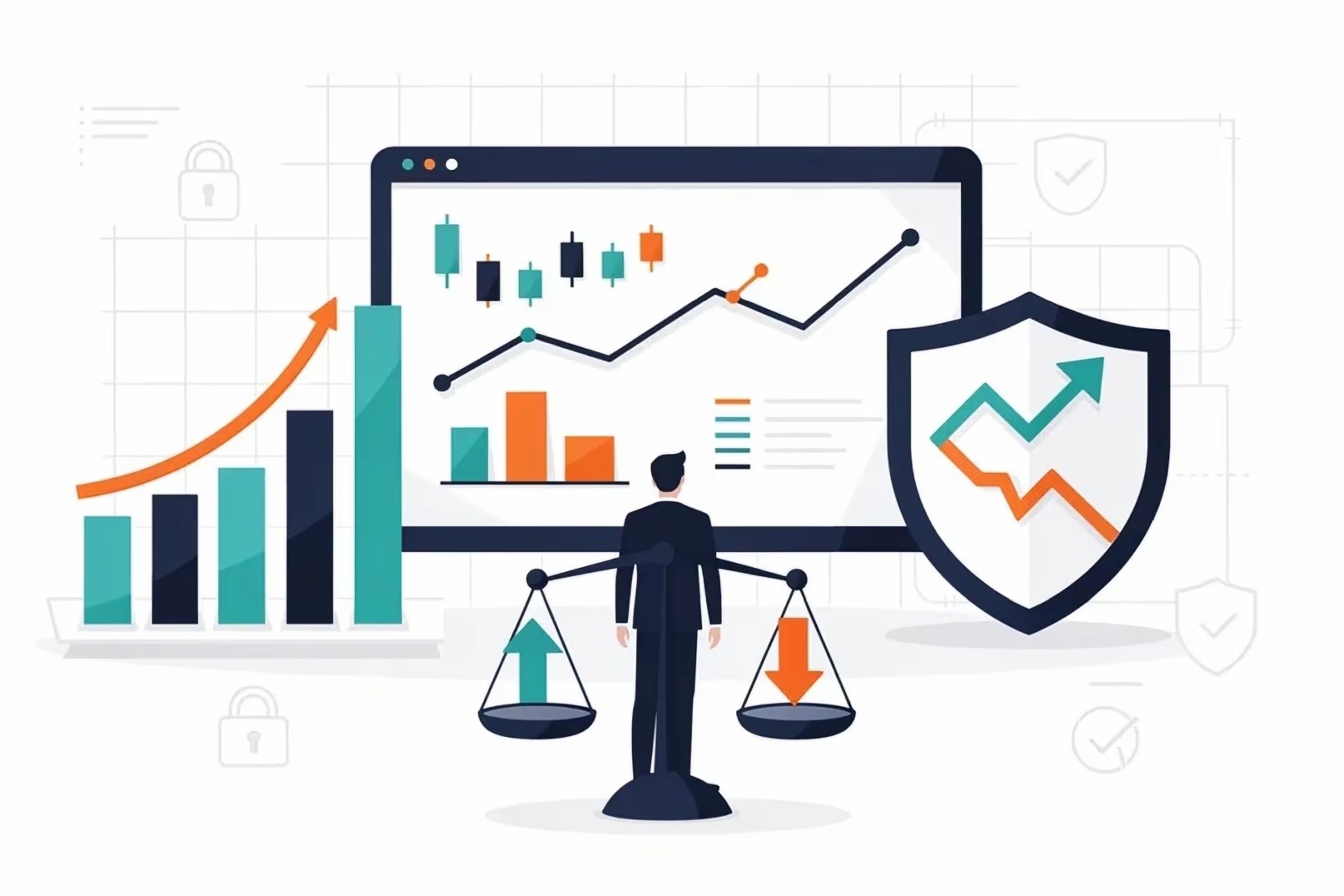
One of the greatest advantages of technical analysis is that it allows traders to manage and control risk.
Trading capital is always limited, and protecting that capital is essential for long-term survival in the markets.
Technical analysis allows traders to determine important factors before entering a trade, including:
- entry points
- exit points
- stop-loss levels
- profit targets
By studying price charts, traders can plan their trades carefully and determine how much they are willing to risk on each position. This planning process removes much of the emotional decision-making that often leads to costly mistakes.
For many traders, this ability to define risk before entering a trade is one of the most valuable benefits of technical analysis.
Using Technical Analysis to Optimize Profits

As traders gain more experience, they often discover that controlling losses is not the most difficult part of trading.
The real challenge is maximizing profits.
Once you establish a proper risk management strategy, you already know how much you are willing to lose if a trade goes against you. This knowledge reduces fear and anxiety.
However, deciding when to exit a profitable trade can be much more difficult.
Many traders have experienced situations where they closed a trade too early, only to watch the price continue moving strongly in the same direction.
Technical analysis can help traders deal with this uncertainty.
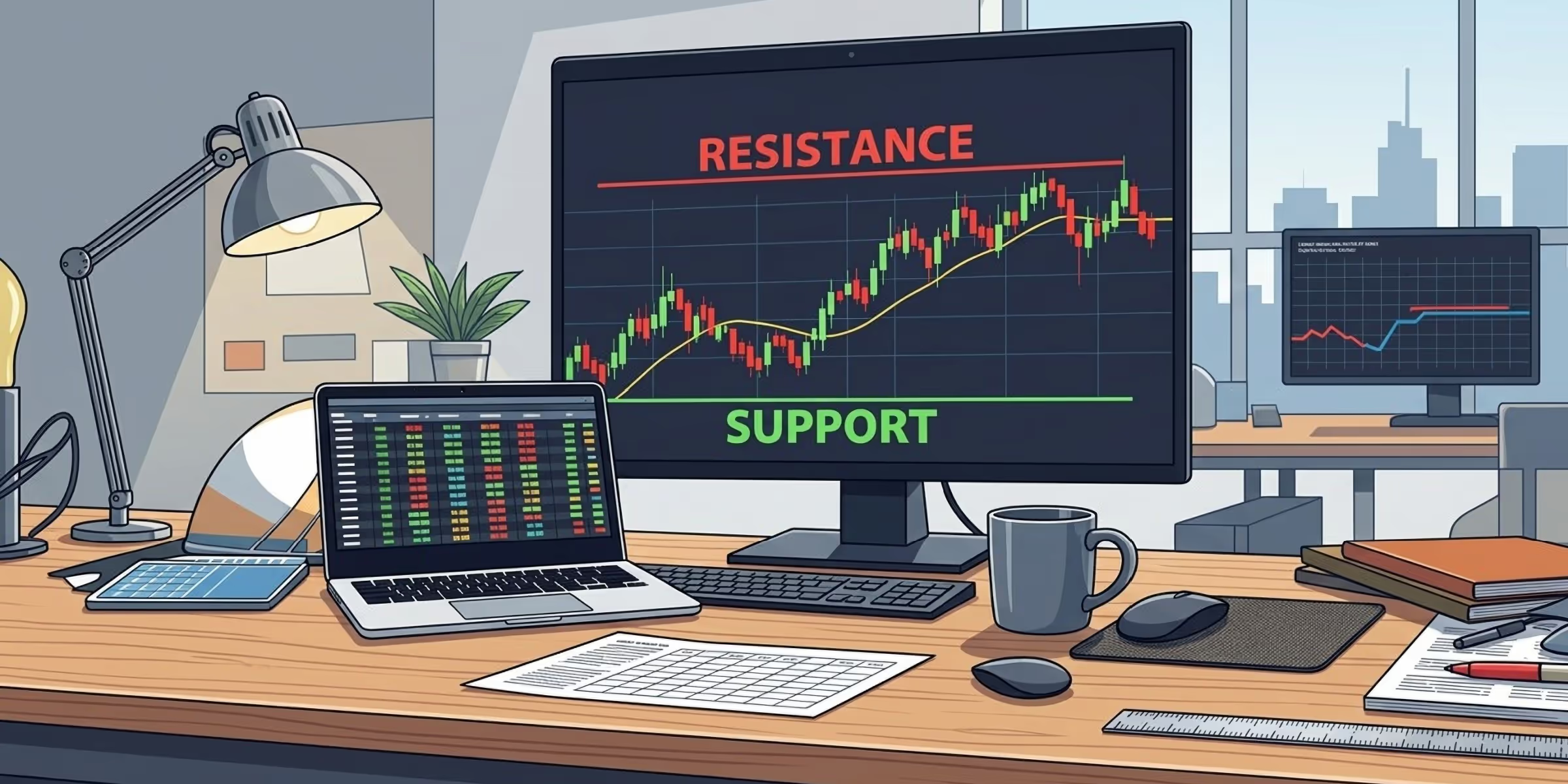
For example, traders can identify potential reversal zones by studying support and resistance levels on price charts.
At these levels, traders can decide to close part of their position to lock in profits while leaving the remainder of the trade open.
If the market reverses, part of the profit has already been secured. If the market continues moving in the same direction, the remaining position can continue generating additional gains.
Using technical analysis in this way allows traders to manage profits more effectively while still participating in larger market movements.
Final Words
I hope this article helps you understand why I personally prefer technical analysis when studying markets and reading charts.
It allows traders to make decisions based on real-time price behavior, rather than relying solely on external opinions or delayed information.
If you are just beginning your journey, it may also help to review the steps beginners should take to learn trading so you can build the right foundation before developing your strategy.
Learning technical analysis can be one of the most valuable steps you take as a beginner trader and can help you become a skilled participant in the markets.
Topics

Trading Myths

Beginner Trading

Technical Analysis
Market Education
Risk Management