Passive vs Active Trading: Which Approach is Right for You?

Understanding Two Different Ways to Approach the Markets
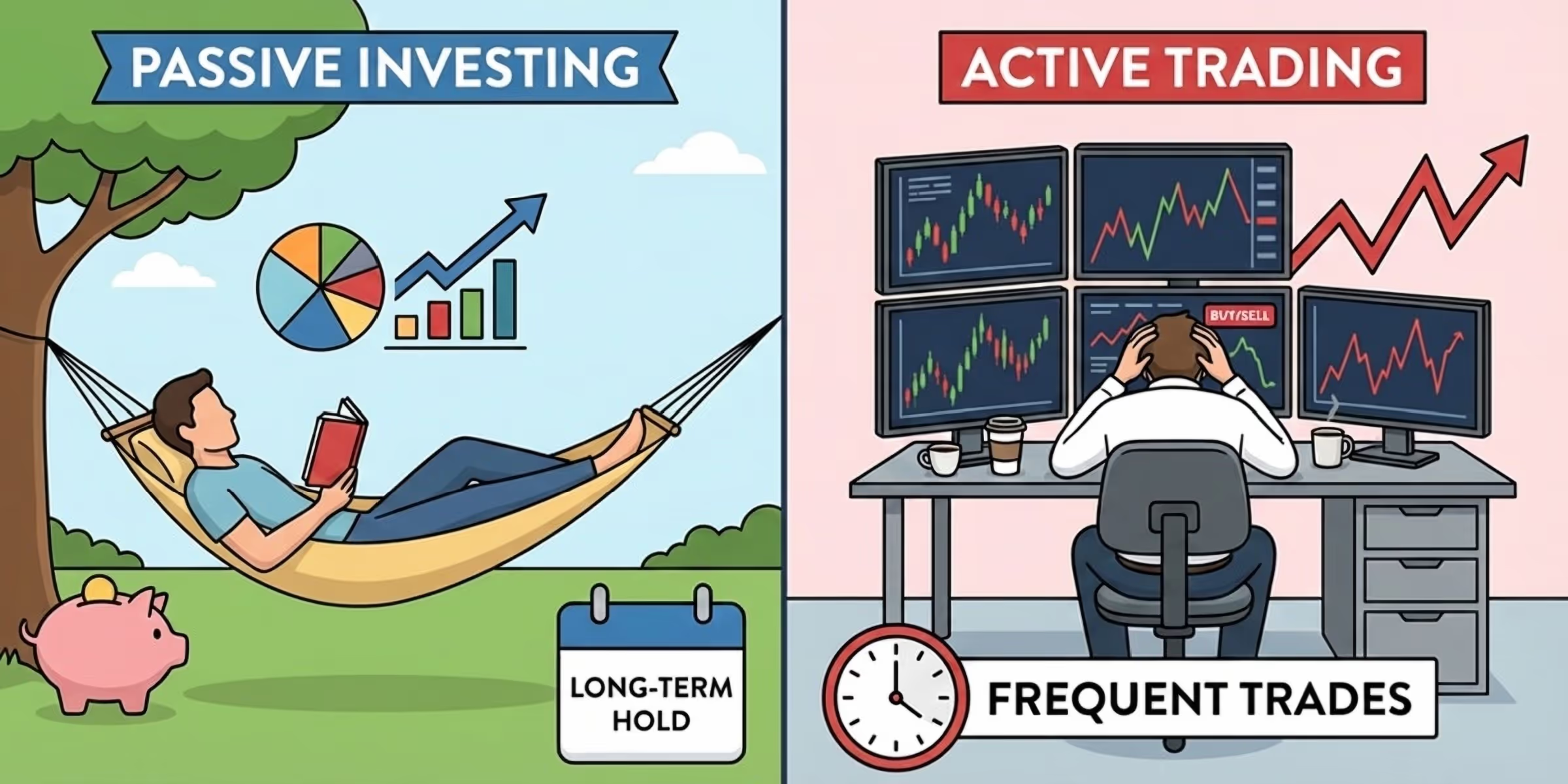
When people first start studying the markets, they usually learn about two main ways to grow wealth: passive investing and active trading. Both strategies aim to increase your capital over time, but they differ significantly in how they work, the level of effort required, and the type of risk involved.
Knowing the difference between these two approaches is important before deciding which path is right for you. Some people prefer the simplicity and long-term focus of passive investing, while others are drawn to the faster-paced nature of active trading.
In this article, we’ll explore both strategies in detail, highlight their main differences, and help you decide which approach may work best for your goals and trading style.
What Is Passive Investing?
Passive investing is a long-term strategy that focuses on building wealth gradually. Instead of trying to predict short-term price movements or constantly buying and selling assets, passive investors typically buy investments and hold them for many years.
A common way to do this is by investing in index funds or exchange-traded funds (ETFs). These financial instruments track the performance of a group of companies, such as the S&P 500. Because they represent a large portion of the market, they tend to reflect the overall growth of the economy over time.

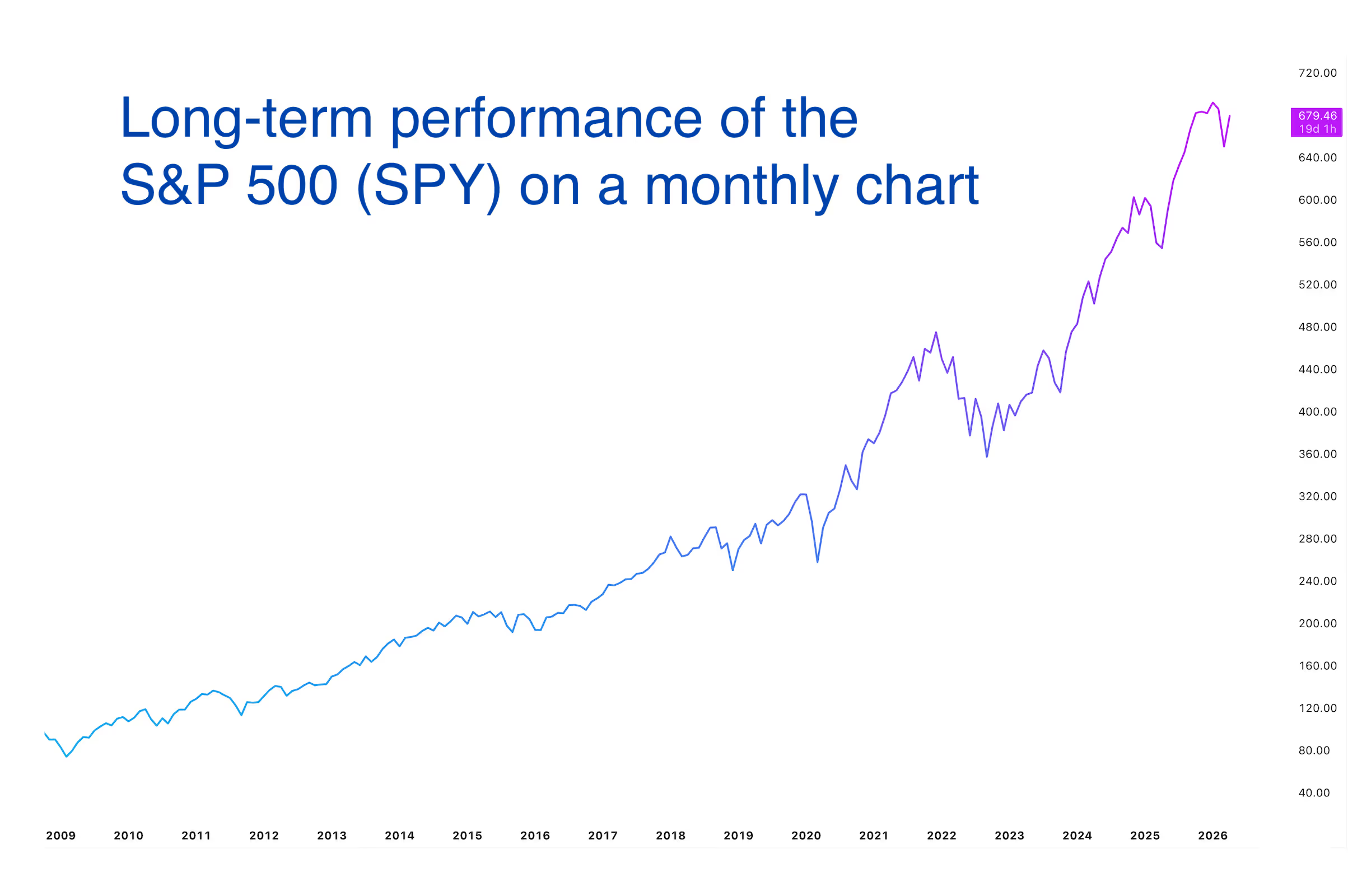
For example, if you are interested in investing in the overall market, the ETF with ticker symbol SPY can be a good choice because it tracks the performance of the S&P 500 Index, which represents 500 of the largest publicly traded companies in the United States. Since these companies cover many different industries, the index is often used as a broad measure of the overall market.
Another example is if you are interested in gaining exposure to the technology sector. In that case, the ETF with ticker symbol QQQ can be a good option because it tracks the NASDAQ-100 Index, which contains many of the largest technology and growth companies.
Some investors take a slightly different approach by buying and holding individual companies they believe will perform well over the long term. If done correctly, this strategy can sometimes outperform index funds. However, selecting individual companies requires more research, knowledge, and skill, which is why many investors prefer diversified funds.
At its core, passive investing is based on a simple belief: over the long term, markets tend to rise. Instead of trying to beat the market, passive investors aim to participate in the market’s growth.
Advantages of Passive Investing
Passive investing has gained popularity over the years because of its simplicity and historical performance. Let’s look at some of its key advantages.
1. Less Frequent Buying and Selling
One of the main benefits of passive investing is that it reduces the need for constant trading.
Instead of monitoring markets every day and trying to predict short-term movements, passive investors typically purchase investments and hold them for a long time - often years or even decades.
This approach keeps things simple. Investors don’t need to constantly analyze charts, follow news events, or make rapid decisions. Instead, they allow the market to work over time.
Because fewer transactions are made, investors also avoid the stress and pressure that often come with frequent trading.
2. The Power of Compounding
Passive investing takes advantage of one of the most powerful concepts in finance: compounding.
Compounding occurs when investment gains generate additional gains over time. For example, if your investments grow and remain invested, future growth occurs on both your original investment and the profits already earned.
Over many years, this effect can significantly increase wealth. Even modest annual returns can lead to substantial growth when compounded over long periods. For example:
Suppose you invest $10,000 and the investment earns an 8% annual return.
Below is the difference between:
- Compounding (profits stay invested and generate new profits)
- No compounding (profits are not reinvested, so you earn the same amount every year)
As you can see, after 30 years, the difference becomes dramatic:
- With compounding: about $100,627
- Without compounding: only $34,000
Even though the annual return is the same (8%), reinvesting the profits allows the investment to grow much faster over time.
This is why passive investors typically focus on staying invested consistently rather than trying to time the market.
3. Lower Fees and Costs
Another major advantage of passive investing is its low cost structure.
Because passive investors trade less frequently, they pay fewer transaction fees and brokerage commissions. Additionally, index funds and ETFs often have lower management fees compared to actively managed funds.
Lower costs can make a significant difference over time. When fewer fees are deducted from your investments, more of your money remains invested and continues to compound.
Over decades, even small differences in fees can result in large differences in total portfolio value.
4. Diversification
Passive investing also promotes diversification, which means spreading investments across many different assets.
For example, when you invest in an index fund, you are often buying small portions of hundreds of companies at once. This reduces the risk associated with any single company performing poorly.
If one company declines significantly, its impact on the entire portfolio is usually limited because the portfolio contains many other companies.
Diversification is one of the most effective ways to reduce risk while maintaining exposure to overall market growth.
5. Historically Consistent Long-Term Performance
Over the long term, passive investing has historically delivered strong results compared to many actively managed strategies.
This is partly because passive investors avoid common mistakes such as overtrading, emotional decision-making, and excessive fees.
Another benefit is that passive investing does not require constant monitoring of markets. Investors can focus on their careers, businesses, or personal lives while their investments grow over time.
By staying invested and avoiding emotional reactions to short-term market fluctuations, passive investors often achieve steady long-term results.
Disadvantages of Passive Investing
Although passive investing has many advantages, it also comes with certain limitations.
The most important drawback is the lack of active risk management.
When you invest passively, you typically remain invested regardless of market conditions. During major market downturns or crashes, passive investors usually continue holding their investments, even as prices decline.
This means your portfolio will follow the market both upward and downward.
While markets have historically recovered in the long term, this approach requires patience and the ability to tolerate temporary losses.
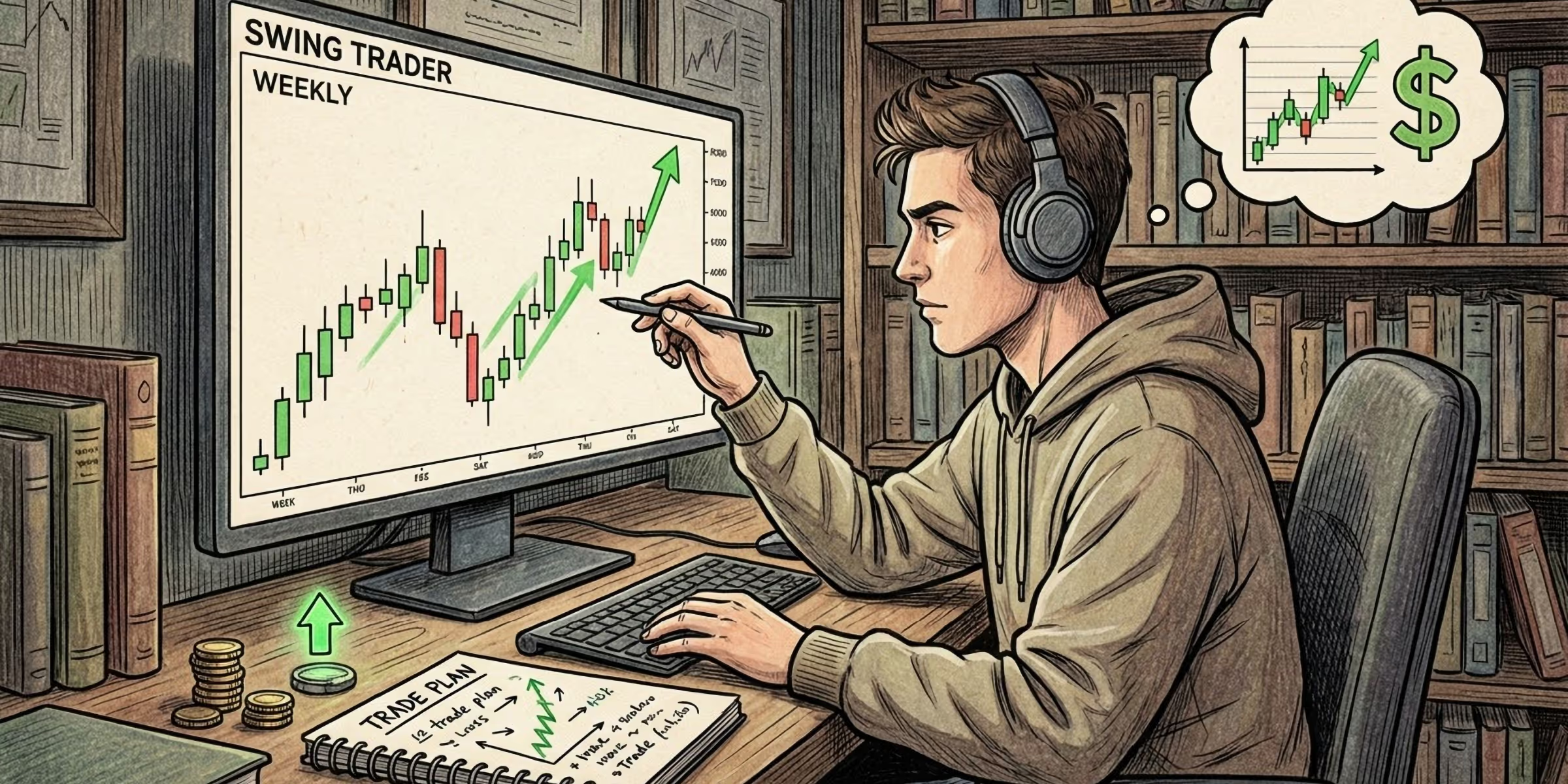
For some investors, especially those uncomfortable with large drawdowns, this passive approach may not be the best way to gain market exposure. If that is the case, a more balanced approach, such as swing trading, may offer a better solution. If you would like to learn more about swing trading, be sure to check out my article on swing trading, where I explain how this approach works in greater detail.
Ultimately, passive investing works best for individuals who are focused on long-term growth and can remain calm during market volatility.
What Is Active Trading?
Active trading takes a completely different approach to interacting with financial markets.
Instead of holding investments for many years, active traders attempt to profit from shorter-term price movements.
This can involve trading stocks, ETFs, options, or other financial instruments. Traders analyze markets using a combination of tools and methods, such as:
- Technical analysis
- Market trends
- Economic data
- Price patterns
- Trading indicators

The goal of active trading is to outperform the overall market by making more strategic and timely decisions.
An active trading approach is commonly used by professional fund managers, analysts, hedge funds, and individual retail traders.
Because this strategy relies heavily on timing and analysis, it generally requires more knowledge, experience, and discipline than passive investing.
Advantages of Active Trading
Active trading attracts many people because it offers opportunities that passive investing cannot provide.
Let’s explore some of the key advantages.
1. Potential to Outperform the Market
One of the biggest motivations behind active trading is the possibility of beating the market’s average return.
Instead of simply following overall market performance, traders attempt to identify opportunities where prices may move significantly in a favorable direction.
For example, if a trader notices that a stock’s upward trend is weakening, they may decide to close their position before the price declines. This allows them to protect profits and potentially re-enter the trade later at a lower price.
Traders can also redirect their capital toward other opportunities that may offer better returns.
This ability to adapt quickly to changing market conditions is one of the defining advantages of active trading.
2. Flexibility
Active trading also provides flexibility that passive investing does not offer.
Markets often move in cycles, meaning certain industries or sectors perform better during specific periods.
Active traders can focus on these areas and trade companies that are currently performing well.
For example, if technology stocks are outperforming the broader market, traders may focus on this sector and look for trading opportunities. This targeted approach can generate higher returns than holding a broadly diversified portfolio.
3. Faster Learning Through Experience
Compared to investing, trading can also provide a much faster learning experience because market feedback comes more quickly. When traders make poor decisions, the consequences often appear quickly in the form of losses.
While losing money is never pleasant, these experiences can help traders develop valuable skills such as:
- Better market analysis
- Risk management
- Emotional control
- Strategic decision-making
Over time, traders who continuously learn and adapt can significantly improve their performance. Some of these concepts are explained in more detail in my article on risk management.
Challenges and Risks of Active Trading
Despite its potential rewards, active trading comes with several challenges that traders must be prepared to face.
1. Higher Costs
Frequent trading leads to higher transaction costs.
Every time a trader buys or sells an asset, they may incur brokerage commissions, exchange fees, or spreads.
In addition, active trading can generate higher tax obligations, especially when profits are realized frequently.
Over time, these costs can reduce overall profitability if not managed carefully.
2. Time Commitment
Active trading requires a significant amount of time and attention.
Traders often spend hours:
- researching markets
- analyzing charts
- monitoring price movements
- reviewing economic news
Market conditions can change rapidly, and traders must remain actively engaged to respond quickly. This requirement can make active trading difficult for individuals with full-time jobs or for those who have limited time available to monitor the markets.
3. Higher Risk
Active trading generally involves greater risk than passive investing.
Because traders frequently enter and exit positions in rapidly moving markets, prices can change unexpectedly.
Even small mistakes, such as entering a trade too late or too early, can lead to significant losses.
For beginners, this risk can be particularly difficult to manage. Without proper skill and discipline, emotional decisions can quickly lead to bad trading results.
4. Emotional Pressure
Trading can also be psychologically demanding.
Market movements often trigger strong emotions such as:
- Fear during market declines
- Greed during strong rallies
- Frustration after losses
These emotions can cause traders to make impulsive decisions that deviate from their strategy.
Developing control over emotional responses is one of the most important skills for anyone involved in active trading.
Which Approach Is Better?
There is no single answer to this question.
The best strategy depends on several personal factors, including an individual’s:
- Financial goals
- Availability of time
- Knowledge of markets
- Level of risk tolerance
- Personality
Passive investing may be ideal for individuals who prefer a simple, long-term approach and do not want to monitor markets frequently.
Active trading, on the other hand, may appeal to those who enjoy analyzing markets, making strategic decisions, and actively managing their capital.
Some people combine both approaches. For example, they may maintain a long-term investment portfolio in one account while actively trading a smaller portion of their capital in another.
Conclusion
Both passive investing and active trading offer unique advantages and challenges.
Passive investing focuses on long-term growth, diversification, and simplicity, making it a reliable strategy for many investors.
Active trading focuses on short-term opportunities, market analysis, and strategic decision-making, offering the potential for higher returns but also requiring more skill and discipline.
By understanding the advantages and limitations of both approaches, you can choose the strategy that best aligns with your financial goals and personal circumstances.
Topics
Trading Myths

Beginner Trading

Technical Analysis
Market Education

Risk Management