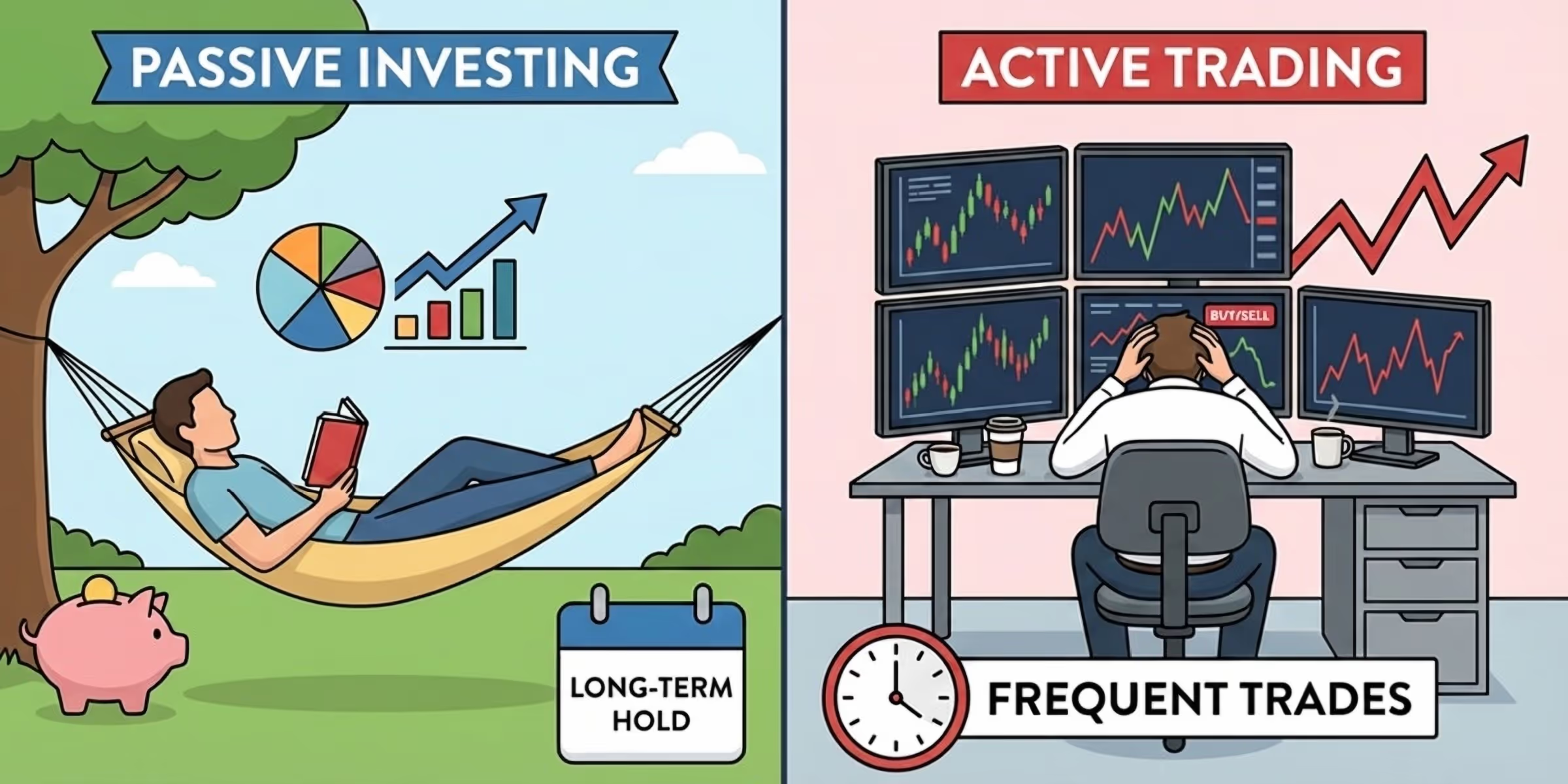
Bull vs Bear Markets: What’s the Difference?


Bull vs Bear Markets: What Every Beginner Trader Needs to Understand
If you’ve ever watched financial news channels like CNBC or Bloomberg, you’ve probably heard commentators talk about “bull markets” and “bear markets.” These two terms appear constantly in discussions about stocks, the economy, and investing.
For someone new to trading, these expressions can sound confusing at first. Why are animals being used to describe financial markets? And more importantly, what do these terms actually mean for traders and investors?
Understanding bull and bear markets is one of the first steps toward understanding how financial markets behave. These concepts help traders identify the general direction of prices, recognize market sentiment, and adjust their strategies accordingly.
In this article, we’ll break down the meaning of bull and bear markets, explain the roles of bulls and bears in the market, and explore two other fundamental trading terms: going long and going short.
What Is a Bull Market?
A bull market is a period when financial markets generally rise over an extended period of time. During a bull market, major stock indices such as the S&P 500, Nasdaq, or Dow Jones Industrial Average trend upward as prices steadily climb.
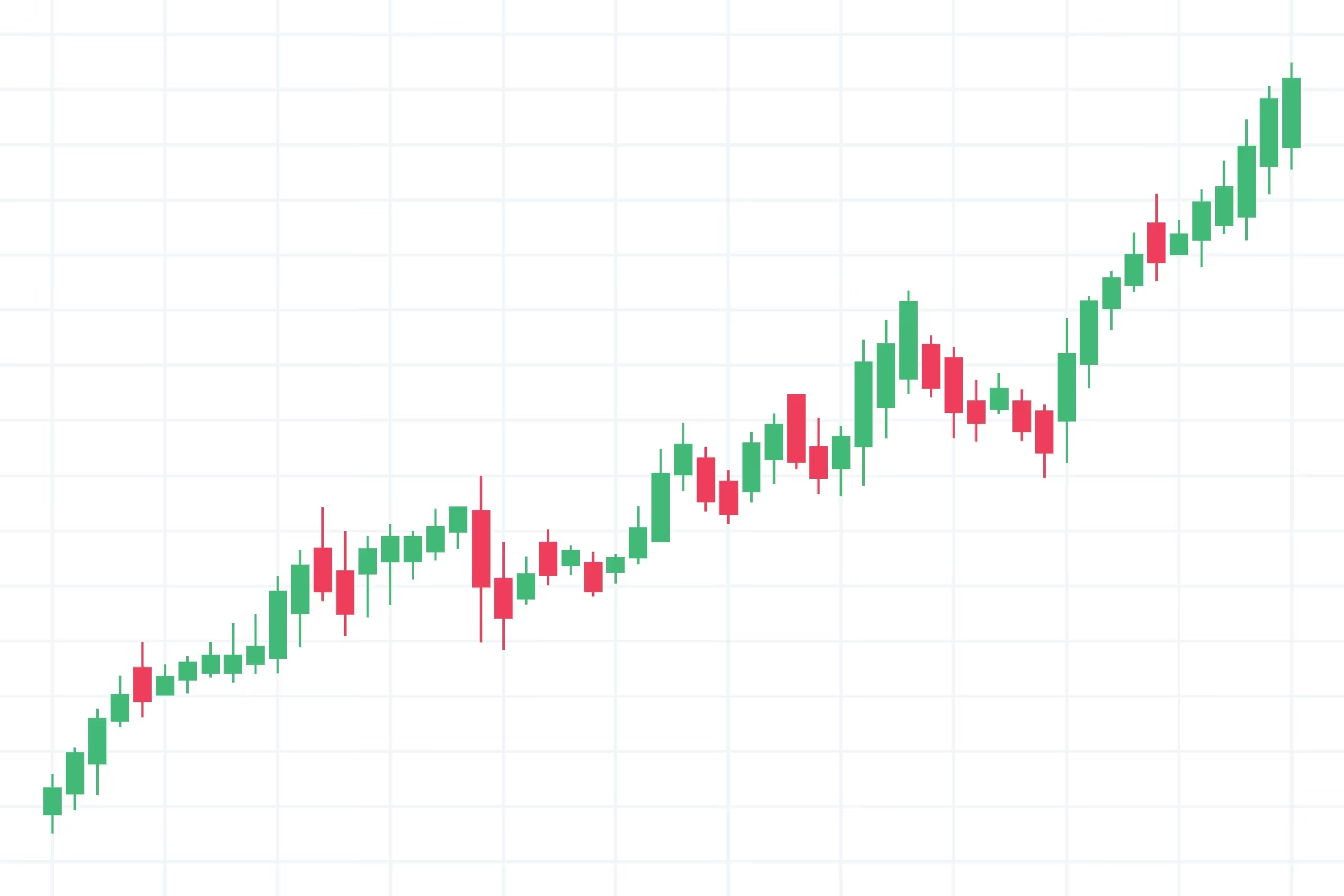
Bull markets are usually accompanied by strong investor confidence and optimism about the economy. Businesses tend to perform well, corporate earnings grow, and investors feel comfortable putting money into the market.
When markets are in this environment, you will often hear phrases such as:
- “Stocks are reaching new highs.”
- “Investor sentiment is strong.”
- “The market rally continues.”
These are all signs of bullish conditions.
One well-known example of an exceptionally strong bull market is the one that followed the 2008 recession, when U.S. stock markets experienced a prolonged period of growth. During this time, stock prices repeatedly reached new all-time highs as technology companies expanded and economic conditions remained favorable.
However, it’s important to understand that even bull markets do not move upward in a straight line. Prices will occasionally pull back, consolidate, or temporarily decline before continuing higher. These fluctuations are a normal part of market behavior. Learning how traders read charts can help you recognize these movements more clearly, as I explain in "What Type of Analysis Should You Use to Read Charts?"
What Is a Bear Market?
A bear market represents the opposite situation. It refers to a prolonged period in which financial markets trend downward, and prices decline significantly.
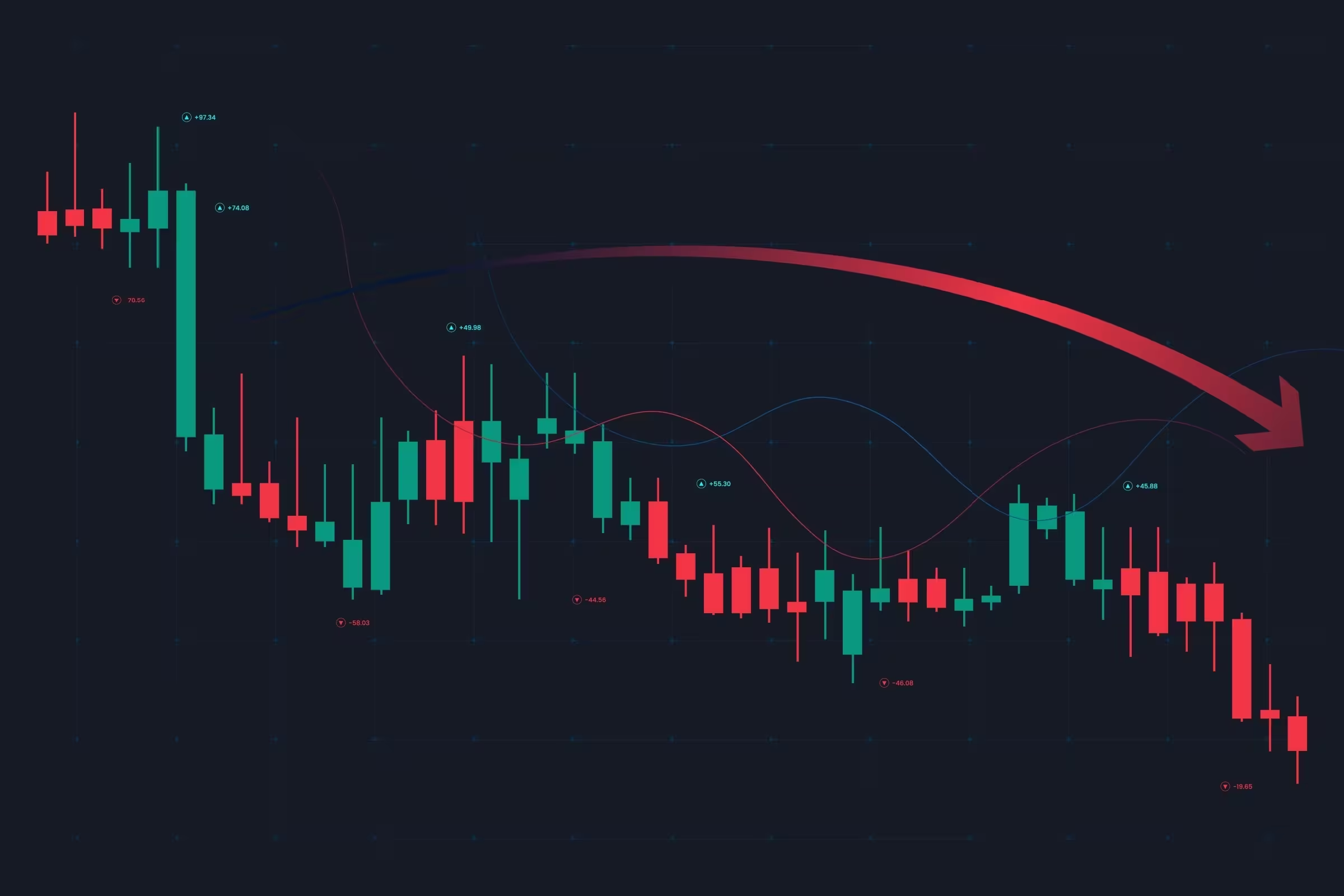
In a bear market, investor sentiment becomes negative, and selling pressure begins to dominate the market. Many investors grow cautious or fearful, and some may choose to move their money out of stocks and into safer assets.
It is commonly accepted that a bear market begins when a major index, such as the S&P 500, falls 20% or more from its recent peak. While this threshold is widely used, the general idea behind a bear market is simply a sustained period of falling prices and pessimism.
Bear markets are often associated with economic uncertainty, slowing growth, or financial crises. During these periods, investors may become more defensive and focus on protecting capital rather than seeking aggressive gains.
But just like bull markets, bear markets also do not move in a straight line.
Markets frequently experience temporary upward movements even during overall downtrends. These short-lived recoveries are known as bear market rallies.
Bear market rallies can sometimes be strong enough to convince investors that the market has recovered, only for prices to resume their downward trend afterward. Understanding this dynamic is an important part of learning how markets function.
Why Are They Called Bulls and Bears?
The origin of the terms bull and bear is often explained by the way each animal attacks its opponent.
A bull charges upward with its horns.
A bear swipes downward with its claws.

These movements resemble the directions of market trends.
- Bull markets move upward
- Bear markets move downward
Over time, these animals became symbolic representations of market sentiment and investor behavior.
Today, traders and investors frequently describe themselves as either bullish or bearish depending on their outlook for prices.
Who Are the Bulls in the Market?
The term bull is used to describe traders or investors who believe that prices will rise.
Bullish traders expect assets, such as stocks, commodities, or cryptocurrencies, to increase in value. Because of this expectation, they buy assets with the intention of selling them later at a higher price.
This idea is often summarized with the familiar phrase:
“Buy low, sell high.”

Bullish participants are responsible for creating buying pressure in the market. When many traders become optimistic about future price movements, demand increases, and prices begin to rise.
During strong bull markets, optimism can spread quickly among investors. Positive news, strong earnings reports, and economic growth can all encourage bullish sentiment.
However, even bullish traders must remain cautious. Markets rarely move in one direction forever, and excessive optimism can sometimes lead to market bubbles.
Who Are the Bears in the Market?
A bear is a trader or investor who believes prices are likely to fall.
Bearish traders expect that the value of an asset will decline. Instead of buying an asset and waiting for it to rise, they look for opportunities to profit from falling prices.
Bearish sentiment usually increases when economic conditions weaken or when markets become overvalued.
During bear markets, pessimism spreads through the financial system. Investors become cautious, and selling pressure increases as traders attempt to avoid further losses.
While bulls and bears often appear to be opposing forces, both groups are essential to healthy market functioning. Markets require both buyers and sellers in order to operate efficiently.
The balance between bullish and bearish participants plays a major role in determining price direction.
Understanding Long and Short Positions
Closely related to bullish and bearish views are two important trading concepts: going long and going short.
These terms describe the methods traders use to profit from market movements.
What Does “Going Long” Mean?
Going long refers to buying an asset with the expectation that its price will rise in the future.
When traders purchase shares of a company, they are taking a long position.
For example, imagine you purchase 100 shares of Apple stock because you believe the company’s value will increase. If the stock price rises and you later sell those shares for a higher price, the difference becomes your profit.
When someone asks a trader:
“Are you long the market?”
They are simply asking whether the trader currently holds positions that benefit from rising prices.
Long positions are the most common type of trade, especially among beginner investors who participate in the stock market.
What Does “Going Short” Mean?
Going short, often called short selling, is a strategy used when a trader believes that an asset’s price will fall.
Instead of buying shares, the trader borrows shares from a broker and sells them at the current market price. Later, the trader repurchases those shares and returns them to the lender.
If the price declines, the trader profits from the difference between the selling price and the lower repurchase price.
Although short selling may sound unusual at first, it plays an important role in financial markets. It allows traders to express negative views about a company or asset and contributes to market price adjustment. The impact of short selling on the market is often evident in price charts. If you’d like to understand how traders analyze these movements, you can explore this further in my article “How to Read Japanese Candlesticks in Trading.” That said, short selling also carries additional risks and requires careful risk management.
Selling vs Short Selling
It’s important to understand the difference between selling an asset you already own and short-selling.
If you purchased shares earlier and later decide to sell them, you are simply closing your position.
Short selling, on the other hand, involves borrowing shares and selling them with the intention of buying them back later.

This distinction is important because the mechanics and risks involved in short selling differ from those of ordinary selling.
A Simple Example of Long and Short Trades
To better understand how traders profit from both rising and falling markets, let’s look at two simplified examples.
Example 1: Going Long
Suppose you believe that XYZ stock will increase in price.
You purchase 50 shares at $200 per share.
Later, the stock price rises to $205.
If you sell your shares at that price, your profit would be:
- $5 profit per share
- 50 shares × $5 = $250 total profit
In this scenario, you made money because the stock price increased after you bought it.
Example 2: Going Short
Now imagine that you believe XYZ stock will fall.
You borrow 50 shares and sell them at $200 per share.
Later, the price drops to $190.
You then buy the shares back at $190 and return them to the lender.
Your profit would be:
- $10 profit per share
- 50 shares × $10 = $500 total profit
In this case, you earned money because the stock price declined after your initial trade.
Why These Concepts Matter for Traders
Understanding bull and bear markets, as well as long and short positions, provides a foundation for studying more advanced trading strategies.
These concepts help traders answer important questions such as:
- What direction is the overall market moving?
- Is investor sentiment optimistic or pessimistic?
- Should strategies focus on rising markets or falling markets?
Professional traders constantly evaluate market conditions to determine whether bullish or bearish strategies are more appropriate.

The ability to recognize these conditions is one of the many skills traders develop over time. However, if you are new to trading and trying to figure out where to begin your learning journey, you may find it helpful to read my article “Steps Beginners Should Take to Learn Trading,” where I outline the key steps beginners should follow when starting out.
Final Thoughts
Bull and bear markets represent two fundamental phases of financial markets. Bull markets are characterized by rising prices, optimism, and strong buying activity, while bear markets are associated with declining prices, pessimism, and increased selling pressure.
Bulls and bears, the traders who believe prices will rise or fall, interact continuously to shape market movements. Their decisions create the balance between supply and demand that ultimately determines the direction of prices.
Understanding these concepts, along with the mechanics of going long and going short, provides an important starting point for anyone interested in trading or investing.
As you continue learning about the markets, you’ll discover that these foundational ideas connect to many other strategies and techniques used by professional traders.
And while this article introduces the basic concepts, applying them effectively in real trading situations requires deeper study, practice, and experience, which I will cover in much more detail in my upcoming course.
Topics

Trading Myths

Beginner Trading

Technical Analysis

Market Education

Risk Management