What Is Swing Trading? Pros, Cons, and How It Works for Beginners

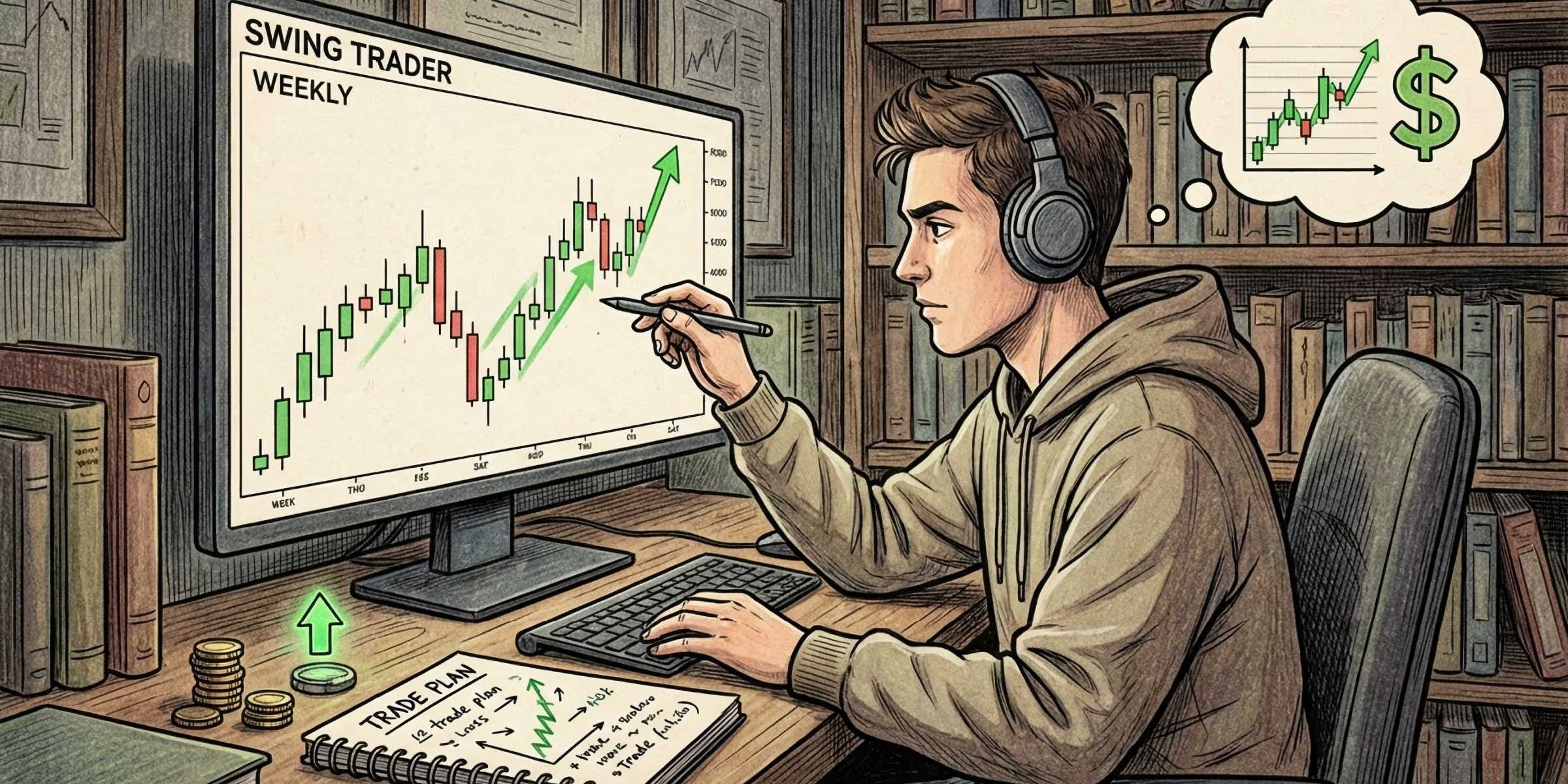
Who Are Swing Traders?
After learning what day trading is, you may want to consider a different trading style that many people find easier to manage: swing trading.
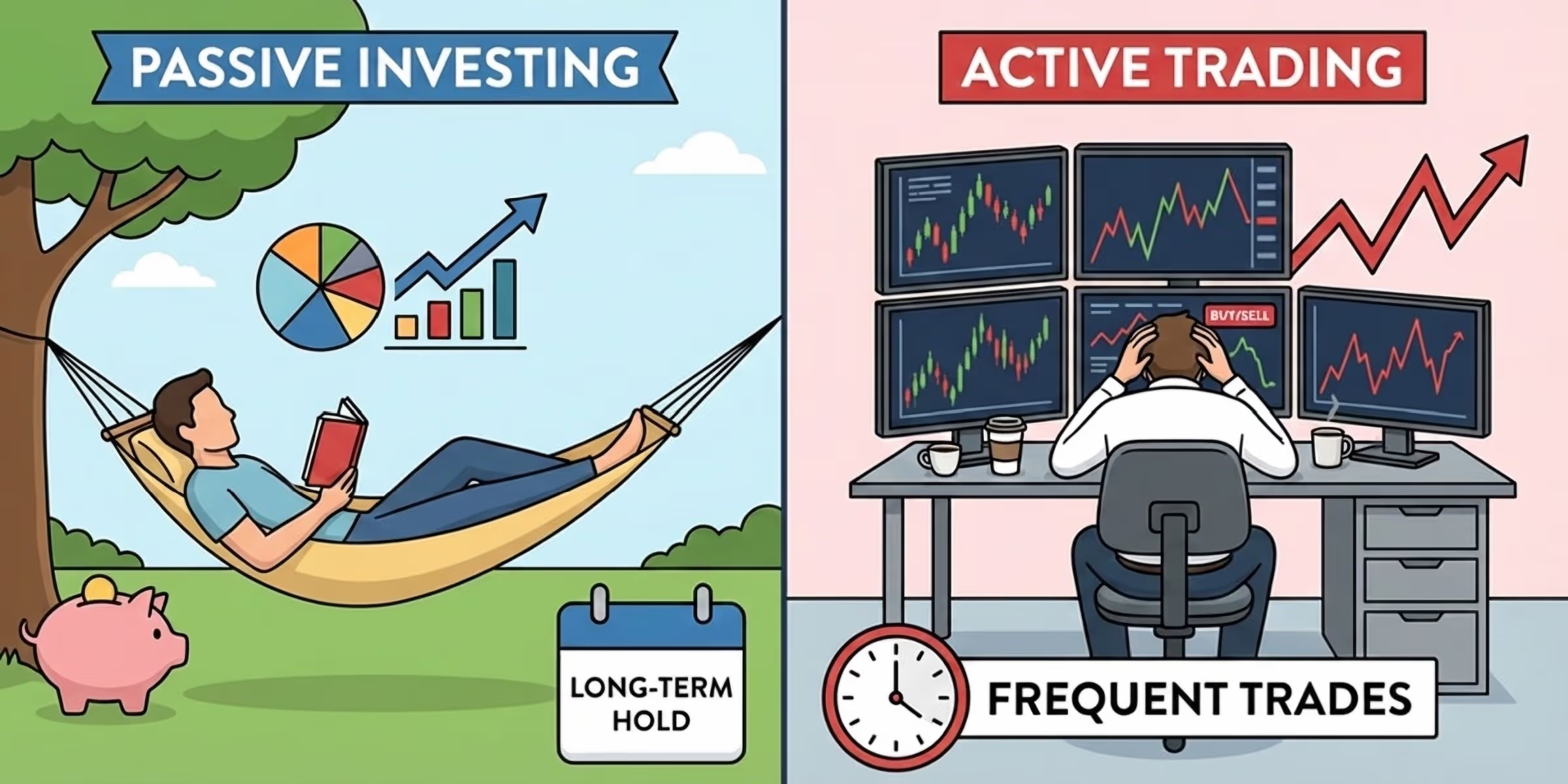
Swing trading sits somewhere between the intensity of day trading and the patience required for long-term investing. While day traders open and close positions within the same day, and long-term investors may hold assets for months or even years, swing traders typically hold their trades for several days to several weeks.
The goal of swing trading is to capture larger price movements, often referred to as “swings,” that occur as markets move up and down over time. Instead of reacting to every small fluctuation that occurs during a single trading session, swing traders wait for more profitable opportunities that develop over a longer period.
For many people, this approach offers the perfect balance. It allows traders to remain actively involved in the markets without the constant pressure and time commitment that day trading demands.
What Is Swing Trading?
Swing trading is a trading method in which positions are held for multiple days or weeks, depending on how long a trading setup takes to play out.
Instead of focusing on minute-by-minute price changes, swing traders analyze broader market trends using longer-term charts. These often include:
- 4-hour charts
- daily charts
- weekly charts
Because these charts reflect longer periods of market activity, they tend to show clearer patterns and trends than the rapid, often chaotic movements seen on very short-term charts. If you are new to reading charts, you can check out my article on chart analysis to gain a better understanding.
By analyzing these longer timeframes, swing traders attempt to enter positions at strategic points where a price movement is likely to develop and then hold the trade until that movement has largely played out.
This approach allows traders to capture larger price moves while avoiding the constant stress of intraday trading.

Why Swing Trading Appeals to Many Traders
There are several reasons why swing trading has become one of the most popular trading styles among both beginners and experienced market participants.
One of the main reasons is that swing trading provides more breathing room.
Unlike day traders who must constantly monitor charts and react quickly to changing market conditions, swing traders can take a more strategic approach. They analyze markets carefully, plan their trades in advance, and then allow the market time to develop.
Another major reason swing trading is appealing is the reduced reliance on leverage.
Because swing traders aim to capture larger price movements over longer periods, they typically do not need to borrow large amounts of capital to amplify their trades. Many swing traders operate with little or no leverage, which significantly lowers their risk exposure.
Using less leverage also means traders are less likely to incur sudden, large losses from sharp market movements. This makes swing trading not only safer in many situations but also more accessible to individuals trading with smaller accounts.
Advantages of Swing Trading
Swing trading offers several important advantages that make it attractive to many traders.
Lower Stress and Better Emotional Control
Day trading environments are often characterized by constant pressure. Prices can change rapidly, forcing traders to make split-second decisions that can easily be influenced by emotions such as fear or greed.
Swing trading, on the other hand, provides traders with more time to analyze situations carefully before acting. Because trades develop over days or weeks rather than minutes, traders have more time to evaluate the market and make decisions in a calmer environment.
This additional time helps reduce the likelihood of emotional mistakes, which is great news for risk management.
Greater Time Efficiency
Another major benefit of swing trading is the efficient use of time.
Unlike day trading, which often requires traders to monitor the market throughout the entire trading session, swing trading usually requires far less daily involvement. Many swing traders spend only one to two hours per day reviewing charts, identifying potential setups, and managing their open positions.
This makes swing trading an appealing option for individuals who have other responsibilities, such as full-time jobs, family commitments, or personal interests.
By dedicating a limited amount of time each day to market analysis, traders can remain active participants without letting trading dominate their entire daily schedule.
Cleaner and More Reliable Charts
One of the challenges of short-term trading is the presence of what we often call market noise. On very short timeframes, price movements can appear random and unpredictable, making it difficult to identify meaningful patterns.
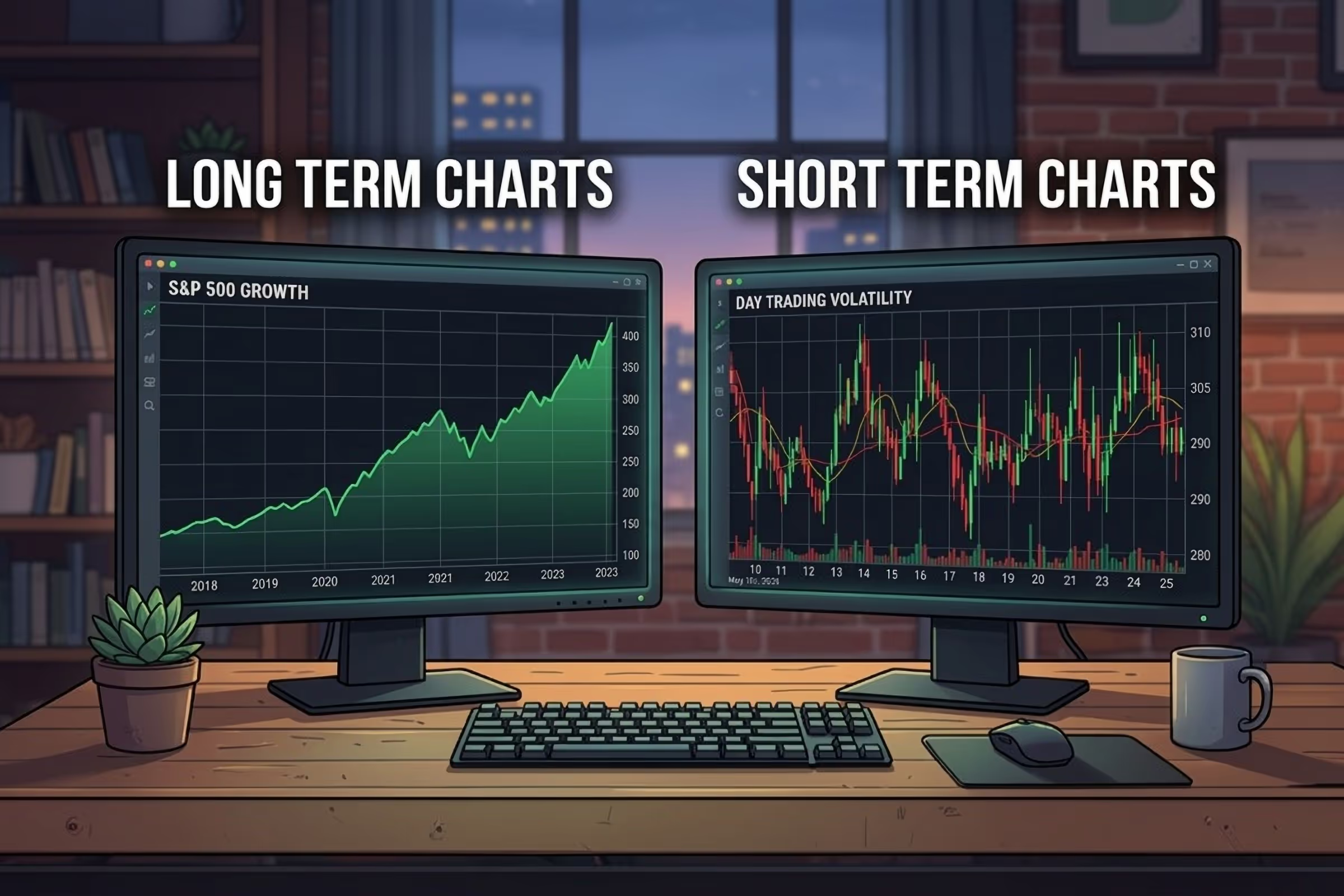
However, longer timeframes tend to filter out much of this noise.
On longer-term charts, traders can often identify clearer technical signals such as:
- support and resistance levels
- trend formations
- candlestick patterns
- technical indicator signals
This clarity gives swing traders a significant analytical advantage. With cleaner charts, traders are better able to identify high-probability opportunities and make good trading decisions.
A More Balanced Lifestyle
Swing trading also offers a lifestyle balance that day trading often cannot provide.
Because trades develop over longer periods, swing traders do not need to remain glued to their screens throughout the day. Instead, they can periodically analyze markets while making time for other aspects of life.
This flexibility allows traders to maintain a healthier balance between work, personal interests, and family time. Many people find that this balanced approach leads to better decision-making and improved overall well-being.
Potentially Higher Success Rate
Another advantage often associated with swing trading is the potential for a higher success rate compared to what short-term trading styles typically provide.
Swing trading focuses on larger market patterns and trends, which typically develop over time.

This slower pace allows traders to analyze opportunities more carefully before committing capital.
While no trading strategy can guarantee profits, the additional time available for deeper analysis often leads to more smart decision making. As a result, many traders find that swing trading yields more consistent, better results over the long term.
Disadvantages of Swing Trading
Although swing trading offers many advantages, it is not without its challenges.
Patience Is Required
One of the primary drawbacks of swing trading is the longer waiting period for trades to develop.
Unlike day traders who may enter and exit multiple positions within a single day, swing traders may hold a position for several days or even weeks before reaching their target.
For individuals who prefer fast results and constant activity, this slower pace can feel frustrating. Patience is a crucial skill for anyone pursuing this trading style, which, unfortunately, many people lack.
Overnight Risk
Another important factor to consider is the risk associated with holding positions overnight.
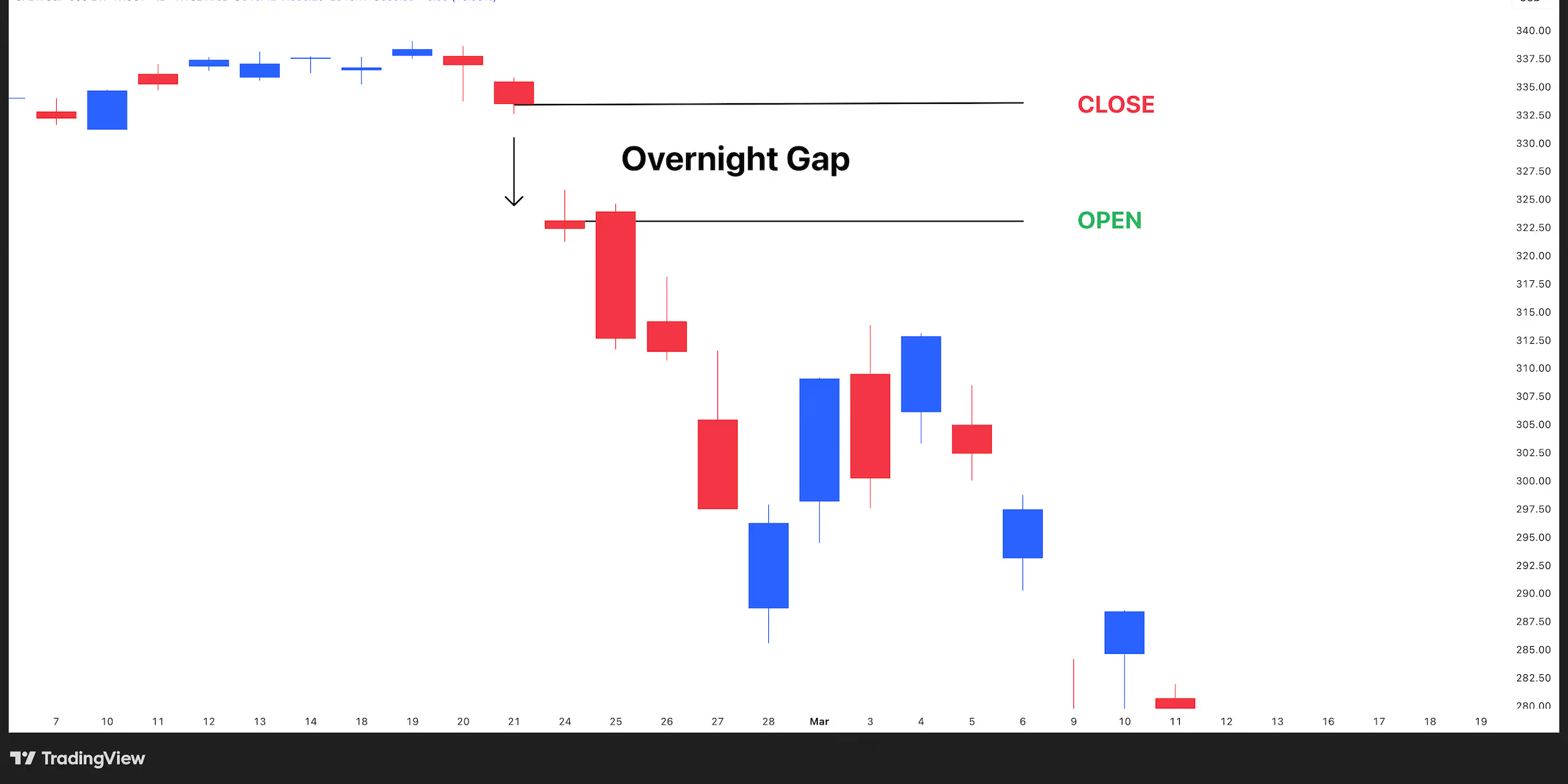
When markets close, traders lose the ability to react immediately to new information. Major events such as:
- earnings announcements
- economic reports
- geopolitical developments
can occur outside regular trading hours.
These events can cause markets to open the next day at significantly different prices, a phenomenon known as gap risk. This is why proper risk control becomes extremely important. I explain this in detail in my article on Why Proper Risk Management Is the Key to Trading Success.
One thing to note is that even with effective risk management strategies that can significantly reduce this exposure, overnight gaps remain a key risk associated with swing trading.
Who Is Swing Trading Best For?
Swing trading is particularly well-suited for individuals who want to participate in the financial markets without committing to full-time trading.
This style is especially attractive for:
- traders who prefer lower stress environments
- individuals who want to use less leverage
- traders who enjoy analyzing broader market trends
- people with full-time jobs or other responsibilities
Because swing trading requires less constant monitoring, it allows individuals to remain active in the markets while maintaining a flexible schedule. If you are new to trading, you may also want to check out my guide “Steps Beginners Should Take to Learn Trading,” where I explain the essential first steps beginners should take. This guide might help you decide whether swing trading is the right trading style for you.
My Story: Why I Chose Swing Trading as My Primary Strategy
For me, the decision to focus on this trading style did not happen overnight. When I first started trading, I experimented with almost every style available because, at the time, I simply did not understand the requirements, advantages, and challenges of each approach.
Like many beginners, I was drawn to the excitement of day trading. The idea of making quick profits and potentially replacing my regular income with earnings from the markets was incredibly appealing. I imagined that with enough effort and screen time, I could learn to capture large moves in a single day and turn trading into a consistent source of income.
In my enthusiasm, I made a mistake many new traders make - I focused too much on potential profits and jumped straight into trading futures, a highly leveraged instrument typically traded by professionals. My goal was to become profitable as quickly as possible. If you find yourself in the same situation I was in when I first started trading, it may be helpful to read my article, where I explain the realistic timeline it typically takes to become profitable.
At that point, I did not fully understand that futures trading requires significant capital, strict discipline, and emotional control. This is because the leverage involved in trading futures greatly amplifies both profits and losses, and without proper preparation, it can quickly become overwhelming.
Unfortunately, things did not go well in the beginning. My lack of experience and understanding of risk management nearly wiped out my trading account. Looking back now, that difficult period was one of the most valuable learning experiences I could have had, even though it was extremely painful at the time. That moment forced me to pause and rethink my entire approach. Instead of continuing to trade and falling deeper into the trap of revenge trading - which, at that stage, was definitely something I struggled with - I decided to focus on education. I realized that continuing to trade without proper knowledge would only lead to more losses.
During this period, I dedicated my time to understanding the markets, learning about risk management, and studying how professional traders approach trading.
I was fortunate to meet a mentor who provided me with valuable advice and practical insights. His guidance helped me change my mindset and understand that, before constantly thinking about money, I needed to stop losing it.
Interestingly, this experience follows a pattern that many traders go through. Most beginners lose money at first while trying to figure out the markets. After some time and education, they begin to stabilize their performance and reduce their losses. Only after passing through this difficult phase do traders slowly begin to generate profits.
Understanding that this process is normal helped me stay patient and continue improving rather than giving up altogether.
Despite the difficulties, I did gain a tremendous amount of knowledge from day trading. One of the biggest advantages of day trading is the speed at which you can evaluate your strategy. Because trades are completed within the same day, you can quickly see whether your system works or needs adjustments.
This fast feedback loop can significantly accelerate the learning process compared to swing trading, where trades may take days or even weeks to unfold.
At the beginning of my trading journey, this rapid-learning environment felt extremely valuable because I was eager to improve as quickly as possible and shorten the path to profitability.
However, over time, I began carefully reviewing and analyzing every trade I made. I kept detailed records of my entries, exits, reasoning, and emotional state during trades. When I stepped back and looked at the bigger picture, a very interesting pattern started to emerge.
My swing trades, the positions that I held for several days or weeks, were consistently outperforming my day trades. Longer-term trades had fewer stop-outs and followed broader market trends more smoothly.
More importantly, they generated significantly more stable profits than those gained from day trading.
Day trading often produced varying results. In my journal, there were times when my trading performed well, but there were also times when losses would accumulate quickly week after week. Those losing streaks were emotionally draining and psychologically taxing. Short-term market noise, sudden price spikes, and sometimes unpredictable intraday movements created an environment that was mentally exhausting for me.
This realization was one of the main reasons I eventually transitioned toward swing trading as my primary strategy. The profits from swing trading were simply more stable and easier to maintain over time. Instead of constantly monitoring every small movement in the market, I could focus on larger trends and more meaningful price patterns. The market behavior on higher time frames is typically less chaotic, making trends easier to identify and analyze. This slower pace allowed me to make better decisions.
Looking back now, I have absolutely no regrets about the difficult path I took while learning to trade. The struggles, mistakes, and setbacks taught me lessons that would have taken years to learn in any other field. Trading forces you to confront your own psychology and decision-making abilities in ways that few other professions do.
Although the journey was challenging, it accelerated my personal growth and deepened my understanding of both the markets and myself. Ultimately, swing trading turned out to be the trading style that best matched my personality and lifestyle. It allowed me to maintain a healthier balance between trading and daily life while still generating income.
While swing trading has become my main approach, I still occasionally day trade, particularly in strong trending environments when the market offers clear opportunities. In fact, day trading performs best when clear short-term market trends develop, such as during bull or bear markets, which I explain in more detail in this article. However, I generally avoid day trading during periods of panic or extreme volatility, when fear dominates the market and price action becomes unpredictable.
Over time, this balanced approach has helped me manage risk more effectively and maintain a trading routine that supports both making money and long-term mental well-being.
Conclusion
Swing trading represents a balanced approach that sits between day trading and long-term investing.
It allows traders to pursue profits while experiencing:
- lower stress levels
- more reliable chart signals
- improved work-life balance
Although it still requires patience and careful risk management, swing trading can offer a more enjoyable trading experience because of fewer losing trades and less stress.
This balanced trading style eventually becomes the preferred style for many traders who value their time and treat trading as a business rather than a short-term money-making endeavor.
After reading this article, it will be up to you to decide whether you want to follow the path I took or begin your journey as a swing trader from the start. Ultimately, the most important factor in making this decision is your personality, as every trader approaches the markets in their own unique way.
Topics

Trading Myths

Beginner Trading

Technical Analysis

Market Education

Risk Management