Who Are Day Traders and How Does Day Trading Work?


Who Are Day Traders?
Day trading is considered one of the most intense and fast-paced approaches to participating in financial markets. Many new traders are attracted to this trading style because they can see the results of their trades quickly. Beginners often anticipate rapid results and quick profits, which they hope will lead to financial independence. We will explore whether this expectation is realistic later in the article.
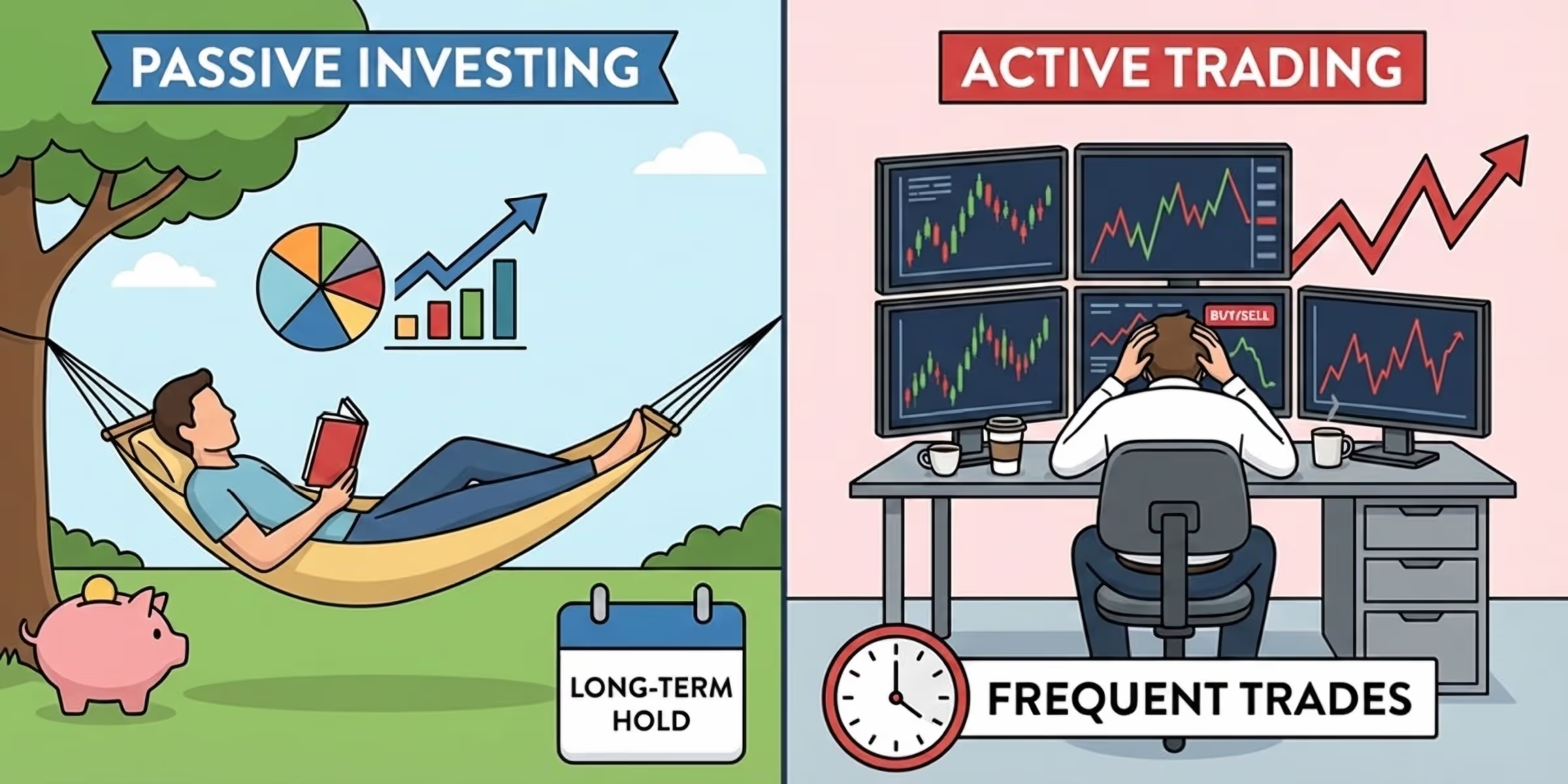
Unlike long-term investors who may hold stocks for months or even years, day traders operate on extremely short time horizons. Their goal is simple but very demanding: open and close positions within the same trading day and capture small price movements before the market closes.
To accomplish this, day traders typically rely on very short-term charts. These often include 1-minute, 5-minute, or 15-minute timeframes, which allow traders to analyze rapid price changes and identify opportunities as they develop in real time. Instead of waiting for large long-term trends, day traders focus on smaller movements that occur frequently throughout the trading session.

Even though day traders operate on short timeframes, understanding broader market conditions is still important. Markets behave differently during bullish and bearish phases, which can affect volatility and trading opportunities. This is largely because volatility can increase dramatically during major market selloffs. Day trading during these periods can be especially risky. Prices often overshoot key support and resistance levels, leading to frequent stop-outs and creating both emotional and financial stress for traders. For this reason, when I am day trading, I prefer to avoid highly volatile market conditions and wait until markets calm down before returning to trading on smaller timeframes. You can learn more about this in Bull vs Bear Markets: What’s the Difference?.
Despite the significant focus and time commitment required for day trading, which I will explain further in this article, many people are attracted to this style of trading because of the possibility of generating income on a daily basis. Some traders aim to produce profits that could potentially replace a traditional job. However, while the concept may sound appealing, day trading is not easy. In fact, it is often considered one of the most challenging trading styles to learn.
To succeed in this environment, traders must follow strict rules, remain disciplined under pressure, and react quickly to constantly changing market conditions. Over time, professional day traders develop a system or set of rules to help them manage both opportunities and risk. Let’s examine some of the most important principles that day traders follow and rely on.
Rule #1: Day Traders Do Not Hold Positions Overnight
One of the most important rules in day trading is simple but essential: Under no circumstances should a day trader hold positions overnight.

This means all trades are opened and closed within the same trading session. This rule exists for a very good reason - holding a position overnight introduces risks that traders cannot control.
One of these risks is known as an overnight gap. Overnight gaps occur when the market opens the next day at a price significantly different from where it closed the previous session. These price jumps can be caused by many factors, including:
- earnings announcements
- economic news
- geopolitical events
- global market reactions
Because these events occur outside of normal trading hours, traders cannot react to them immediately. If a trader were holding a position overnight, the next day’s opening price could be dramatically different from what they expected.
Another challenge is increased volatility outside trading hours. Major economic announcements or company updates can shift market sentiment very quickly. Since day traders depend on monitoring price movements and reacting quickly, being unable to observe these developments introduces unnecessary risk.
Day trading strategies are designed to operate only during active market hours, when traders can closely monitor charts and make immediate decisions. By liquidating all positions before the market closes, traders avoid overnight surprises and keep their trading approach consistent with their short-term strategy.
Rule #2: Focus on Small Price Movements
Another key characteristic of day trading is the focus on small but frequent price movements.
Instead of waiting for large trends that may take days or weeks to develop, day traders look for short bursts of price movement that can occur within minutes. Even small fluctuations can create opportunities if they occur often enough.
Because of this, day traders may enter and exit multiple positions during a single trading session. Their profits typically come from many small trades, rather than a single large move.
However, this approach requires significant time and attention. Markets can shift in a matter of seconds, and trading opportunities may appear and disappear very quickly. To identify these opportunities, day traders rely heavily on technical analysis, studying price charts, patterns, and indicators to understand price behavior. You can learn more about this in my article on technical analysis.
Day traders also spend considerable time in front of their computers, monitoring charts and market activity. Unlike long-term investors who may review their positions occasionally, day traders must remain actively engaged throughout the entire trading session.
Speed and precision are critical in this environment. A delay of only a few seconds can mean the difference between capturing a profitable trade and missing the opportunity entirely.
Rule #3: Cut Losses Quickly
Perhaps the most important rule for day traders is the ability to control losses quickly and effectively.

Day trading often involves leverage, which allows traders to control larger positions with smaller amounts of capital. While leverage can increase potential profits, it also magnifies losses. If a losing trade is allowed to continue without risk control, it can quickly become a significant problem.
For this reason, professional day traders closely monitor their losing trades and exit them quickly when the market moves against them.
One of the most common tools for managing this risk is the stop-loss order. A stop-loss automatically closes a trade when the price reaches a predetermined level. This prevents a small loss from turning into a much larger one.
Risk control is actually one of the most important skills in trading, which I explain in more detail in "Why Proper Risk Management Is the Key to Trading Success."
Effective risk management is essential for long-term success. A well-designed trading strategy ensures that a single bad trade cannot wipe out the profits from several successful ones. Even skilled traders experience losing trades from time to time. What separates professionals from beginners is their ability to control those losses and protect their trading capital.
In many cases, profitable trading is not about winning every trade. Instead, it is about maintaining a favorable profit-to-loss ratio, where the gains from successful trades outweigh the losses from unsuccessful ones.
Advantages of Day Trading
Despite the challenges, day trading offers several potential advantages that attract traders to this style.
1. The Potential for Rapid Profits
One of the most appealing aspects of day trading is the potential to generate profits quickly. Since day traders focus on short-term price movements, profitable trades can occur within minutes or hours.
Even relatively small price fluctuations can create opportunities when trades are executed frequently. Skilled day traders may complete several successful trades within a single day, turning modest market movements into good profits.
However, it is important to remember that rapid profit potential also comes with increased difficulty and risk.
2. Location
Another advantage of day trading is the flexibility it offers for lifestyle.
Unlike traditional jobs that require commuting to an office, day traders only need a computer, a stable internet connection, and access to trading platforms. This allows traders to work from almost anywhere in the world, provided they can follow the trading hours of the markets they participate in.

Some traders choose to work from home, while others travel and trade from different locations. This level of independence can be appealing for those who prefer flexible working conditions.
Many traders appreciate the ability to design their own schedule and balance their work with personal interests, family time, or hobbies.
3. The Possibility of Financial Independence
For those who eventually learn to day trade profitably, it can lead to financial independence.
Imagine being able to generate income directly from the markets without relying on a traditional employer. While achieving this level of success requires significant dedication and experience, it is a goal that motivates many traders to pursue day trading seriously.
It is important to approach this possibility with realistic expectations. Becoming consistently profitable takes time, practice, and a deep understanding of market behavior. If you would like to learn more about this topic, you can read my article “How Long Does It Really Take to Become Profitable?”, where I explain the typical timeline traders may expect before reaching profitability.
Challenges and Risks of Day Trading
While day trading offers exciting opportunities, it also comes with substantial risks and challenges.
1. High Stress Environment
Day trading requires constant attention and quick decision-making. Prices can move fast, sometimes within seconds, forcing traders to react quickly.
This fast pace creates a high-pressure environment that can be emotionally demanding. Watching charts throughout the day and dealing with frequent fluctuations in profits and losses can be mentally exhausting.

Without strong discipline and emotional control, traders may make impulsive decisions that lead to costly mistakes. Understanding how human behavior affects risk-taking is critical, which I discuss in Understanding Gambling, Risk, and Human Behavior.
2. High Failure Rate
Another challenge associated with day trading is the high failure rate among beginners.
Many new traders underestimate the complexity of the fast-moving markets and the discipline required for success, especially if trying to generate profits from small price movements. I explain the deeper reasons behind this in Why 90% of Traders Fail.
Successful day trading requires a combination of skills, including:
- technical analysis
- risk management
- emotional discipline
- strategic thinking
Developing these abilities takes time and experience. While success is certainly possible, only a relatively small percentage of traders manage to remain profitable over the long term. It may sound discouraging, but knowing what you are dealing with beforehand will greatly increase your chances of success, which many beginners fail to consider.
3. Trading Costs
Frequent trading also introduces another important factor: transaction costs.
Each trade may involve brokerage commissions, platform fees, or other expenses, depending on the market being traded and the platform being used. When trades occur many times per day, these costs can accumulate quickly.

In addition, leveraged trading often involves margin requirements and interest charges. Short-term trading profits may also be subject to higher tax rates compared to long-term investments.
All of these expenses can reduce overall profitability, making it even more challenging for traders to succeed.
Who Is the Ideal Candidate for Day Trading?
Day trading has both advantages and risks, making it clear that it is not suitable for everyone. Certain characteristics make individuals more likely to succeed in this demanding environment.
A successful day trader should:
- be comfortable working in high-pressure situations
- dedicate several hours each day to monitoring markets and executing trades
- maintain strong discipline and emotional control
- be willing to accept higher levels of risk in pursuit of higher potential rewards
These qualities are essential because day trading requires constant attention, patience, and the ability to remain calm even during periods of market volatility.
Is Day Trading Right for You?
For beginners, day trading can be one of the most challenging styles to learn. It requires extensive practice, continuous learning, and a strong commitment to risk management.
However, for those willing to invest the time and effort to learn these essential skills, day trading can offer unique opportunities. It provides the possibility of independent work, flexible lifestyle choices, and the potential to generate income directly from markets.
At the same time, it is important to recognize that this approach is not suitable for everyone. The fast-paced nature of day trading demands discipline, focus, and a deep understanding of market behavior.
Anyone considering this path should prioritize education and proper training before risking significant capital in the markets.
Topics
Trading Myths

Beginner Trading

Technical Analysis

Market Education

Risk Management