Who Are Investors and How They Make Money


Who Are Long-Term Investors? Understanding the Most Patient Market Participants
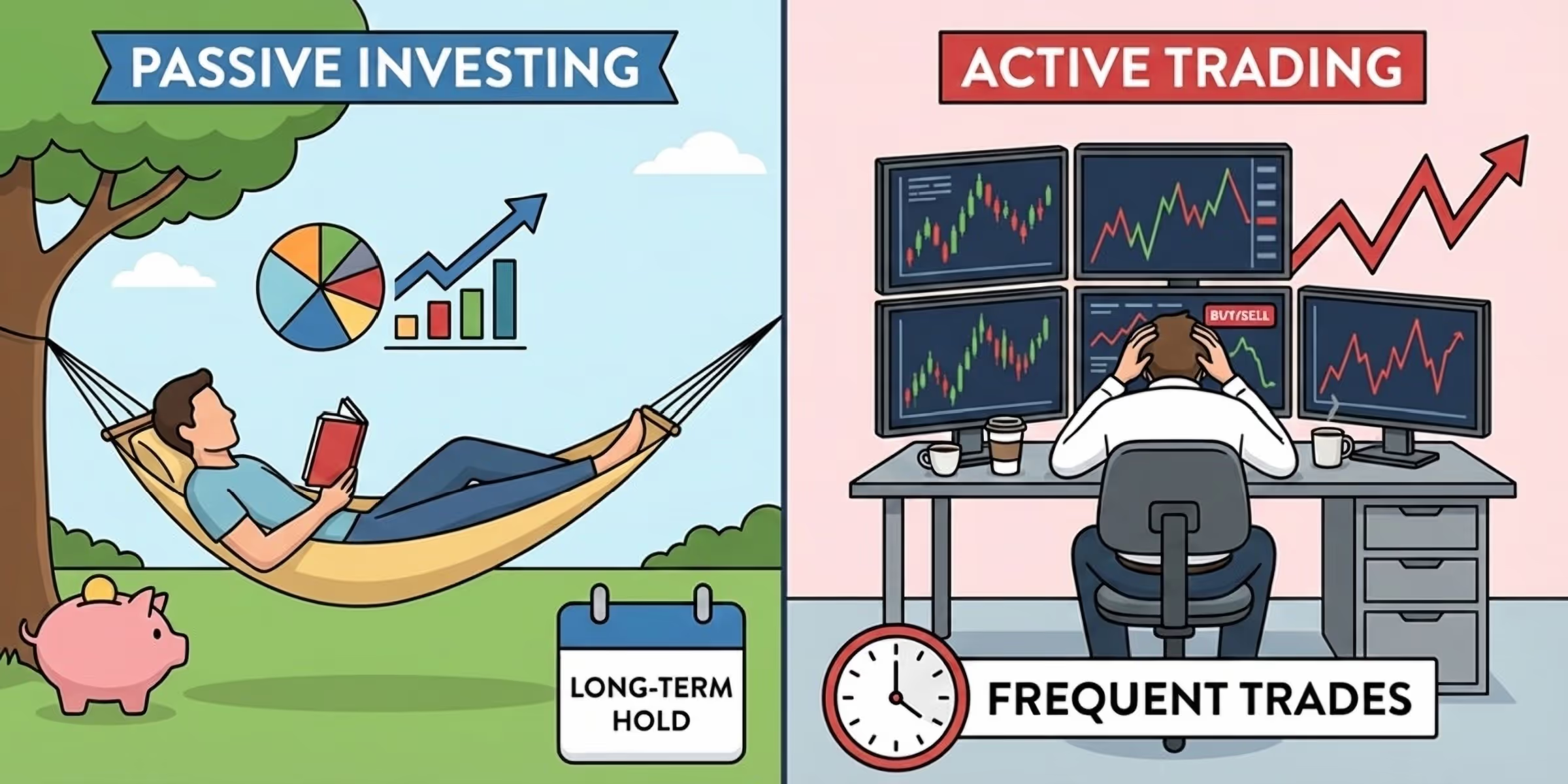
In the financial markets, people approach trading in several different ways. It all comes down to short and long-term goals, personality, and how much time they want to commit. Some are drawn to the fast pace of day trading, jumping in and out of positions within the same day. Others take a more patient approach with swing trading, holding trades for several days or even weeks to capture bigger moves.
However, there’s a third major group of market participants that takes a completely different approach: those who prioritize long-term investing.
Long-term investors focus on building wealth gradually over time. Instead of trying to capture short-term price fluctuations, they aim to hold investments for an extended period of time. A typical investor can hold a position for at least a year. Their goal is not to profit from daily market swings but to allow their investments to grow steadily as businesses expand and economies develop.
For these investors, the markets are not a place for quick speculation but a tool for long-term wealth creation.
How Long-Term Investors Approach the Market
The biggest difference between long-term investors and shorter-term traders, such as swing traders, is how long they hold their positions. Day traders may hold trades for minutes or hours. Swing traders may hold trades for days or weeks.
Long-term investors, on the other hand, hold investments for months, years, or even decades.
Since their time horizon is much longer, they don’t worry much about day-to-day price swings. Instead, they focus on the bigger picture - looking at the long-term growth potential of companies, entire industries, and the overall economy.
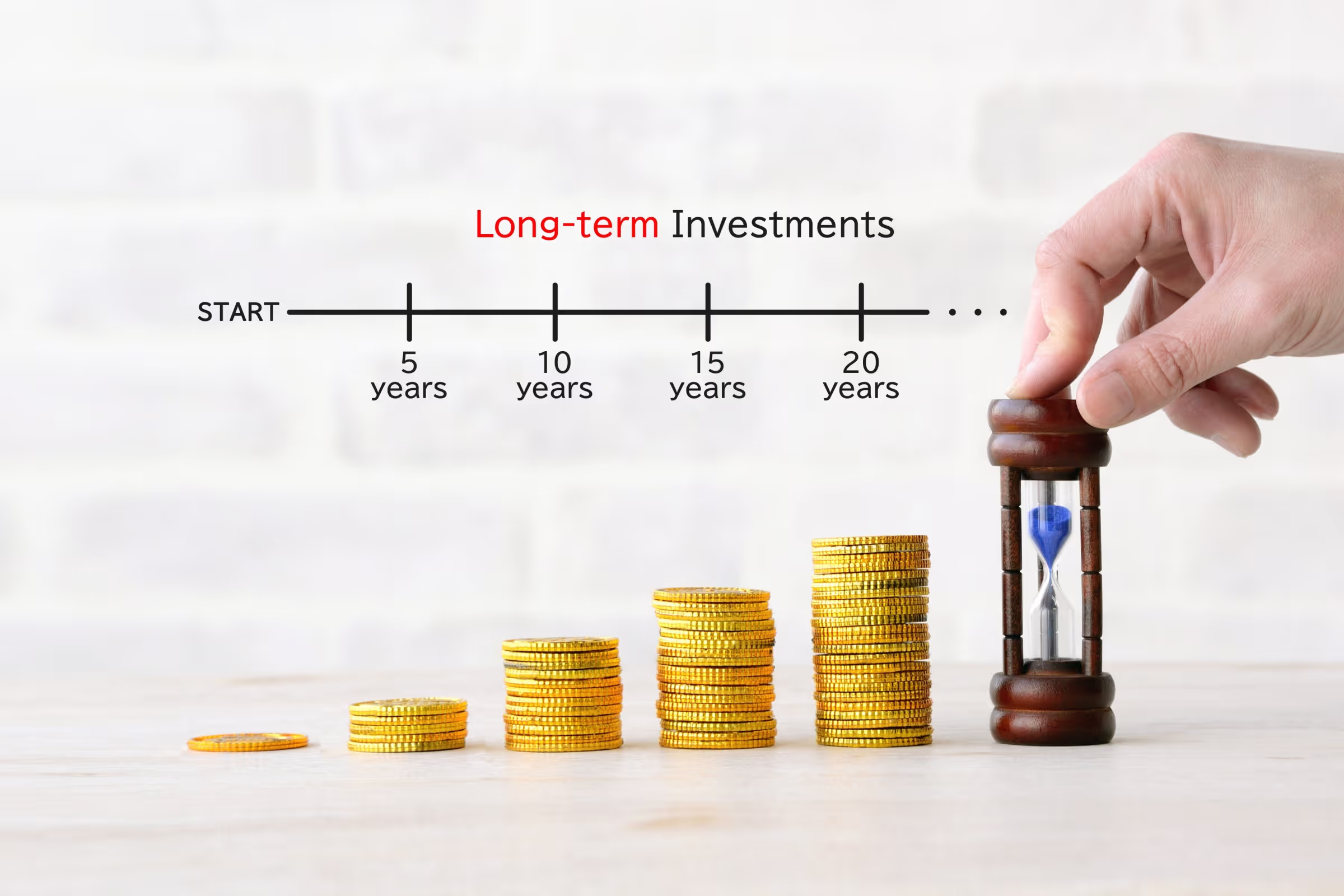
This also means they do not spend their days constantly watching charts or reacting to every market move. In fact, many long-term investors check their portfolios only occasionally. For some, reviewing investments once a week or even once a month is more than enough.
Their philosophy is simple: the longer money remains invested, the more time it has to grow.
The Inspiration Behind Long-Term Investing
One of the most famous examples of long-term investing is Warren Buffett, widely considered one of the greatest investors of all time.
Buffett built his fortune by buying strong businesses and holding them for an extremely long time. Rather than trying to predict short-term market moves, he focuses on the long-term performance and growth of the companies he invests in.
By 2025, Buffett’s net worth exceeded $150 billion, making him one of the wealthiest investors in history. His success demonstrates a powerful principle of investing: wealth is often created not by timing the market perfectly but by spending time in the market.
One of the most well-known examples of long-term investing is Warren Buffett’s investment in Coca-Cola. In the late 1980s, after a market downturn, Buffett invested roughly $1.3 billion to acquire about 400 million shares of the company at an average price of around $3.25 per share (adjusted for splits). What attracted him wasn’t short-term price movement, but Coca-Cola’s global dominance, strong brand recognition, and consistent demand - qualities that made it a business he believed could grow steadily for decades.
What makes this investment remarkable is how it evolved over time. Buffett didn’t sell when the stock rose; he held it for the long term, allowing compounding to take effect. Today, that original $1.3 billion investment has grown to over $20 billion in market value, and it continues to generate income. In fact, Coca-Cola now pays him more than $700 million per year in dividends, with total dividends collected exceeding $10 billion. This example shows how a single well-chosen investment, combined with patience, can turn into a powerful and lasting source of wealth.
Patience and discipline have been central to Buffett’s philosophy. Even during periods of market volatility, he has remained committed to long-term investing, allowing his investments to grow over decades.
Where Position Traders Fit Into the Picture
Between swing traders and long-term investors, there is another group that often receives less attention but plays an important role in the market.
Some traders operate on slightly shorter horizons than traditional investors. These market participants are often called position traders, and they typically hold positions for several weeks or months while following broader market trends.
Position traders often combine elements of both swing trading and investing. They may rely on technical analysis to identify trends while also considering larger economic or fundamental factors.
Although their time horizon is shorter than that of traditional investors, their approach still reflects a longer-term perspective compared to day trading or swing trading.
Understanding this distinction helps illustrate the wide spectrum of market participation styles.
Advantages of Long-Term Investing
Long-term investing offers several powerful advantages that have helped countless individuals build wealth over time.
The Power of Compounding
One of the greatest benefits of long-term investing is compounding.
Compounding occurs when profits from an investment are reinvested, so those earnings begin generating additional earnings over time.
To understand this concept, imagine planting a tree. In its early years, the tree grows slowly. Its branches are small, and the progress may seem almost invisible. However, as the tree matures, it produces more branches and leaves each year.
Eventually, the tree becomes large and strong, and its growth accelerates dramatically.
Compounding works in much the same way with money. When profits are reinvested instead of withdrawn, the investment begins to grow exponentially.

Over many years, even modest investments can grow into substantial wealth simply because time allows compounding to work its magic.
This is why many successful investors emphasize patience. The longer investments remain in the market, the stronger the compounding effect becomes. I explore this in greater detail in another article, where I compare investment growth with and without compounding, as well as the differences between passive and active trading. If you’re interested, you can check it out here.
Lower Stress
Another significant advantage of long-term investing is the reduction of stress.
Short-term traders often face constant pressure. Prices move rapidly, and traders must make quick decisions that can affect their financial outcomes immediately.
Long-term investors, however, take a very different perspective. They understand that short-term fluctuations are a natural part of market behavior.
Instead of reacting emotionally to every dip or spike in the market, they focus on the long-term trajectory of their investments.
This mindset helps investors stay calm during market downturns. Temporary price declines are viewed not as disasters but as normal events within the broader economic cycle.
By maintaining this long-term perspective, investors avoid many of the emotional mistakes that short-term traders often make.
Reduced Trading Costs
Frequent trading comes with expenses. Each time a trade is executed, costs such as brokerage commissions, platform fees, and taxes may apply.
While these fees might appear small individually, they can accumulate quickly when trades are executed frequently.

Long-term investors benefit from significantly lower trading costs because they buy and sell assets far less often. Instead of constantly entering and exiting the market, they hold investments for extended periods. This means fewer transactions and fewer fees.
In addition, many countries, including the US, provide favorable tax treatment for long-term investments. Profits from assets held for longer periods are often taxed at lower rates compared to short-term gains.
For example, in the United States, if an investor buys a stock and sells it within a year, any profit is considered a short-term capital gain and is taxed at ordinary income rates, which can be as high as 37% depending on income. However, if the same investor holds that stock for more than one year, the profit is classified as a long-term capital gain and is typically taxed at a lower rate - usually 0%, 15%, or 20%.
For example, imagine an investor makes a $10,000 profit. If it’s a short-term trade, they might owe up to $3,700 in taxes. But if they held the investment for over a year, the tax could be reduced to around $1,500-$2,000, depending on their income bracket. This difference highlights how a longer investment horizon can significantly improve net returns simply through more favorable tax treatment.
This combination of reduced fees and lower taxes allows more money to remain invested and continue growing.
Historically Higher Success Rates
Another reason many people prefer long-term investing is its historically strong track record.
Research consistently shows that investors who remain invested in the market for the long term, especially those with diversified portfolios, often outperform many short-term traders and even professional fund managers.
Short-term trading requires precise timing, which is extremely difficult to achieve consistently. Even experienced professionals struggle to predict short-term market movements accurately.
Long-term investors, on the other hand, benefit from overall economic and financial market growth, relying less on precise timing and, as a result, improving their chances of success over time.
In fact, markets generally trend upward over the long term as businesses innovate, economies grow, and productivity improves. Investors who stay patient are often able to benefit from these broader trends over time.
Challenges of Long-Term Investing
Despite its many advantages, long-term investing also has certain drawbacks that investors must understand.
Patience Is Essential
The biggest challenge for many people is patience.
Long-term investing does not produce instant results. Investments often require years to reach their full potential.
Beginners frequently struggle with this reality. When they invest in a stock or fund, they may expect immediate gains. If those gains do not appear quickly, frustration can set in, and emotions start to take over. This is where many beginners run into common pitfalls and costly mistakes. If you’ve experienced something similar and want to understand why most traders struggle, you can check out my article “Why 90% of Traders Fail,” where I break down the key psychological and practical challenges beginners face.
Experienced investors, on the other hand, understand that wealth accumulation is a gradual process. Markets move through cycles, and companies require time to grow.
Successful investors remain focused on long-term goals rather than short-term fluctuations.
Reduced Liquidity
Another challenge associated with long-term investing is reduced liquidity.
Liquidity refers to how easily an investment can be converted into cash without losing value.
Short-term traders can quickly sell their positions and access their capital whenever they wish. Long-term investors, however, intentionally keep their money invested for extended periods.
While this strategy can generate significant wealth over time, it also means that capital may not always be immediately available.
If investors need to withdraw funds unexpectedly, they may face unfavorable market conditions or tax penalties.
To address this issue, many investors maintain a balanced portfolio, keeping some assets in liquid forms such as cash or short-term bonds while allowing long-term investments to grow.
Market Cycles
Financial markets naturally move through cycles.
Periods of growth, known as bull markets, are often followed by slower periods or declines known as bear markets. If you’re not familiar with these terms, check out my article where I explain their meaning and the key differences between them.
Long-term investors must be prepared to experience these fluctuations.
During bear markets, portfolio values can decline significantly. Watching investments lose value, even temporarily, can be emotionally challenging.
However, history has shown that markets tend to recover over time.
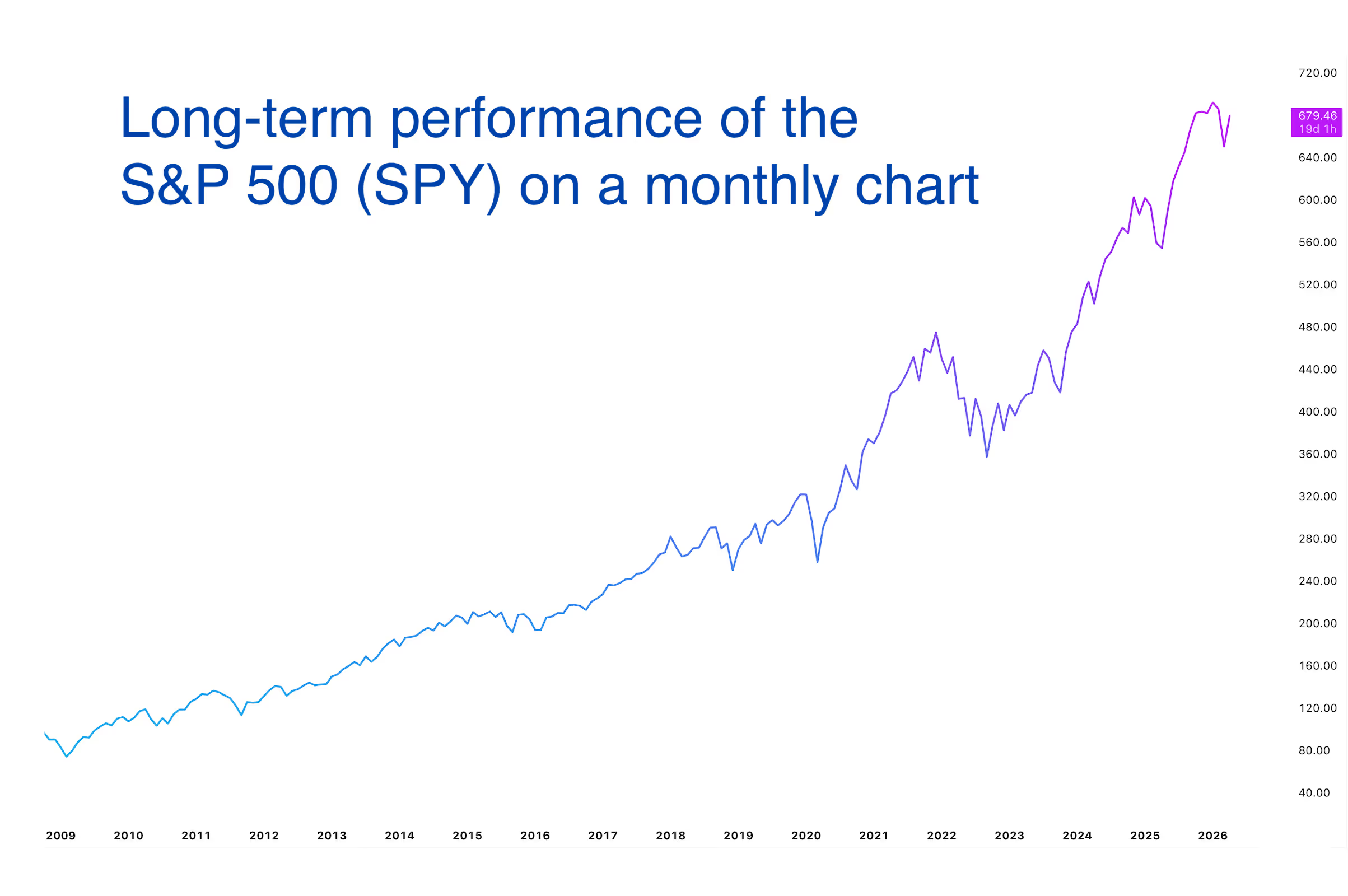
Bear markets are typically temporary phases within a broader pattern of economic growth.
Investors who remain disciplined during difficult periods often benefit when markets eventually recover.
Why Long-Term Investing Should Be Part of Your Strategy
Despite its challenges, long-term investing remains one of the most reliable methods for building wealth.
Short-term trading styles can offer quick profits, but they often require constant attention, rapid decision-making, and a high tolerance for stress.
Long-term investing takes a different approach. It allows individuals to benefit from:
- compounding growth
- economic expansion
- reduced trading costs
- disciplined financial planning
Over time, these factors can lead to significant wealth accumulation.
For this reason, even traders who prefer active strategies often include long-term investments in their financial plans.
Investing is not just about increasing wealth. It is also about creating financial stability and independence.
By allowing investments to grow over many years, individuals can build the resources necessary to support their future goals and ambitions.
Conclusion
Long-term investing is one of the most effective ways to benefit from the financial markets over time.
Although it requires patience and the ability to withstand market fluctuations, it offers significant benefits. Investors who remain focused on long-term goals often experience steady growth in their wealth.
While short-term trading styles may capture attention with promises of quick profits, history has repeatedly shown that time in the market often beats timing the market.
For anyone serious about building financial security, investing should be considered an essential part of a well-rounded strategy.
Topics
Trading Myths

Beginner Trading

Technical Analysis

Market Education

Risk Management